.webp)


Imagine climbing the steps at Tirumala or trekking in Ladakh and feeling breathless within minutes. Now imagine training your body to handle that low oxygen stress more efficiently. This is where intermittent hypoxia comes into the spotlight. Increasingly discussed in sports science and medical research, intermittent hypoxia refers to controlled, short bursts of reduced oxygen exposure followed by normal breathing.
From hypoxia training for athletes to emerging intermittent hypoxia therapy models for certain medical conditions, this concept is gaining attention in India. But while the benefits of intermittent hypoxia are promising, there are also well documented risks of intermittent hypoxia that must not be ignored. Understanding who should avoid hypoxia training is equally important before attempting any hypoxic conditioning program.
At Continental Hospitals, we believe in evidence based medicine and safe innovation. Let us explore what intermittent hypoxia means, how it works, and whether it is right for you.
What Is Intermittent Hypoxia?
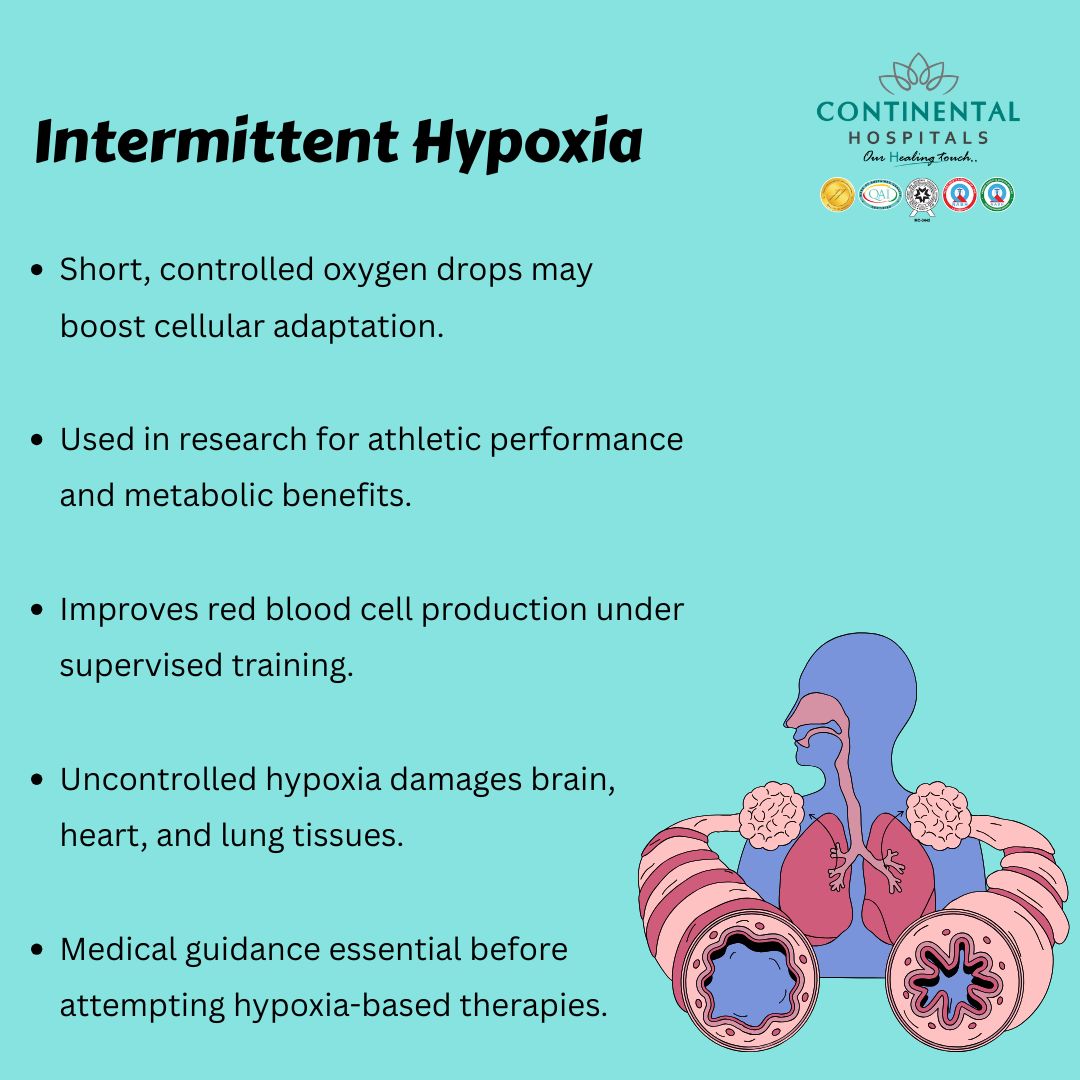
Intermittent hypoxia is a structured exposure to low oxygen levels for short periods, alternated with normal oxygen breathing. Unlike chronic hypoxia, which is harmful and persistent, this approach is controlled and time limited.
In simple terms, you are temporarily simulating high altitude conditions without actually traveling to the mountains. This is often done using specialized masks or hypoxic chambers under medical or sports supervision.
The goal is to stimulate adaptive mechanisms in the body that enhance oxygen utilization in the body and improve overall physiological efficiency.
How Does the Body Respond to Low Oxygen?
When oxygen levels drop, the body activates several protective responses:
- Increased red blood cell production
- Enhanced mitochondrial efficiency
- Improved oxygen delivery to tissues
- Activation of protective cellular pathways
These responses are the foundation of altitude training benefits seen in elite athletes who train in high altitude areas such as Himachal Pradesh or Sikkim.
Over time, these adaptations may improve oxygen efficiency and physical endurance, especially in trained individuals.

Intermittent Hypoxia Training and Athletic Performance
Intermittent hypoxia training is widely used in sports medicine. Athletes preparing for marathons, cricket tournaments, cycling competitions, and even kabaddi leagues use hypoxic conditioning to gain a competitive edge.
How hypoxia training for athletes works:
- Exposure to simulated high altitude
- Short sessions lasting minutes
- Repeated cycles over weeks
- Combined with structured exercise
Research suggests that intermittent hypoxia and lung function may show measurable improvement in some trained athletes. Lung ventilation efficiency and oxygen extraction at the muscular level can become more effective with structured programs.
However, it is not a shortcut. Proper supervision and individualized intermittent hypoxia protocol planning are essential.
Benefits of Intermittent Hypoxia
The benefits of intermittent hypoxia depend on dosage, frequency, and individual health status. Potential advantages include:
- Improved cardiovascular endurance
- Enhanced oxygen utilization in the body
- Better mitochondrial performance
- Support in certain pulmonary rehabilitation models
- Possible neuroprotective effects in experimental settings
Some emerging studies are evaluating intermittent hypoxia therapy in controlled settings for respiratory conditions and neurological recovery. However, this remains a developing field and should not be self administered.
It is important to remember that altitude training benefits observed in athletes cannot automatically be applied to the general population without assessment.
Intermittent Hypoxia and Lung Function
One area of interest is intermittent hypoxia and lung function. In carefully selected patients with mild respiratory limitations, supervised hypoxic exposure may stimulate adaptive responses in breathing control mechanisms.
In pulmonary rehabilitation, hypoxic conditioning may sometimes be integrated into structured therapy plans, but only under close monitoring of oxygen saturation levels.
For individuals living in polluted Indian metro cities where lung stress is common, self experimenting with hypoxia can be dangerous. Baseline lung function testing is essential before considering any hypoxia related intervention.
Risks of Intermittent Hypoxia
While the concept sounds beneficial, the risks of intermittent hypoxia are real and medically significant if not properly controlled.
Potential intermittent hypoxia side effects include:
- Headache
- Dizziness
- Increased blood pressure
- Irregular heart rhythms
- Sleep disturbances
- Worsening of underlying lung disease
Repeated oxygen deprivation can stress the cardiovascular system. In people with hypertension or coronary artery disease, hypoxic exposure may increase cardiac workload.
In patients with untreated obstructive sleep apnea, intermittent hypoxia can worsen systemic inflammation and metabolic disturbances.
This is why hypoxia therapy safety depends entirely on medical screening, controlled exposure, and continuous monitoring.
Who Should Avoid Hypoxia Training?
Understanding who should avoid hypoxia training is critical for safety. The following individuals should not attempt intermittent hypoxia without specialist approval:
- Patients with uncontrolled hypertension
- People with coronary artery disease
- Individuals with severe asthma or COPD
- Those with anemia
- Pregnant women
- Patients with arrhythmias
- People with recent stroke or heart attack
In India, where lifestyle disorders such as diabetes and heart disease are increasing, unsupervised hypoxic conditioning can pose serious risks.
If you are already experiencing breathlessness during daily activities, hypoxia training is not the solution. A thorough cardiac and pulmonary evaluation is necessary first.
Intermittent Hypoxia Therapy in Medical Settings
Intermittent hypoxia therapy is being studied in controlled hospital environments. It is sometimes explored in neurological rehabilitation and certain respiratory conditions under strict protocols.
A typical intermittent hypoxia protocol in a clinical setting includes:
- Pre therapy medical evaluation
- Baseline ECG and lung function test
- Pulse oximetry monitoring
- Structured cycles of reduced oxygen exposure
- Immediate discontinuation if adverse symptoms occur
Without this framework, hypoxia therapy safety cannot be ensured.
Expert Insight from Continental Hospitals
Dr Pradeep Simha Karur, Sr Consultant Pulmonologist & Senior Sleep Specialist at Continental Hospitals, explains:
Intermittent hypoxia is not a fitness trend. It is a physiological intervention. When applied scientifically, it may help specific individuals. But when misused, it can aggravate heart and lung conditions. A proper assessment is mandatory before starting any hypoxia training program.
This expert view reinforces that intermittent hypoxia must be personalized and medically supervised.
Prevention and Safety Tips Before Trying Hypoxic Conditioning
If you are considering intermittent hypoxia training, follow these precautions:
- Consult a pulmonologist or sports medicine specialist
- Get a full cardiac and lung evaluation
- Never attempt DIY hypoxia masks at home
- Avoid if you have uncontrolled lifestyle diseases
- Ensure professional supervision and oxygen monitoring
- Stop immediately if you experience chest pain or severe dizziness
These steps significantly reduce intermittent hypoxia side effects and ensure safe adaptation.
Why Choose Continental Hospitals for Hypoxia Evaluation?
Continental Hospitals is a leading multi speciality hospital in Hyderabad, offering advanced pulmonary medicine, cardiology, and sports medicine services.
Why patients trust us:
- Comprehensive cardiopulmonary assessment under one roof
- Advanced lung function and exercise testing labs
- Evidence based treatment protocols
- Multidisciplinary expert teams
- Focus on patient safety and individualized care
Whether you are an athlete seeking to improve oxygen efficiency or a patient exploring structured hypoxic conditioning, our specialists ensure personalized guidance rooted in scientific evidence.
Conclusion
Intermittent hypoxia is a powerful physiological tool when used responsibly. It has shown promising benefits of intermittent hypoxia in improving endurance and oxygen utilization in the body, especially among athletes.
However, the risks of intermittent hypoxia must not be underestimated. Improper use can strain the heart, lungs, and nervous system. Understanding who should avoid hypoxia training is crucial for preventing complications.
If you are experiencing breathlessness, fatigue, or unexplained low oxygen levels, consult our best Pulmonology Specialists at Continental Hospitals for a comprehensive evaluation. Do not experiment with your oxygen levels without medical supervision.