.webp)

Gaming is one of the most popular leisure activities today. It can be relaxing, stimulating, and even educational. But when gaming slowly takes control of your daily routine, affects your health, reduces productivity, or disrupts relationships, it becomes a concern. Many children, teenagers, and even adults experience gaming addiction signs without realising how deeply it is impacting their mental and physical well-being. This comprehensive guide helps you understand excessive gaming symptoms, gaming behaviour red flags, and when to seek help to regain balance.
Understanding When Gaming Turns Unhealthy
Not all gaming is harmful. Healthy gaming is fun, limited, and controlled. Unhealthy gaming habits develop when a person loses control over the amount of time spent on gaming or starts prioritising games over important responsibilities. This affects work, studies, sleep, relationships, and health. Gaming addiction is recognised worldwide as a behavioural concern linked closely to mental health.
If you or your child experiences gaming mental health issues, early recognition helps prevent long-term problems.
Key Red Flags That Gaming Is Taking Over Your Life
Look for these warning signs that indicate gaming is becoming excessive or addictive.
1. Decline in Productivity
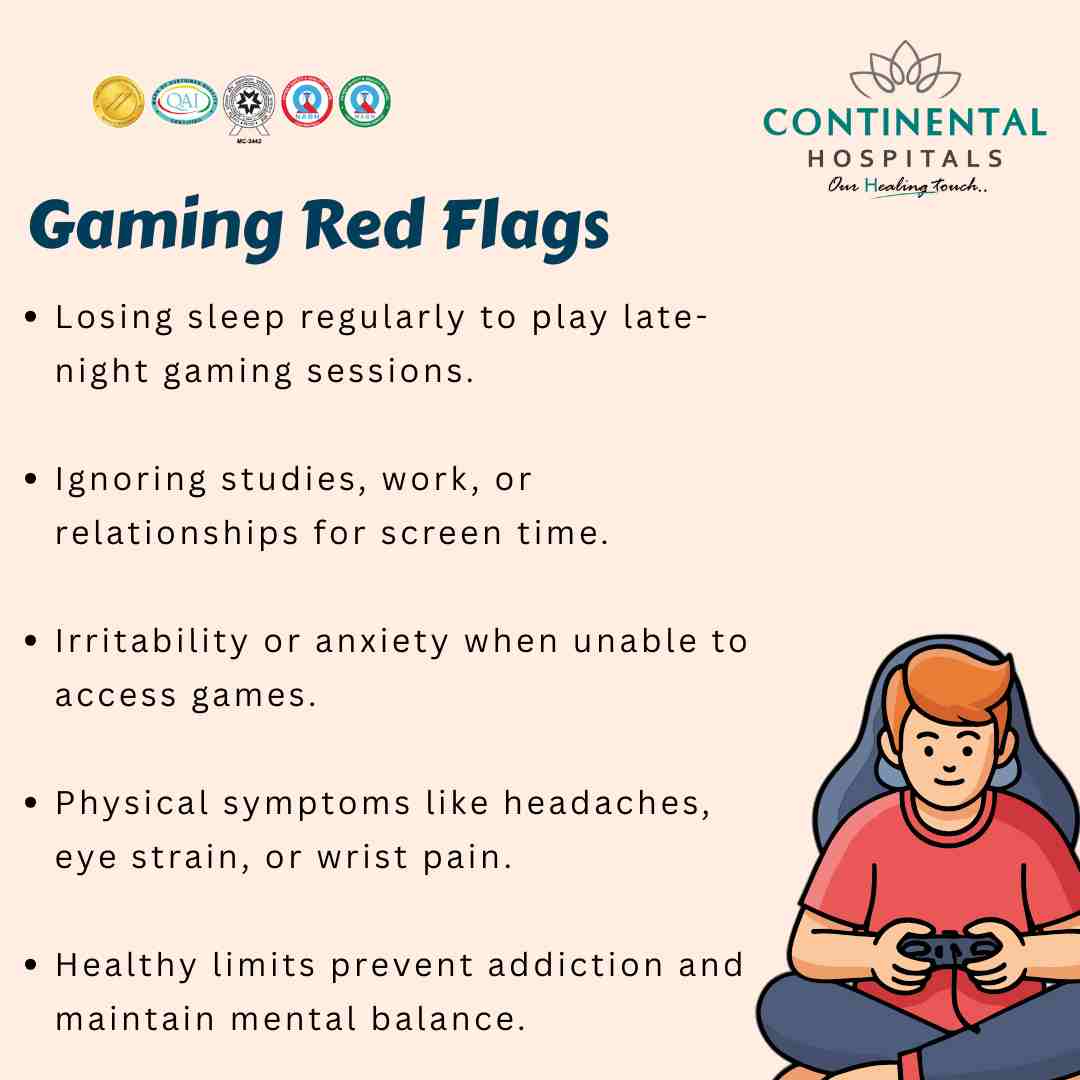
Gaming starts interfering with daily responsibilities such as studies, office work, household tasks, or professional commitments. Missed deadlines, poor academic performance, and inability to concentrate are common gaming productivity issues. When gaming becomes the priority over essential tasks, it is a serious red flag.
2. Gaming for Long Hours Without Breaks
Spending hours continuously on the screen, skipping meals, ignoring hydration, or missing physical movement are excessive gaming symptoms. Long gaming sessions strain the eyes, back, and neck and can cause headaches and lack of motivation in other areas of life.
3. Sleep Disturbances and Fatigue
Gaming sleep issues are extremely common. Many gamers stay awake late at night, lose track of time, or feel the urge to complete missions. This leads to irregular sleep patterns, morning fatigue, daytime drowsiness, and reduced focus. Poor sleep eventually affects mental health and emotional stability.
4. Irritability or Restlessness When Not Gaming
A strong emotional response when the game is taken away or disturbed is one of the biggest gaming behaviour red flags. If you feel anxious, angry, restless, or depressed when you are not gaming, it suggests dependency.

5. Withdrawal From Family and Friends
Preferring virtual teams over real interactions is a sign of unhealthy gaming habits. People may isolate themselves, avoid gatherings, stop engaging in hobbies, or lose interest in outdoor activities.
6. Losing Interest in School or Work
Many children and adults begin showing less interest in school assignments, office work, learning activities, or skill development. Gaming addiction signs often include skipping classes, missing work targets, or decreasing enthusiasm for academic or career growth.
7. Physical Health Issues
Continuous gaming affects the body in several ways. Symptoms include neck and back pain, eye strain, headaches, numbness in hands, poor posture, and general fatigue. A lack of physical activity leads to weight fluctuations and reduced overall fitness.
8. Emotional Impact and Mental Health Concerns
Excessive gaming can worsen stress, mood swings, anger, and anxiety. When gaming begins to replace healthy coping skills or becomes an escape from real-life problems, the risk of mental health issues increases significantly.
9. Using Gaming as the Only Source of Happiness
If gaming becomes the only enjoyable part of your day, it indicates dependence. Losing interest in family time, outdoor games, reading, or other hobbies is a sign that gaming might be taking over your life.
10. Financial Impact
Some people overspend on in-game purchases, upgrades, subscriptions, or gaming equipment. This can affect savings and cause financial stress.
Gaming Addiction in Children
Child gaming addiction is rising rapidly. Children are more vulnerable because they have developing brains, a strong need for reward, and less self-control. Warning signs in children include:
- Reduced focus in school
- Poor academic performance
- Avoiding outdoor play
- Irritable behaviour
- Continuous thinking about games
- Skipping meals or sleep
- Lying about gaming time
Parents should monitor screen time, set healthy boundaries, and encourage balanced routines.
How Gaming Affects Mental Health?
Gaming mental health challenges arise when excessive gameplay affects emotional stability. High-intensity games stimulate the brain's reward centres, making the player crave more gaming time. Over time, this reduces interest in other activities, affects motivation, and increases irritability. Prolonged gaming also contributes to stress, frustration, low self-esteem, and social withdrawal.
Seeking help early improves long-term outcomes.
How to Reduce Gaming Time?
If you identify with the symptoms above, here are practical steps to reduce gaming:
- Set daily gaming limits
- Use timers or app controls to restrict hours
- Replace gaming hours with hobbies such as walking, fitness, reading, music, or social activities
- Create a fixed study or work schedule
- Do not use gaming as a coping mechanism for stress
- Keep gaming devices away from the bedroom to avoid night-time gaming
- Encourage children to follow structured routines
You can also speak to a mental health specialist if reducing gaming on your own is difficult.
When to See a Specialist
Consult a doctor or mental health expert if you notice the following:
- Severe sleep disturbances
- Declining performance at school or work
- Withdrawal from family and friends
- Frequent anger, frustration, or emotional instability
- Physical health issues like headaches, neck pain, or fatigue
- Inability to reduce gaming despite repeated attempts
Early evaluation prevents complications and helps restore balance.
Why Choose Continental Hospitals for Gaming Mental Health Concerns?
Continental Hospitals is renowned for its high-quality healthcare, advanced diagnostic facilities, and expert specialists. The hospital is known for its international level of patient care and is recognised through respected global accreditations for quality, safety, and clinical excellence. Patients receive personalised care tailored to their physical and emotional needs. The hospital team includes specialists in behavioural health, neurology, psychology, and rehabilitation who work together to manage gaming addiction and its related complications. A patient-centred approach, modern infrastructure, and dedicated support ensure the best outcomes for individuals facing gaming-related issues.
Conclusion
Gaming is enjoyable when done in moderation. When gaming starts influencing sleep, productivity, relationships, and mental stability, it becomes essential to recognise the warning signs. Understanding gaming addiction signs and excessive gaming symptoms helps you identify problems early and take corrective steps. Whether it is developing healthy gaming habits, reducing gaming time, or seeking treatment for gaming mental health concerns, you can regain balance with the right support.
For expert guidance, diagnosis, and treatment, consult our best psychologists at Continental Hospitals. They can help you break unhealthy gaming habits and build a balanced, healthier life.