.webp)


Pain in the lower back can be confusing. Is it a simple muscle strain, or is it something related to the kidney? Understanding the difference between kidney vs back pain is important because the treatment and urgency can vary greatly. Many people ignore early signs, thinking it is just back pain, when it could be a kidney problem.
Understanding the Kidneys and the Back
- Your kidneys are two bean shaped organs located just below the rib cage, one on each side of your spine. They filter waste and excess fluid from your blood and produce urine.
- Your back includes muscles, bones, discs, ligaments, and nerves. Back pain usually comes from muscle strain, disc problems, poor posture, or injury.
- Knowing the location and type of pain helps you identify kidney vs back pain more accurately.
Where Is the Pain Located?
Location is one of the biggest clues when comparing kidney pain vs back pain.
Kidney pain location
Kidney pain is usually felt higher up in the back, just below the ribs. It may be on one side or both sides. The pain can also spread to the sides of the abdomen or groin.
Back pain location
Back pain is commonly felt in the lower back area. It may be central or spread across the lower spine. It can also radiate down the legs if nerves are involved.
If the pain is deeper and located under the ribs, it may point toward a kidney issue rather than a muscle problem.
Visit our nephrology department at Continental Hospitals for expert evaluation, advanced kidney care, and personalized treatment—all under one roof.
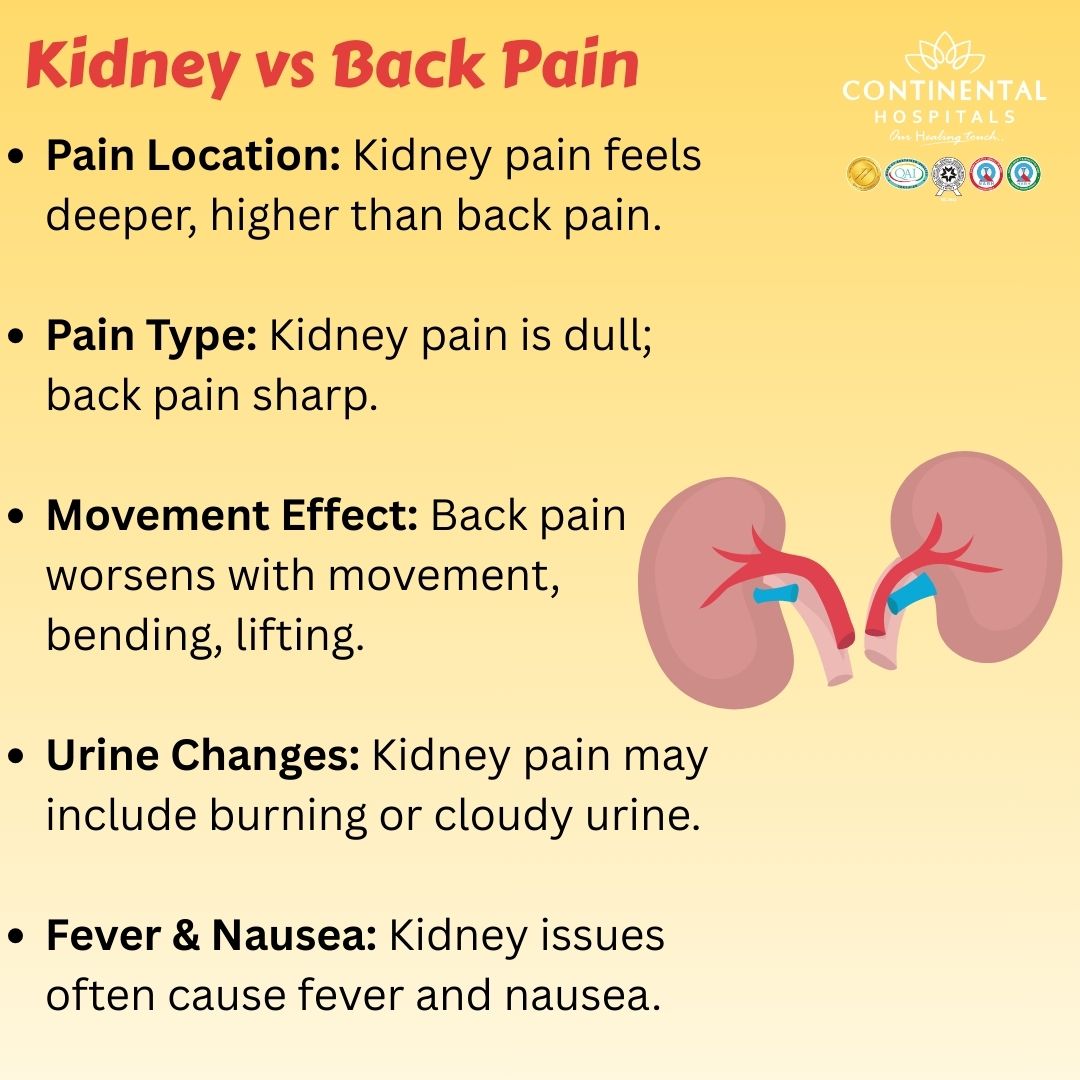
What Does the Pain Feel Like?
Understanding how the pain feels can help you distinguish kidney vs back pain.
Kidney pain symptoms
• Deep, dull ache that does not change with movement
• Sharp and severe pain in case of kidney stones
• Pain that may come in waves
• Pain that does not improve with rest

Back pain symptoms
• Dull or sharp pain that changes with movement
• Pain that worsens when bending or lifting
• Muscle stiffness
• Pain relief when lying down or resting
Kidney pain often feels constant and intense, while back pain usually changes with posture and activity.
Other Symptoms to Watch For
Symptoms beyond pain are important when comparing kidney pain vs back pain.
Kidney related symptoms
• Fever and chills
• Nausea or vomiting
• Pain while passing urine
• Frequent urination
• Blood in urine
• Cloudy or foul smelling urine
Back related symptoms
• Muscle spasms
• Limited range of motion
• Tingling or numbness in legs
• Pain after heavy lifting or long sitting
If you notice urinary symptoms along with pain, it may indicate a kidney infection or kidney stones. This makes the difference between kidney vs back pain more clear.
Common Causes of Kidney Pain
Kidney pain can occur due to several reasons:
• Kidney stones
• Kidney infection
• Urinary tract infection that spreads to the kidney
• Blockage in urinary tract
• Polycystic kidney disease
Kidney stones often cause severe, sharp pain that can radiate to the groin. A kidney infection may cause fever along with back pain symptoms that resemble muscle pain.
Early diagnosis is important to prevent complications.
Common Causes of Back Pain
Back pain is very common and usually not related to the kidney.
• Muscle strain
• Herniated disc
• Poor posture
• Arthritis
• Sciatica
• Spinal injuries
Most cases of back pain improve with rest, physical therapy, and medications. Unlike kidney pain, back pain usually gets worse with movement and better with rest.
How Doctors Diagnose Kidney vs Back Pain
At Continental Hospitals, our specialists carefully evaluate symptoms to identify kidney vs back pain.
Diagnosis may include:
• Detailed physical examination
• Urine test
• Blood test
• Ultrasound scan
• CT scan
• MRI scan
If kidney disease is suspected, a nephrologist will assess kidney function. If spine related issues are suspected, an orthopaedic or spine specialist may be involved.
Accurate diagnosis ensures correct treatment and prevents complications.
When Should You See a Doctor?
Seek immediate medical attention if you have:
• Severe pain that does not improve
• Fever with back pain
• Blood in urine
• Persistent nausea or vomiting
• Difficulty passing urine
Ignoring kidney pain symptoms can lead to serious complications such as kidney damage or sepsis. Recognizing kidney vs back pain early helps protect your health.
Key Differences at a Glance
Here is a simple comparison to help you remember:
Kidney vs back pain quick points
• Kidney pain is higher under the ribs
• Back pain is lower and linked to movement
• Kidney pain may include urinary symptoms
• Back pain often improves with rest
• Fever suggests kidney infection, not muscle strain
These points make it easier to identify kidney pain vs back pain in daily life.
Why Choose Continental Hospitals?
When dealing with kidney vs back pain, expert care matters. Continental Hospitals stands out as the best hospital in Hyderabad for several reasons.
• NABH and JCI accredited hospital ensuring high standards of safety and quality care
• Advanced diagnostic imaging facilities
• Experienced nephrologists, urologists, orthopaedic surgeons, and spine specialists
• Multidisciplinary team approach for accurate diagnosis
• State of the art infrastructure and modern operation theatres
• Comprehensive kidney care including dialysis and minimally invasive procedures
Our accreditations reflect our commitment to patient safety, clinical excellence, and international standards of healthcare.
We believe in early detection, precise diagnosis, and personalized treatment plans for every patient.
Preventing Kidney and Back Problems
Prevention is always better than treatment.
For kidney health
• Drink enough water daily
• Maintain healthy blood sugar and blood pressure
• Avoid excessive salt intake
• Do not ignore urinary symptoms
• Get regular health checkups
For back health
• Maintain correct posture
• Exercise regularly
• Avoid lifting heavy weights improperly
• Use ergonomic chairs
• Maintain a healthy weight
Healthy lifestyle habits reduce the risk of both kidney pain and back pain.
Conclusion
Understanding kidney vs back pain can save you from serious complications. While back pain is common and often harmless, kidney pain can signal infections or stones that need urgent care.
Pay attention to the location of pain, associated symptoms, and whether the pain changes with movement. If you are unsure whether it is kidney pain vs back pain, do not ignore the signs.
If you are suffering from persistent back pain, kidney pain symptoms, fever, or urinary issues, consult the specialists at Continental Hospitals. Consult our best nephrologists, who provide comprehensive evaluation and advanced treatment under one roof.
Early medical consultation can protect your kidney function and improve your quality of life. Book an appointment today at Continental Hospitals, the best hospital in Hyderabad, and take the right step toward better health.
Related Blog Topics: