.webp)


Lip pigmentation winter concerns are extremely common. Many people notice that their lips look darker, duller, or uneven during the colder months. The drop in temperature, harsh winds, low humidity, and lack of proper winter lip care all play a major role in making your lips chapped, dry, and prone to hyperpigmentation. If you have been wondering why your lips darken during winter and how to protect them, this detailed guide will help you understand the causes and effective solutions.
Why Lip Pigmentation Worsens in Winter?
Winter brings a combination of environmental triggers that directly affect the delicate skin of your lips. Unlike the rest of your skin, lips do not have oil glands. This makes them more vulnerable to dryness, cracking, and discoloration.
1. Severe Dryness and Lack of Moisture
Low humidity removes natural moisture from the skin. This leads to dry lips pigmentation because dehydrated skin becomes dull and darker. Constant dryness also makes the top layer flaky, giving the lips an uneven tone.
2. Chapped Lips Darkening
When lips become cracked, peeling, or chapped, the healing process can leave behind dark patches or spots. Repeated peeling or rubbing can worsen the pigmentation further.
3. Cold Winds Irritate the Skin
Cold winds damage the protective barrier of the lips. The irritated skin becomes inflamed and eventually darkens due to repeated exposure without adequate hydration.
4. Not Using SPF Lip Balm
Many people skip SPF lip balm in winter because they assume sunlight is weak. In reality, UV rays are still strong and contribute to hyperpigmentation lips. UV exposure is one of the leading reasons for dark lips winter cause problems.
5. Increased Lip Licking
Lip dryness winter makes people lick their lips frequently. Saliva evaporates quickly and removes moisture instead of adding it. This constant cycle causes irritation and pigmentation around the lips.
6. Hot Beverages and Dehydration
People tend to drink more tea and coffee during winter. Hot beverages can darken the lips over time because of staining agents. Additionally, not drinking enough water affects lip hydration.
7. Allergic Reactions
Lip balms with fragrances, flavors, or chemicals may cause irritation when the skin is already dry. This irritation can lead to discolouration.

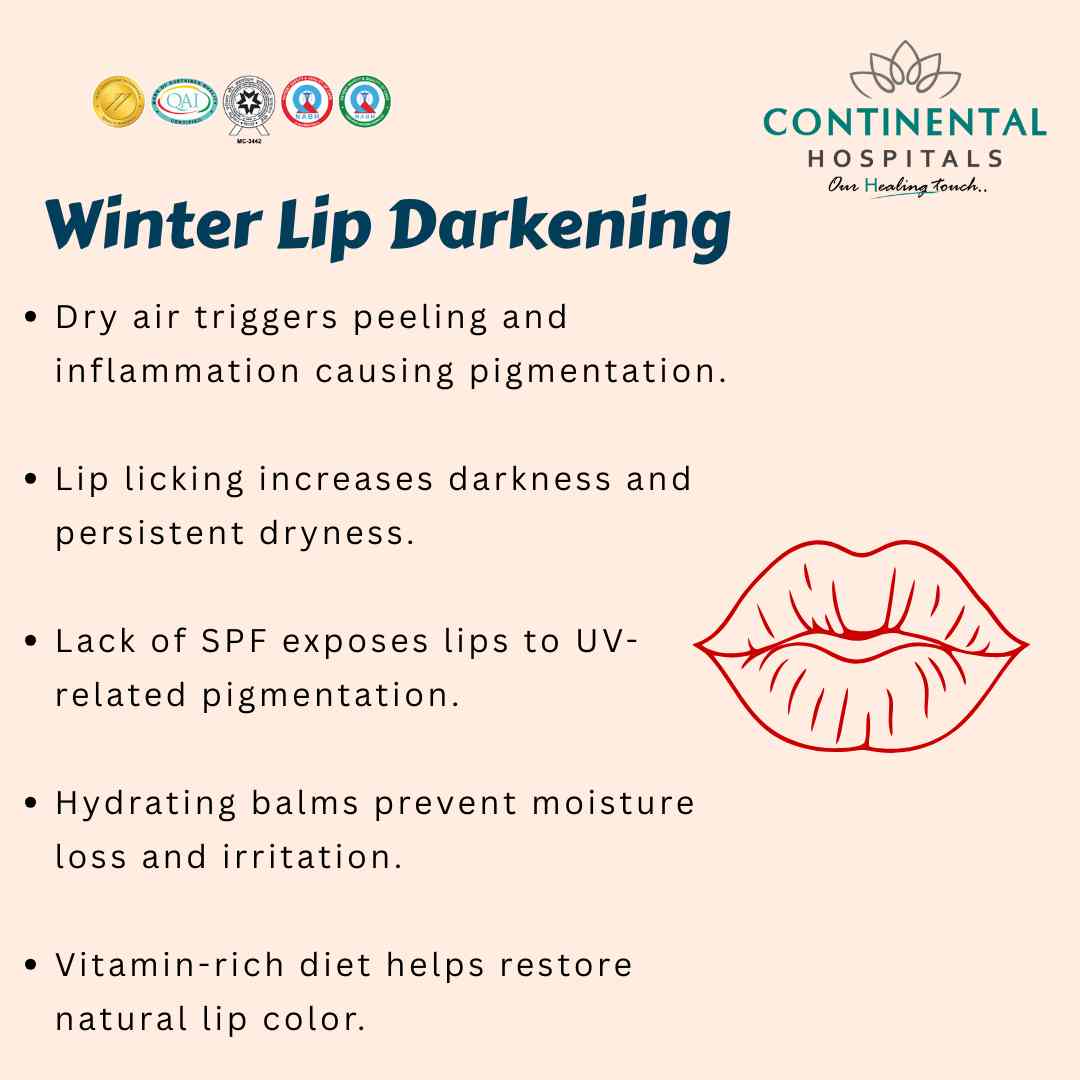
How to Prevent Lip Pigmentation in Winter
If you follow the right lip care routine winter strategies, you can prevent your lips from becoming dark and damaged. Here are proven and dermatologist-recommended tips.
1. Use SPF Lip Balm Daily
SPF lip balm benefits include protection against sun damage, prevention of hyperpigmentation lips, and maintaining the natural lip color. Always choose a lip balm with broad spectrum SPF.
2. Hydrate Lips Regularly
Apply lip balm multiple times a day. Ingredients like shea butter, ceramides, vitamin E, almond oil, and hyaluronic acid provide deep hydration. Conditioning agents seal moisture and prevent further damage.
3. Avoid Licking or Peeling Lips
Even if your lips are dry or flaky, avoid pulling at the skin. Use a gentle lip scrub twice a week to remove dead skin.
4. Stay Hydrated
Drink enough water to keep your skin and lips naturally moisturized.
5. Protect Lips From Wind
Use a scarf or mask when going outdoors to shield your lips from cold winds.
6. Choose Non Irritating Lip Balms
Avoid strong fragrances or chemical-based products. Opt for dermatologist-tested balms that support healing.
7. Follow a Simple Lip Care Routine
A consistent lip care routine winter approach includes cleansing, hydrating, sun protection, and nighttime repair.
Winter Lip Care Routine: Step-by-Step
You can follow this simple daily routine to protect your lips from darkening.
Step 1: Morning
- Gently wash your lips with lukewarm water
- Apply a layer of hydrating lip balm
- Reapply SPF lip balm before stepping outdoors
Step 2: Afternoon
- Reapply lip balm after meals
- Avoid licking and rubbing lips
Step 3: Night
- Use a lip mask or thick nourishing balm
- Apply a hydrating serum around the mouth area if needed
Additional Lip Hydration Tips
- Use a humidifier at home to balance moisture levels
- Avoid matte lipsticks daily as they dry out the lips
- Choose lip products with natural oils
- Limit caffeine intake
- Avoid biting lips
Winter Lip Pigmentation Do’s and Don’ts
Do’s
- Do apply SPF even on cloudy days
- Do scrub your lips gently
- Do keep a lip balm handy
Don’ts
- Do not peel the dry skin
- Do not apply expired lip products
- Do not smoke or expose lips to heat sources.
Why Choose Continental Hospitals for Skin and Lip Pigmentation Concerns?
Continental Hospitals is recognised for its commitment to delivering high quality dermatology and cosmetic care supported by advanced diagnostic tools and experienced specialists. The hospital follows strict clinical safety standards and maintains global quality benchmarks through its international accreditations. Skilled dermatologists use evidence based treatments to manage lip pigmentation, dryness, and other skin concerns. The dermatology department offers personalised plans, modern equipment, and patient centric care that ensures long lasting results.
Conclusion
Lip pigmentation winter issues are extremely common, but with the right routine and protection, your lips can stay healthy, soft, and naturally pink. Dry weather, UV exposure, lip licking, and inadequate hydration are the leading reasons behind dark lips winter cause problems. Following a consistent winter lip care routine and using SPF lip balm can make a major difference.
If you suffer from persistent dark lips, dryness, or pigmentation, consult our best Dermatology Specialists at Continental Hospitals for expert evaluation and treatment. Our team can help you restore smooth, hydrated, and naturally bright lips with safe and advanced care.