.webp)

The liver is one of the most important organs in the body, responsible for detoxifying blood, metabolizing nutrients, storing energy, and supporting overall immunity. Despite its critical functions, liver problems often go unnoticed in the early stages. Recognizing early signs of liver disease is essential for timely treatment, preventing complications, and maintaining long-term health.
At Continental Hospitals, visit our gastroenterology speciality for advanced diagnostic services and personalized care for patients concerned about liver health.
Understanding Liver Disease
Liver disease can affect anyone and develops gradually. Many liver disease symptoms in adults may be subtle at first, which makes early detection crucial. The liver has a remarkable ability to compensate for damage, often masking serious problems until they progress. Conditions like fatty liver disease, hepatitis, cirrhosis, and liver fibrosis are common, and early intervention can improve outcomes.
Knowing how to detect liver problems early is the first step toward maintaining liver health. Awareness of liver health warning signs allows patients to act quickly and seek appropriate medical evaluation.
Key Symptoms to Watch
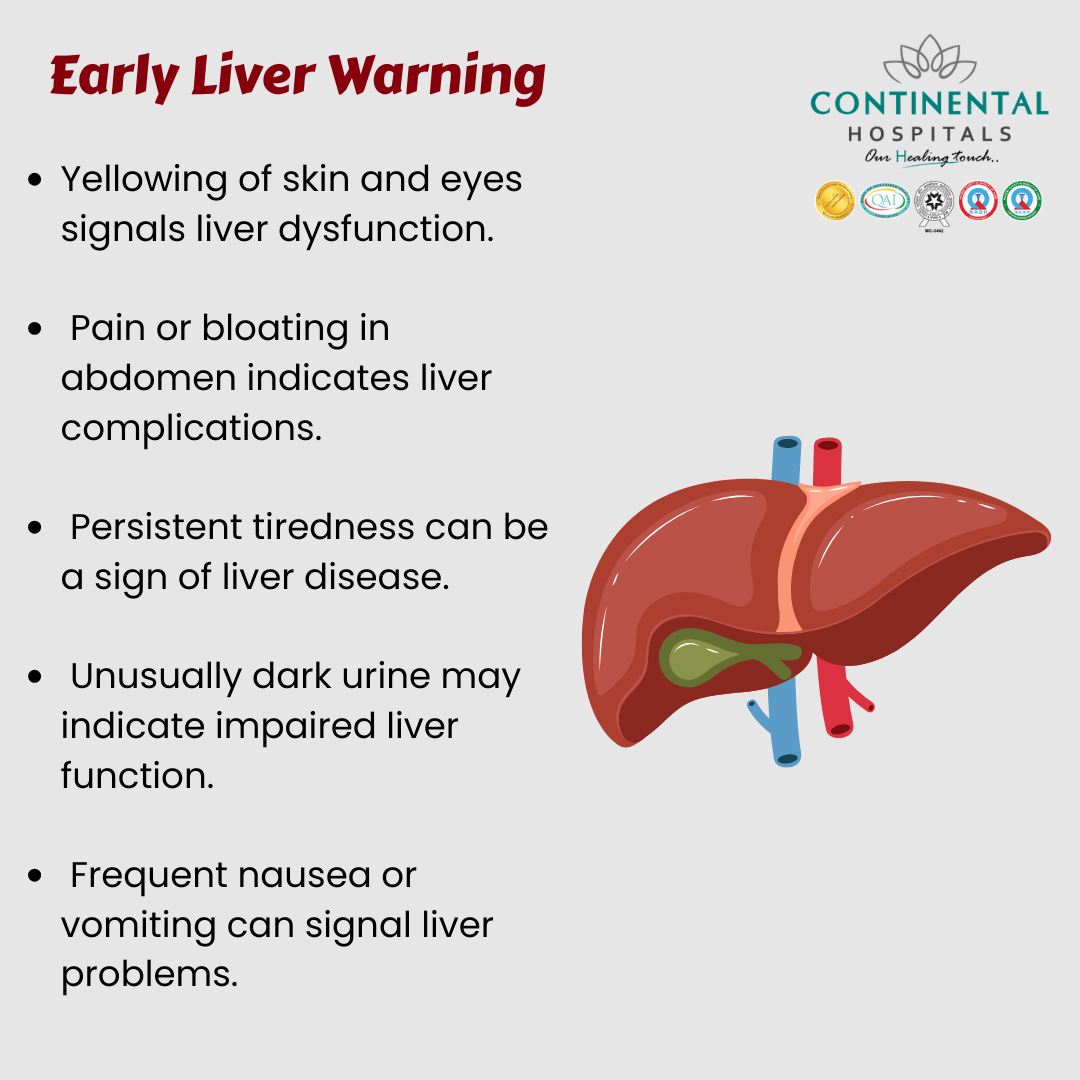
Recognizing warning signs of liver damage early can make a significant difference. Here are the most important symptoms to monitor:
Yellow Skin Liver Disease
Also called jaundice, yellow skin liver disease occurs due to excess bilirubin buildup in the blood. It is a clear sign that the liver is not functioning properly and requires immediate evaluation.
Fatigue and Liver Disease

Persistent exhaustion is common. Fatigue and liver disease result from the liver’s reduced ability to process toxins and produce energy. This fatigue is often long-lasting and not relieved by rest.
Dark Urine Liver Disease
Dark urine liver disease occurs when bilirubin is excreted in urine. This symptom may indicate liver stress or early liver dysfunction.
Abdominal Swelling Liver Problems
Fluid accumulation in the abdomen, or ascites, can indicate severe liver stress. Abdominal swelling liver problems is a sign of advanced liver issues and should be addressed promptly.
Nausea and Liver Disease
Persistent nausea or vomiting is another common early symptom. Nausea and liver disease occur due to toxins accumulating in the body when liver function is impaired.
Additional Common Liver Disease Symptoms
Other common liver disease symptoms include:
- Loss of appetite and unintentional weight loss
- Itchy skin due to bile salt buildup
- Swelling in legs and ankles
- Confusion or difficulty concentrating, which may indicate hepatic encephalopathy
- Pale or clay-colored stools
These symptoms often appear gradually, making regular monitoring and liver disease diagnosis early symptoms assessment essential for preventing further damage.
How to Detect Liver Problems Early?
Early detection improves outcomes and reduces complications. Steps to monitor liver health include:
Regular Liver Function Tests – Blood tests help monitor liver enzymes and bilirubin levels.
Imaging Studies – Ultrasound, CT scans, or MRI can detect structural liver changes.
Blood Tests for Infections – Screening for hepatitis A, B, and C is important.
Symptom Monitoring – Track signs like fatigue, jaundice, and abdominal swelling.
Consultation with a Specialist – Hepatologists can provide targeted evaluation and personalized guidance.
Understanding liver function symptoms to watch ensures that patients can take timely steps to protect liver health.
When to Consult a Doctor?
Immediate consultation is recommended if you notice:
- Persistent fatigue
- Yellowing of eyes or skin
- Dark urine or pale stools
- Abdominal swelling or pain
- Nausea, vomiting, or loss of appetite
Early medical evaluation ensures proper diagnosis, management, and effective treatment. Use? Medical advice is essential for accurate assessment, especially if there is a family history of liver disease or other risk factors.
Why Choose Continental Hospitals?
Continental Hospitals is recognized as the best hospital in Hyderabad for comprehensive liver care. Our facility is accredited by NABH and NABL, reflecting strict adherence to quality, safety, and patient care standards.
Key advantages include:
- Experienced hepatologists and gastroenterologists offering expert care
- Advanced diagnostic labs and imaging technology
- Personalized treatment plans with diet and lifestyle counseling
- Multidisciplinary approach integrating medical, nutritional, and lifestyle support
- Patient-centered care ensuring comfort, safety, and long-term follow-up
Choosing Continental Hospitals ensures accurate diagnosis, effective treatment, and ongoing support for patients with liver concerns.
Preventive Measures for Liver Health
Maintaining liver health involves a combination of lifestyle choices and regular monitoring. Recommended strategies include:
- Limiting alcohol consumption
- Eating a balanced diet rich in fruits, vegetables, and whole grains
- Exercising regularly to maintain healthy weight and prevent fatty liver
- Keeping up-to-date with hepatitis vaccinations
- Avoiding processed and trans-fat-rich foods
Adopting these habits supports early detection of liver disease and reduces the risk of complications.
Conclusion
Recognizing early signs of liver disease is vital for timely treatment and better health outcomes. Symptoms like jaundice, fatigue, dark urine, abdominal swelling, and nausea should not be ignored. Regular health checkups and liver disease diagnosis early symptoms assessments are essential for maintaining liver function.
If you suffer from liver disease symptoms in adults, unexplained fatigue, or other liver-related concerns, consult our best gastroenterology specialists at Continental Hospitals. Our team provides personalized evaluation, advanced diagnostics, and comprehensive treatment plans to ensure optimal liver health and long-term wellness.
Related Blog Topics