.webp)


Memory loss is often linked with older age, but many young adults also experience memory-related concerns. Forgetting names, missing deadlines, struggling to focus, or feeling mentally slow can be worrying, especially in the 20s and 30s. Memory loss in young adults is not always serious, but it should never be ignored. Understanding the causes, early signs, and available treatments can help protect long-term brain health.
What Is Memory Loss?
Memory loss refers to difficulty in remembering information, learning new things, or recalling past events. It can affect short-term memory, long-term memory, or both. In young adults, memory problems may appear as mental fog, frequent forgetfulness, or trouble concentrating at work or studies.
Occasional forgetfulness is normal. Persistent memory issues in youth, however, may signal an underlying medical or mental health condition that needs attention.
Visit our Neurology Department at Continental Hospitals. Consult the best neurologist in Hyderabad for accurate diagnosis, advanced care, and long-term brain health support.
Common Symptoms of Memory Problems in Young Adults
Memory issues in 20s and 30s can show up in many ways. Some symptoms include:
• Forgetting recent conversations or events
• Difficulty concentrating or staying focused
• Trouble recalling words or names
• Losing track of tasks or appointments
• Feeling mentally slow or confused
• Reduced ability to multitask
If these symptoms interfere with daily life, professional evaluation is important.
Causes of Memory Loss in Young Adults
Memory loss has many possible causes. Identifying the root problem is the key to effective treatment.

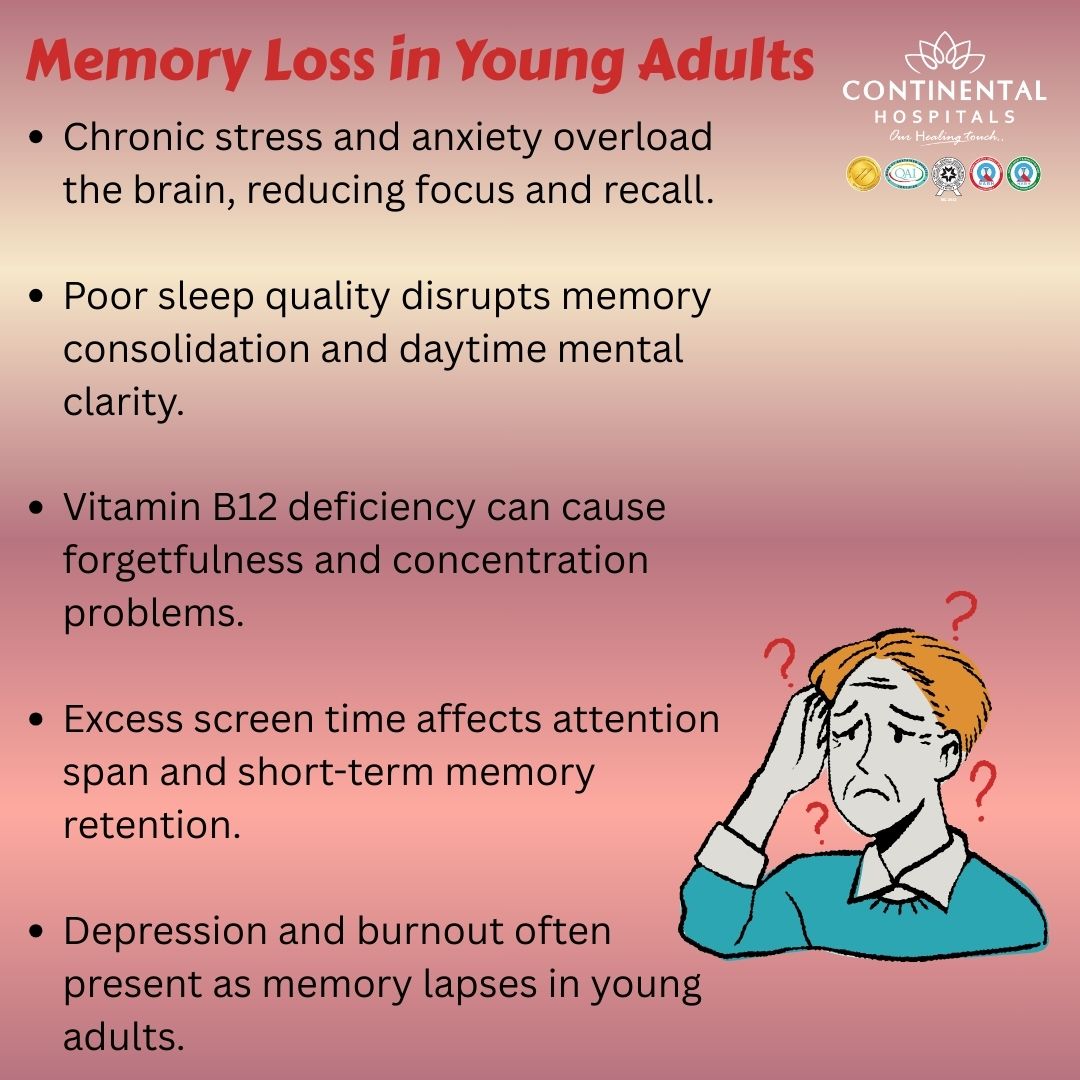
1. Stress and Anxiety
Chronic stress affects the brain areas responsible for memory and learning. Anxiety overloads the mind, making it harder to store and recall information. Mental health challenges are one of the most common reasons for memory problems in young adults.
2. Poor Sleep Quality
Sleep is essential for memory consolidation. Irregular sleep, insomnia, or sleep disorders reduce brain performance. Poor sleep can lead to forgetfulness, lack of focus, and reduced mental clarity.
3. Depression and Mental Health Disorders
Depression often affects memory, attention, and decision-making. Many young adults with depression report memory loss even before mood symptoms are clearly recognized. Addressing mental health is vital for restoring memory and brain health.
4. Nutritional Deficiencies
The brain needs proper nutrition to function well. Deficiencies in vitamin B12, vitamin D, iron, and folate can cause memory loss, fatigue, and confusion. Diet-related memory issues are common and usually reversible with treatment.
5. Excessive Screen Time and Digital Overload
Continuous exposure to screens, multitasking, and constant notifications reduce attention span. Over time, this digital overload affects memory and concentration, especially in youth.
6. Alcohol and Substance Use
Alcohol and recreational drugs can damage brain cells and interfere with memory formation. Even moderate but frequent use may contribute to memory issues in young adults.
7. Hormonal Imbalances
Hormonal changes or disorders such as thyroid problems can impact memory and cognitive performance. Hormonal imbalance is often overlooked but easily detectable with medical tests.
8. Head Injuries and Concussions
Past head injuries, even mild ones, can lead to long-term memory problems. Symptoms may appear weeks or months later and should always be medically evaluated.
9. Medical and Neurological Conditions
Certain conditions like epilepsy, infections, autoimmune disorders, and early-onset neurological diseases may affect memory. While rare, they require early diagnosis for better outcomes.
When Should You Worry About Memory Loss?
Ask yourself these questions
- Is memory loss frequent and worsening?
- Does it affect work, studies, or relationships?
- Is it associated with mood changes or confusion?
- Does it follow a head injury or illness?
- If the answer is yes, consulting a specialist is strongly advised.
Diagnosis of Memory Issues in Young Adults
Doctors use a step-by-step approach to evaluate memory loss
• Detailed medical and mental health history
• Physical and neurological examination
• Blood tests to detect deficiencies or hormonal issues
• Cognitive assessments to evaluate memory and attention
• Brain imaging if required
Early diagnosis helps prevent long-term brain damage and supports recovery.
Treatment Options for Memory Loss
Treatment depends on the underlying cause. In many cases, memory problems are reversible.
Common treatment approaches include:
• Managing stress and anxiety through therapy
• Treating depression and mental health conditions
• Correcting vitamin and nutritional deficiencies
• Improving sleep quality and daily routines
• Lifestyle changes to support brain health
• Medical treatment for neurological or hormonal conditions
A personalized treatment plan delivers the best results.
Tips to Improve Memory and Brain Health
Simple habits can make a big difference
• Follow a balanced, nutrient-rich diet
• Get regular quality sleep
• Practice mindfulness and stress management
• Limit alcohol and avoid substance use
• Stay physically active
• Reduce screen time and digital distractions
• Engage in brain-stimulating activities
Consistency is key to protecting memory over time.
Why Choose Continental Hospitals?
Continental Hospitals is recognized as one of the best hospitals in Hyderabad, known for excellence in patient care and clinical outcomes. The hospital is accredited by leading national and international healthcare accreditation bodies, reflecting high standards of safety, quality, and ethical medical practice.
Key reasons to choose Continental Hospitals include:
• Experienced neurologists, psychiatrists, and internal medicine specialists
• Advanced diagnostic facilities for brain and mental health evaluation
• Multidisciplinary approach to memory loss and cognitive disorders
• Evidence-based treatment protocols
• Patient-focused care with clear communication
The hospital’s commitment to quality and innovation ensures comprehensive care for young adults facing memory issues.
When to Consult a Doctor?
If you suffer from persistent memory loss, confusion, or difficulty concentrating, do not delay medical advice. Early care can prevent complications and restore confidence.
At Continental Hospitals, our Neurology and Mental Health specialists work together to identify the cause of memory problems and guide effective treatment.
Conclusion
Memory loss in young adults is more common than many realize. While occasional forgetfulness is normal, ongoing memory problems in youth should be taken seriously. Stress, sleep issues, mental health conditions, nutritional deficiencies, and medical disorders can all affect memory and brain health.
With early diagnosis, proper treatment, and lifestyle changes, most young adults can improve memory and regain mental clarity. If memory issues are affecting your quality of life, expert care can make a lasting difference.
Consult our Best Neurologist at Continental Hospitals, one of the best hospitals in Hyderabad, for accurate diagnosis, advanced care, and long-term brain health support.
Related Blog Topics: