.webp)


Obesity is a growing health concern globally and in India, increasing the risk of diabetes, hypertension, heart disease, and other complications. For many patients, lifestyle changes alone are not enough to achieve significant and sustained weight loss. Bariatric surgery is often considered an effective solution, and among the available options, mini gastric bypass has become increasingly popular. This article explains how mini gastric bypass works, who is an ideal candidate, the procedure, recovery, and why choosing the right hospital is critical for successful outcomes.
If you struggle with obesity or related health issues, visit our Bariatric Speciality at Continental Hospitals for early evaluation and personalized care.
What is Mini Gastric Bypass?
Mini gastric bypass is a type of bariatric surgery designed to help patients achieve significant weight loss by reducing the stomach’s capacity and altering the digestive tract. Unlike traditional gastric bypass, this procedure involves creating a small stomach pouch and connecting it to a loop of the small intestine. This allows food to bypass a portion of the intestine, which reduces calorie absorption while maintaining a simpler surgical approach.
Patients benefit from reduced food intake, better control of hunger, and improvement in obesity-related health conditions such as type 2 diabetes, sleep apnea, and high blood pressure.
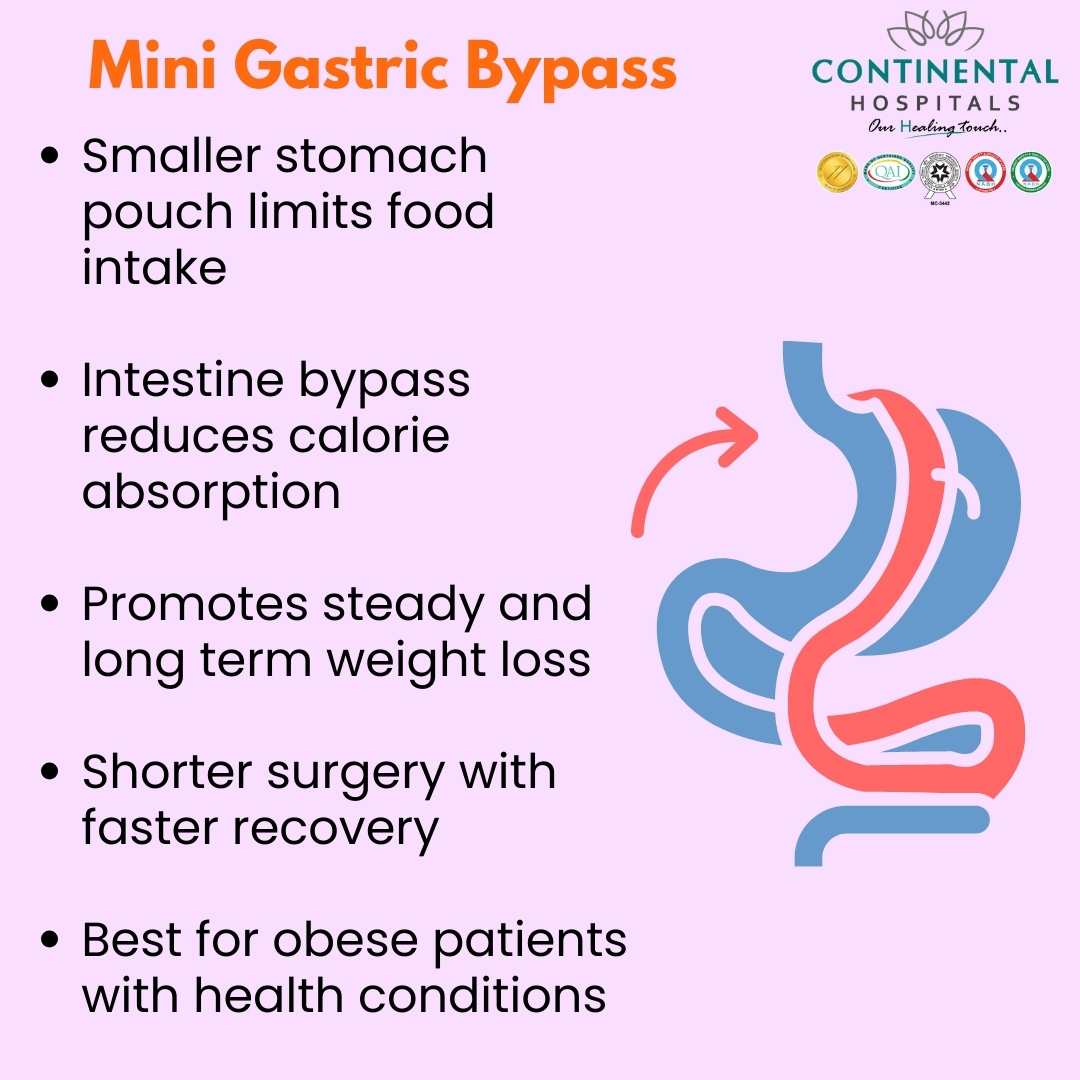
How Mini Gastric Bypass Works
Mini gastric bypass works in two main ways:
Restrictive Effect: A small stomach pouch is created, limiting the amount of food you can eat in one sitting. Patients feel full with smaller meals.
Malabsorptive Effect: A portion of the small intestine is bypassed, which decreases the number of calories and nutrients absorbed from food.
This dual mechanism ensures effective and sustained weight loss while improving metabolic health.

Step-by-Step Overview of the Procedure
Mini gastric bypass surgery is generally performed using minimally invasive laparoscopic techniques. Here is a step-by-step guide to how the surgery is performed:
- The surgeon makes small incisions in the abdomen.
- A small stomach pouch is created using surgical staples.
- The small intestine is divided and connected to the new pouch, allowing food to bypass a section of the intestine.
- The surgical area is checked for leaks and proper blood flow.
- Incisions are closed, and the patient is moved to recovery for monitoring.
The minimally invasive nature of the surgery ensures shorter hospital stays, reduced postoperative pain, and faster recovery compared to traditional open surgery.
Who Should Consider Mini Gastric Bypass?
Mini gastric bypass is suitable for patients who are:
- Obese with a body mass index (BMI) above 35 or 30 with comorbid conditions like diabetes
- Struggling with weight loss despite diet, exercise, and medication
- Looking for an effective long-term solution for obesity-related health issues
- Suitable candidates for bariatric surgery after comprehensive medical evaluation
Patients who previously underwent gastric sleeve surgery but have not achieved desired weight loss may also consider mini bypass after gastric sleeve as an effective secondary procedure.
Mini Gastric Bypass vs Other Bariatric Surgeries
When considering bariatric surgery, patients often compare mini gastric bypass with other procedures such as gastric sleeve and traditional gastric bypass:
- Mini Bypass vs Gastric Sleeve: Mini gastric bypass offers both restriction and reduced calorie absorption, while gastric sleeve primarily restricts food intake. This may lead to more significant weight loss with mini gastric bypass.
- Mini Gastric Bypass vs Gastric Bypass: Mini gastric bypass is technically simpler, involves shorter surgery time, and has fewer complications compared to traditional gastric bypass.
Patients should discuss options with a qualified bariatric surgeon to determine the most suitable procedure for their health goals.
Diet After Mini Gastric Bypass
A structured mini gastric bypass diet is critical for recovery and long-term weight management:
- Phase 1 – Liquid Diet: Clear liquids for the first few days after surgery
- Phase 2 – Soft Foods: Pureed or soft foods to ease digestion
- Phase 3 – Solid Foods: Gradual introduction of high-protein, low-fat, and nutrient-rich foods
- Long-term Maintenance: Balanced diet with small, frequent meals and supplementation of vitamins and minerals as recommended by the surgeon
Following the diet strictly ensures healing, prevents complications, and supports weight loss goals.
Benefits of Mini Gastric Bypass
- Significant and sustained weight loss
- Improvement or remission of type 2 diabetes
- Reduction in high blood pressure and cholesterol
- Relief from sleep apnea and joint pain
- Minimal invasiveness leading to faster recovery
Many patients also report improvement in energy levels, self-confidence, and overall quality of life after surgery.
Risks and Considerations
While mini gastric bypass is generally safe, potential risks include:
- Nutritional deficiencies due to reduced absorption
- Dumping syndrome (rapid movement of food into intestines)
- Gastrointestinal complications such as ulcers or leaks
- Surgical risks like infection or bleeding
Careful patient selection, adherence to dietary guidelines, and follow-up care are essential to minimize these risks.
Why Choose Continental Hospitals for Mini Gastric Bypass?
Continental Hospitals is recognized as one of the best hospitals in Hyderabad for bariatric and metabolic surgery. The hospital holds NABH and JCI accreditations, reflecting international standards of patient safety and clinical excellence.
Key advantages of choosing Continental Hospitals:
- Experienced bariatric surgeons performing mini gastric bypass and revision surgeries
- Advanced laparoscopic technology and modern operating theaters
- Comprehensive care including nutrition counseling, physiotherapy, and post-surgery monitoring
- Multidisciplinary approach ensuring personalized treatment plans
- Patient-centered care with continuous support for recovery and long-term success
Continental Hospitals combines medical expertise with compassionate care, making it a trusted choice for individuals seeking safe and effective weight loss surgery.
Mini Gastric Bypass Results
Patients typically experience significant weight loss within the first 6 to 12 months post-surgery. Improvement in obesity-related conditions such as diabetes, high blood pressure, and cholesterol is often observed. Long-term success depends on adherence to diet, exercise, and follow-up care. Before and after photos and patient journeys highlight the effectiveness of the procedure in transforming health and quality of life.
If you are struggling with obesity or obesity-related health issues, consult an experienced Bariatric Surgeon at Continental Hospitals. Early evaluation and personalized guidance can help determine if mini gastric bypass is the right option for you and improve long-term health outcomes.
Conclusion
Mini gastric bypass is a safe, effective, and minimally invasive bariatric procedure suitable for patients with obesity, diabetes, or insufficient weight loss from previous surgeries. It combines restriction and malabsorption for significant, sustained weight loss.
If you are struggling with obesity or obesity-related health issues, consult our top Bariatric Surgeon at Continental Hospitals. Early evaluation and personalized guidance can help determine if mini gastric bypass is the right option for you and improve long-term health outcomes.
Related Blog topics