.webp)

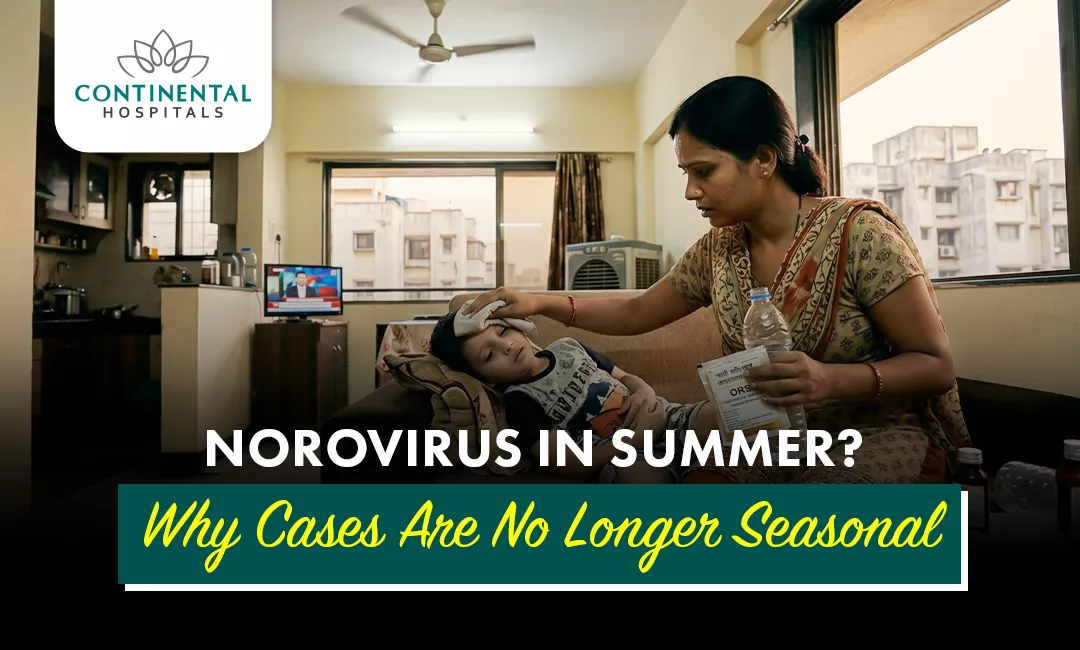
The stomach flu is often associated with the cold, shivering months of winter. For years, medical experts and the public alike viewed norovirus as a seasonal visitor that arrived with the frost and vanished with the spring. However, recent health trends show a significant shift. We are now seeing a rise in norovirus in summer, proving that this resilient virus does not strictly follow the calendar.
Understanding why this shift is happening is crucial for families and individuals. At Continental Hospitals, we believe that staying informed is the first step toward prevention. This guide explores the changing nature of the virus, its symptoms, and how you can protect yourself regardless of the temperature outside.
What is Norovirus?
Norovirus is a highly contagious virus that causes a sudden onset of severe vomiting and diarrhea. It is often referred to as the stomach flu or gastric flu, though it is not related to the influenza virus. The virus spreads through direct contact with an infected person, consuming contaminated food or water, or touching contaminated surfaces and then putting your unwashed hands in your mouth.
What makes norovirus particularly difficult to manage is its durability. It can survive high temperatures and many common disinfectants. This resilience is a primary reason why norovirus in summer has become a growing concern for public health officials globally.
If you are experiencing persistent vomiting, severe abdominal pain, or signs of dehydration, do not ignore the symptoms. Visit our Internal Medicine Department at Continental Hospitals.
Why are we seeing norovirus in summer?
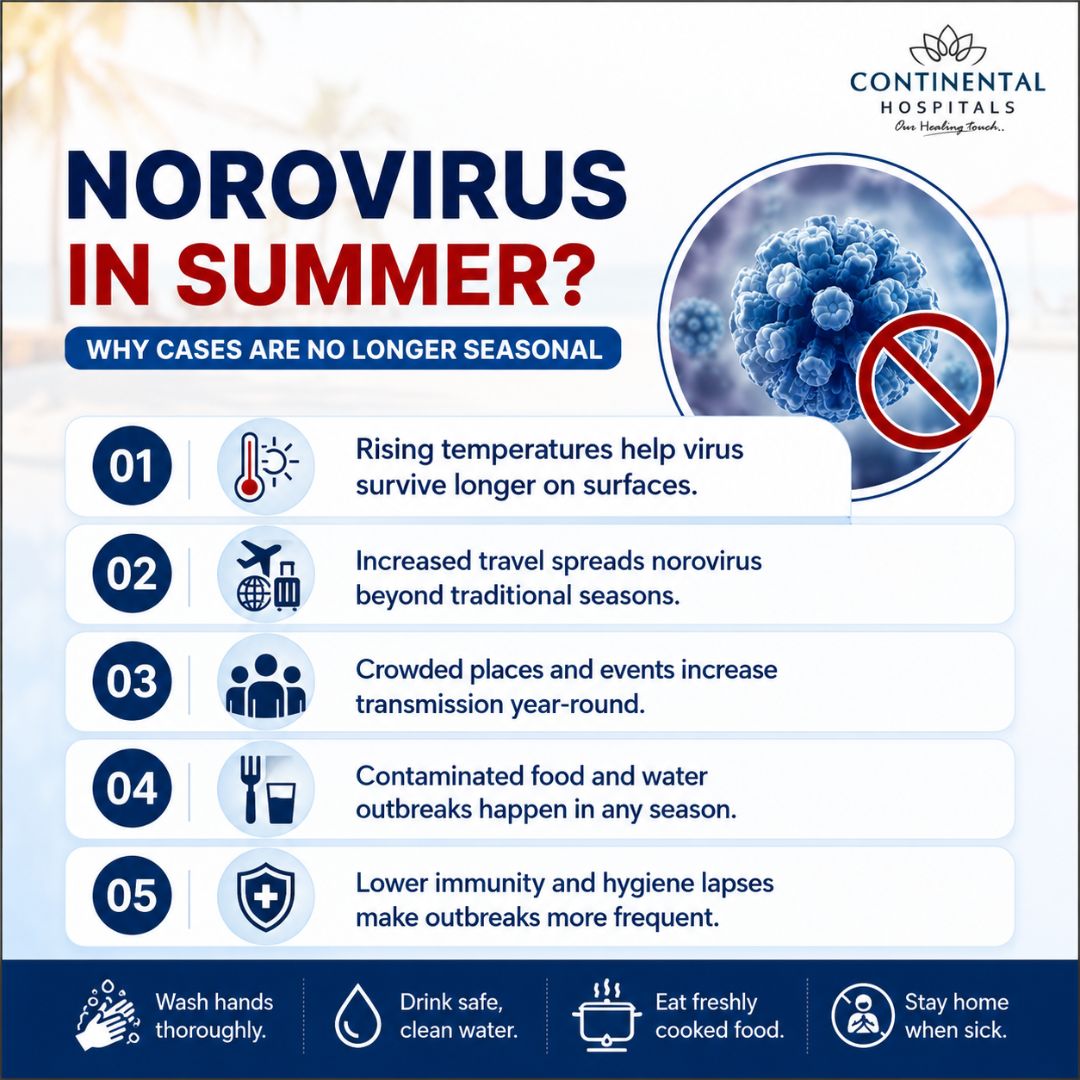
The traditional seasonality of norovirus was linked to people spending more time indoors in close proximity during winter. However, several factors have contributed to the year-round presence of the virus.
1. Increased Global Travel
In the modern world, travel is no longer restricted to specific seasons. Summer is a peak time for international vacations, cruises, and summer camps. These activities bring large groups of people together from different geographic regions, creating a perfect environment for the virus to spread. A virus that may be peaking in one hemisphere can easily be transported to another through air travel.
2. Changing Environmental Conditions
Changing weather patterns have altered the behavior of many pathogens. Warmer temperatures and fluctuating humidity levels can sometimes favor the survival of viruses in environments where they previously struggled. While norovirus still prefers cooler environments, its ability to adapt to varying conditions means that norovirus in summer is no longer an anomaly.
3. Food Safety Challenges
Summer is the season for outdoor dining, picnics, and raw seafood. Norovirus is often linked to contaminated leafy greens, fresh fruits, and shellfish. If food is handled by someone who is ill or if water sources used for irrigation are contaminated, the virus can easily enter the food chain. During summer parties, food left out in the heat can also become a breeding ground for various bacteria and viruses if not handled with professional care.

4. Viral Mutation
Like many other viruses, norovirus continues to evolve. New strains emerge periodically that may not follow traditional seasonal patterns. These new variants can bypass existing immunity in the population, leading to outbreaks at unexpected times of the year, including the height of summer.
Recognizing Norovirus Symptoms
Identifying the virus early is essential to prevent dehydration and further spread. The symptoms usually appear 12 to 48 hours after exposure.
- Nausea and Projectile Vomiting: This is often the first sign of infection.
- Watery Diarrhea: This can lead to rapid fluid loss.
- Stomach Cramps: Sharp pains in the abdomen are common.
- Low-grade Fever: While not always present, a mild fever may occur.
- Headache and Body Aches: General malaise often accompanies gastrointestinal distress.
If you notice these norovirus symptoms, it is vital to monitor fluid intake. Dehydration is the most significant risk associated with a norovirus infection, especially in young children and the elderly.
How the Norovirus Infection Spreads
The norovirus infection is notorious for its ease of transmission. It only takes a very small number of virus particles to make a person sick.
Surface Contamination
The virus can live on hard surfaces like doorknobs, railings, and countertops for weeks. In summer, high-traffic areas like water parks, public restrooms, and hotel lobbies become hotspots for transmission.
Person-to-Person Contact
Shaking hands or sharing utensils with someone who has the virus is a guaranteed way to contract it. Even after a person feels better, they can continue to shed the virus in their stool for two weeks or more.
Waterborne Transmission
Contaminated water in swimming pools or lakes can also lead to a norovirus outbreak. If the water is not properly chlorinated or if there is runoff from contaminated sources, swimmers can accidentally ingest the virus.
Prevention Strategies for the Summer Months
Preventing norovirus in summer requires a combination of good hygiene and situational awareness.
- Handwashing is mandatory: use soap and running water for at least 20 seconds. Alcohol-based hand sanitizers are less effective against norovirus than traditional handwashing.
- Wash Fruits and Vegetables: Thoroughly rinse all produce, especially those that will be eaten raw.
- Cook Shellfish Thoroughly: Avoid raw oysters or undercooked seafood during summer months.
- Disinfect Surfaces: Use a bleach-based cleaner on surfaces if someone in your household is ill.
- Stay Home When Sick: If you have symptoms, do not prepare food for others and stay home for at least 48 hours after symptoms subside.
Why Choose Continental Hospitals for Gastric Care?
When dealing with a persistent seasonal stomach virus or a sudden outbreak, you need a healthcare partner that prioritizes speed, accuracy, and patient safety. Continental Hospitals stands as a leader in healthcare in Hyderabad for several reasons.
Global Standards of Care
Continental Hospitals is built on a foundation of international protocols. We ensure that every patient receives treatment that aligns with global medical benchmarks. Our facility is designed to prevent cross-contamination, which is essential when treating a highly contagious norovirus infection.
Advanced Diagnostic Facilities
Our laboratory services are equipped with the latest technology to quickly identify the specific cause of your gastrointestinal distress. Rapid diagnosis means faster treatment and a quicker path to recovery.
Expert Medical Team
Our gastroenterologists and internal medicine specialists have extensive experience in managing complex viral infections and dehydration. We provide personalized care plans tailored to the needs of each patient.
Accreditations and Excellence
Continental Hospitals holds prestigious accreditations that reflect our commitment to quality. We are proud to be a JCI (Joint Commission International) accredited hospital, which is the gold standard in global healthcare. Additionally, our NABH (National Accreditation Board for Hospitals & Healthcare Providers) accreditation ensures that we maintain the highest standards of patient safety and quality of care in India.
Managing the Stomach Flu Virus at Home
While most people recover from the stomach flu virus without medical intervention, home management must be handled carefully.
- Rehydration: Use oral rehydration salts (ORS) rather than just plain water to replace lost electrolytes.
- Small Sips: If vomiting is frequent, take very small sips of fluid every few minutes.
- Bland Diet: Once you can keep fluids down, transition to a diet of bananas, rice, applesauce, and toast.
- Rest: Allow your body the time it needs to fight the infection.
If symptoms persist for more than three days, or if you see signs of severe dehydration such as dark urine, dizziness, or extreme thirst, seek medical attention immediately.
Conclusion
The emergence of norovirus in summer serves as a reminder that we must remain vigilant about hygiene year-round. While the timing of the virus may have changed, do the methods to combat it remain the same? clean hands, safe food, and professional medical care when needed. By understanding the symptoms and transmission risks, you can protect your family from this uncomfortable and potentially dangerous virus.
If you suffer from persistent vomiting, severe abdominal pain, or signs of dehydration, please consult our best internal medicine specialist in Hyderabad at Continental Hospitals immediately for expert care.
Related Blog Topics: