.webp)

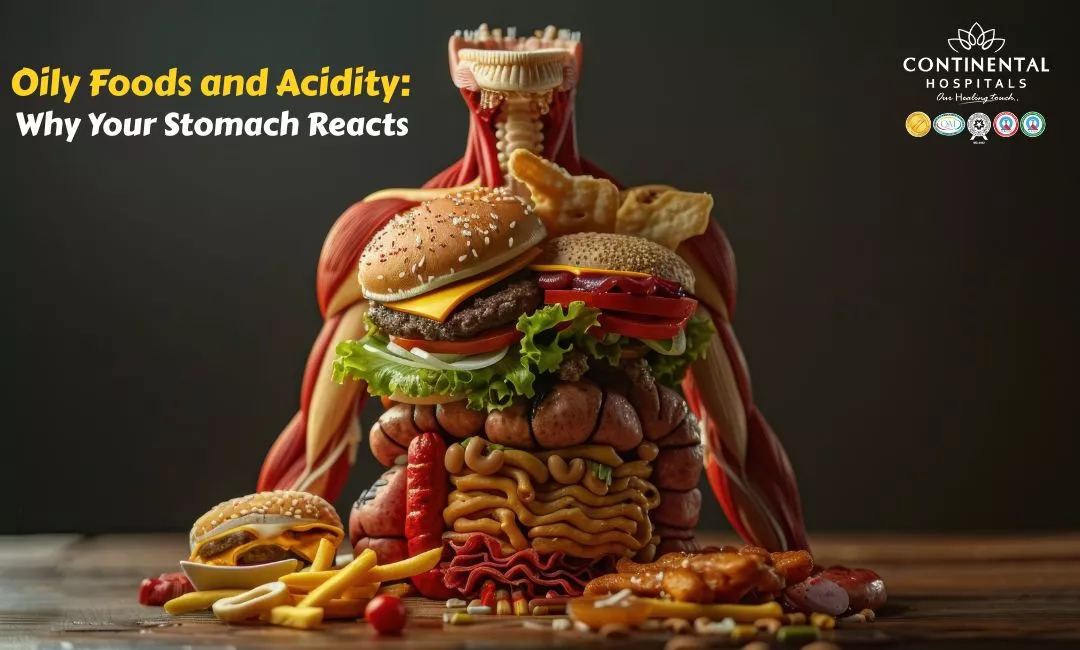
Oily foods are a favorite for many, from crispy fried snacks to creamy fast food dishes. However, while they may satisfy your taste buds, they can often upset your stomach. Many people experience acidity, bloating, and discomfort after consuming oily meals. Understanding why this happens and how to manage it is crucial for maintaining digestive health.
Oily foods are rich in fats, which take longer to digest compared to proteins and carbohydrates. This delay in digestion can increase the production of stomach acid. When the acid rises into the esophagus, it leads to heartburn or acid reflux. Acid reflux from oily foods is a common problem for people who frequently consume fried or greasy meals.
Visit our Gastroenterology department at Continental Hospitals for expert care for acid reflux, indigestion, or heartburn from oily foods.
Why Oily Foods Cause Acidity?
There are several reasons why oily foods trigger acidity and related digestive issues:
Slower Digestion: Fat-rich foods take longer to move through the stomach. This allows acid to build up and irritate the stomach lining.
Relaxation of the Esophageal Valve: Oily meals can weaken the lower esophageal sphincter, the valve that prevents acid from moving up into the esophagus. This can lead to heartburn after oily food.
Increased Acid Production: The stomach responds to fatty foods by producing more acid to break down the fats, which can trigger acidity after eating oily foods.
Bloating and Gas: High-fat meals can cause oily food bloating and gas because fats slow down digestion, giving bacteria in the gut more time to ferment undigested food.
Indigestion: People may experience indigestion from oily food, which includes discomfort, nausea, or a feeling of fullness.

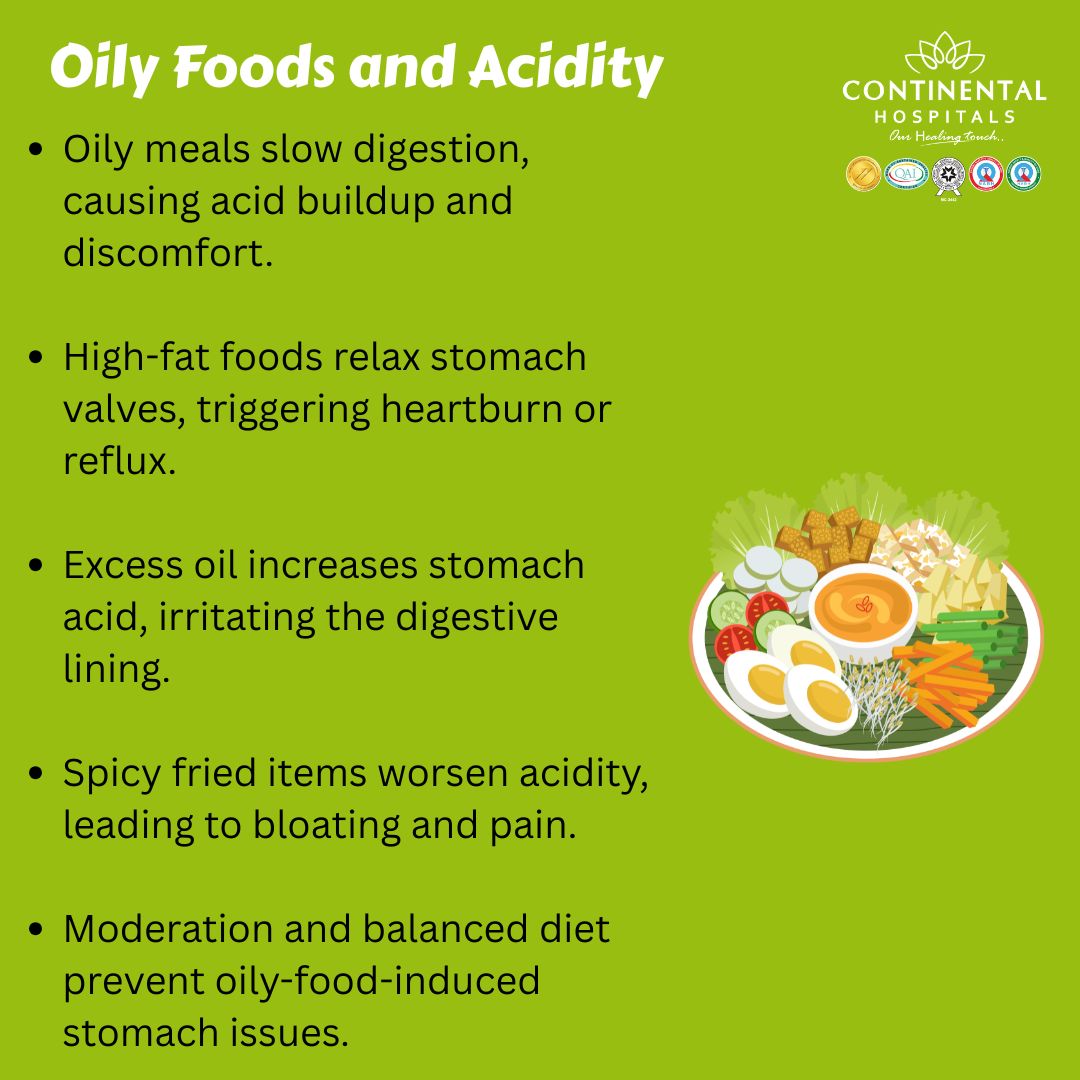
Common Symptoms of Acidity from Oily Foods
If you experience acidity regularly after oily meals, you may notice one or more of the following symptoms:
- Heartburn, a burning sensation in the chest or throat
- Acid reflux from oily foods, causing sour taste in the mouth
- Indigestion from oily food, feeling full or heavy
- Oily food bloating and gas, leading to abdominal discomfort
- Nausea or mild stomach pain after meals
Tips to Reduce Acidity Caused by Oily Foods
While avoiding oily foods completely may not be practical, there are several ways to reduce their impact on your stomach:
Moderation is Key: Limit the portion of oily foods to prevent excessive acid production.
Eat Smaller Meals: Eating smaller, more frequent meals can help the stomach digest food more efficiently.
Include Fiber: Foods rich in fiber, like vegetables, whole grains, and fruits, can help reduce acid reflux from oily foods.
Stay Upright After Eating: Avoid lying down immediately after consuming fatty foods to prevent heartburn.
Hydration: Drink water to help digestion, but avoid excessive liquids with meals as it can increase bloating.
Avoid Late-Night Eating: Consuming oily foods close to bedtime can worsen acidity after eating oily foods.
Junk Food and Acidity
Junk food is one of the leading contributors to stomach acidity. Fast food items, fried snacks, and processed meals are usually high in unhealthy fats. Regular consumption of these foods can lead to chronic acid reflux, indigestion, and even gastritis. People who experience regular heartburn after oily food may benefit from reducing their intake of junk food and choosing healthier alternatives.
Lifestyle Adjustments for a Healthier Stomach
Along with dietary changes, certain lifestyle adjustments can help prevent acidity:
- Avoid smoking and alcohol as they increase acid production
- Maintain a healthy weight, as excess abdominal pressure can worsen acid reflux
- Practice stress management techniques like yoga and meditation
- Regular physical activity can aid digestion and reduce bloating
Why Choose Continental Hospitals for Digestive Health?
Continental Hospitals is recognized as the best hospital in Hyderabad for gastrointestinal and digestive care. The hospital is accredited for its high-quality medical services, patient safety, and advanced technology. Choosing Continental Hospitals ensures:
- Access to experienced gastroenterologists and dieticians
- State-of-the-art diagnostic tools to identify causes of acidity and acid reflux
- Comprehensive treatment plans for conditions like acid reflux from oily foods, indigestion from oily food, and heartburn after oily food
- Personalized patient care to improve digestive health and overall well-being
Points to Remember About Oily Foods and Acidity
- Oily foods slow down digestion, increasing stomach acid
- Acid reflux from oily foods can cause a burning sensation in the chest
- Indigestion from oily food may include nausea and bloating
- Heartburn after oily food is preventable with portion control and lifestyle changes
- Reducing junk food consumption helps prevent chronic acidity
Conclusion
Acidity from oily foods is common, but it can be managed effectively with the right diet, lifestyle changes, and medical guidance. Understanding why oily food causes acidity allows you to make better food choices and maintain digestive health. If you often experience acidity after eating oily foods, bloating, or heartburn, consulting a gastroenterologist is important. At Continental Hospitals, our digestive health specialists provide personalized care to help you enjoy your meals without discomfort. Prioritizing your stomach health ensures a better quality of life and long-term wellness.
Consult our best gastroenterology at Continental Hospitals for expert guidance and treatment if you suffer from acid reflux from oily foods, indigestion from oily food, or heartburn after oily food. Your digestive health is our priority.
Related Blog Topics: