.webp)

Perimenopause is a natural hormonal transition that begins years before menopause. Many women experience early changes in their 30s and 40s but often dismiss them as stress, aging, or lifestyle issues. Understanding the signs of perimenopause can help you take timely steps to protect your health, wellbeing, and quality of life.
This detailed guide explains perimenopause fatigue, weight changes, anxiety, unusual symptoms, supplements, and treatment options in clear, simple language, helping you recognize when your body is asking for attention.
If you notice signs of perimenopause, visit our Gynecology Specilaity at Continental Hospitals for expert evaluation and personalized long term care.
Perimenopause means around menopause. It is the phase when estrogen and progesterone levels begin to fluctuate. This stage can last several years before periods stop completely.
Many women ask, can perimenopause start at age 40? Yes. Some women notice symptoms even in their mid to late 30s. Recognizing symptoms of perimenopause early helps prevent unnecessary discomfort and long term health issues.
Signs of Perimenopause You Should Not Ignore
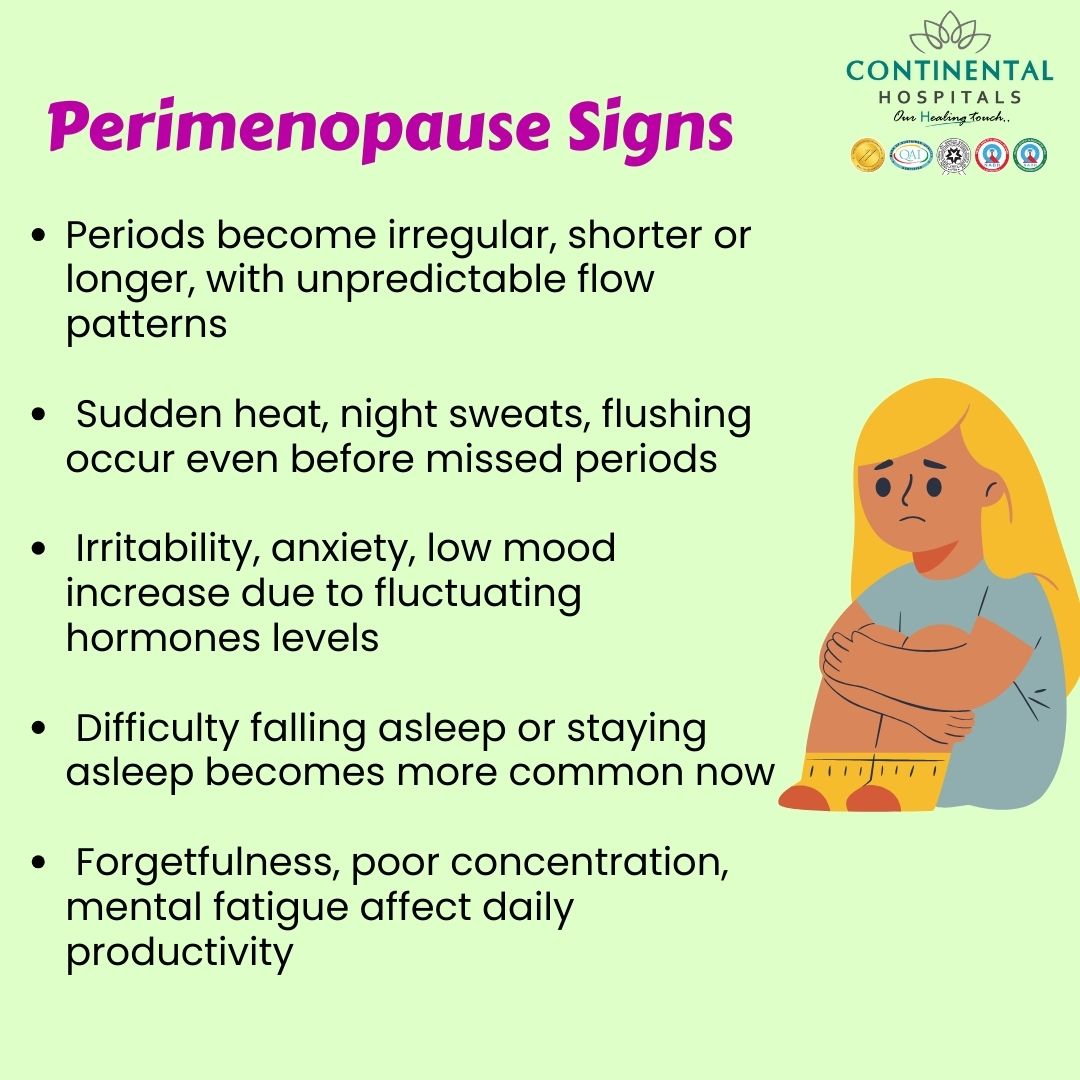
Hormonal changes affect the whole body, not just periods. Common signs of perimenopause include physical, emotional, and mental changes.
Key signs include
- Irregular periods or changes in flow
- Persistent tiredness and low energy
- Weight gain around the abdomen
- Mood changes and anxiety
- Sleep disturbances
- Reduced focus and memory issues
These symptoms may come and go, making them easy to overlook.

Perimenopause Symptoms at Age 40
Many women search for perimenopause symptoms age 40 because this is when changes become noticeable.
At this stage, hormone levels rise and fall unpredictably, leading to:
- Shorter or longer menstrual cycles
- Increased premenstrual symptoms
- Sudden hot sensations
- Headaches or body aches
- Increased sensitivity to stress
Is it normal to feel different every month? Yes. Hormonal fluctuation is a defining feature of perimenopause.
Understanding Perimenopause Fatigue
Perimenopause fatigue is one of the most common and frustrating symptoms. Women often describe feeling exhausted even after adequate rest.
Why does this happen?
- Poor sleep due to night sweats or anxiety
- Hormonal impact on energy metabolism
- Increased mental load and stress response
Fatigue can affect productivity, family life, and emotional health. Addressing it early can restore daily energy levels.
Perimenopause Anxiety and Mood Changes
Hormonal shifts affect brain chemicals responsible for mood regulation. Perimenopause anxiety may appear suddenly, even in women with no previous anxiety history.
You may notice:
- Irritability or mood swings
- Unexplained worry
- Low motivation
- Feeling overwhelmed easily
Is anxiety a symptom of perimenopause? Yes. Hormonal imbalance can amplify emotional responses, making stress feel harder to manage.
Perimenopause Weight Gain and Weight Loss
Weight changes are another major concern. Perimenopause weight gain often occurs around the waist and abdomen.
Reasons include:
- Slower metabolism
- Insulin sensitivity changes
- Reduced muscle mass
- Hormonal influence on fat storage
Some women also experience perimenopause weight loss due to appetite changes, digestive sensitivity, or stress. Both patterns deserve medical evaluation to rule out other causes.
Unusual Symptoms of Perimenopause
Not all symptoms are widely discussed. Unusual symptoms of perimenopause can include:
- Joint pain or stiffness
- Heart palpitations
- Burning mouth sensation
- Changes in body odor
- Increased allergies or skin sensitivity
These symptoms may seem unrelated but often stem from hormonal fluctuations.
Perimenopause Supplements and Nutrition Support
Lifestyle and nutrition play a vital role during perimenopause. Perimenopause supplements may help support hormonal balance when guided by a doctor.
Commonly recommended supplements include:
- Calcium and vitamin D for bone health
- Magnesium for sleep and muscle relaxation
- Omega 3 fatty acids for mood and inflammation
- B complex vitamins for energy metabolism
Should you start supplements on your own? It is always safer to consult a specialist for personalized guidance.
Perimenopause Treatment Options
Perimenopause treatment focuses on symptom relief, hormone balance, and long term health protection.
Treatment options may include:
- Lifestyle changes and stress management
- Nutritional planning
- Hormonal or non hormonal medical therapy
- Sleep optimization strategies
- Mental health support
Treatment is not one size fits all. A personalized approach ensures better outcomes and fewer side effects.
Why Early Care Matters for Women and Families
Women in their 30s and 40s often manage multiple responsibilities, including careers, family care, and child health checkup routines. Ignoring personal health can affect the entire household.
Choosing the Best hospital in Hyderabad ensures comprehensive care for women while supporting overall family wellness through preventive services, including child health checkup programs and long term health planning.
Why Choose Continental Hospitals?
Continental Hospitals is recognized as one of the Best hospital in Hyderabad, offering world class care across multiple specialties.
Key reasons to choose Continental Hospitals include:
- Internationally accredited healthcare standards
- Experienced gynecologists, endocrinologists, and internal medicine specialists
- Advanced diagnostic facilities for hormonal evaluation
- Integrated care approach for women and families
- Strong focus on preventive health and wellness
The hospital follows globally accepted clinical protocols and quality benchmarks, ensuring safe, reliable, and ethical care for every patient.
When Should You See a Doctor?
You should consult a doctor if:
- Symptoms interfere with daily life
- Fatigue or anxiety persists for months
- Period changes are severe or unpredictable
- Weight changes are sudden or unexplained
Early evaluation helps prevent complications and improves quality of life.
If you are experiencing signs of perimenopause, consult a Gynecologist or Internal Medicine specialist at Continental Hospitals. Expert assessment helps identify hormonal imbalances and tailor treatment plans that support long term health.
Conclusion
Perimenopause is a natural transition, but its symptoms should not be ignored. From fatigue and anxiety to weight changes and unusual symptoms, early awareness empowers women to take control of their health. With expert care, personalized treatment, and preventive focus, women can navigate this phase with confidence and comfort.
If you are experiencing signs of perimenopause, consult our top Gynecologist at Continental Hospitals. Expert assessment helps identify hormonal imbalances and tailor treatment plans that support long term health.
Related Blog Topics
- Understanding Menopause
- Top 5 Things to Understand About Menopause
- Coping with Menopause: Hormone and Lifestyle Tips