
post-title

Posture and Chronic Back Pain: Causes, Effects, and Solutions

Written by - Editorial Team
Medically Reviewed by - Dr S Kiran Reddy

Posture and chronic back pain are closely connected, yet often ignored in daily life. Many people live with constant back pain without realizing that the way they sit, stand, work, or sleep plays a major role. Poor posture silently strains muscles, joints, and the spine, leading to long term discomfort and reduced quality of life.

At Continental Hospitals, Hyderabad, doctors frequently see patients whose chronic back pain started with simple posture problems. The good news is that posture related back pain can be prevented, managed, and relieved with the right guidance and care.

Visit our top orthopedic doctors in Hyderabad at Continental Hospitals, Hyderabad, for expert diagnosis, posture correction, and personalized care for lasting back pain relief.

What Is Posture and Why Does It Matter?

Posture refers to how your body is positioned while sitting, standing, walking, or lying down. Good posture keeps your spine aligned and balances the body evenly. Poor posture puts extra pressure on muscles and spinal discs, increasing the risk of back pain.

Posture and chronic back pain often develop together when incorrect body positions are repeated daily at work, during travel, or even while using mobile phones.
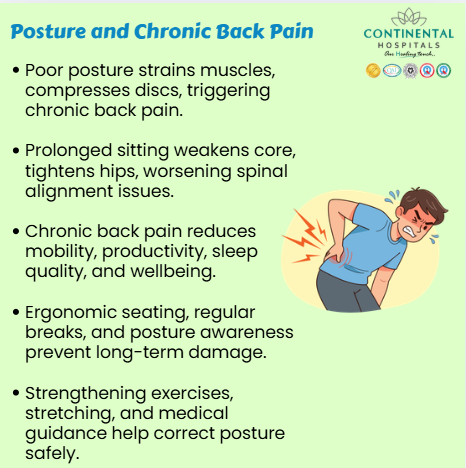
How Posture and Chronic Back Pain Are Connected?

Posture and chronic back pain share a direct cause and effect relationship. When posture problems persist for months or years, the spine adapts to incorrect alignment. This leads to muscle fatigue, stiffness, and nerve compression.

Common links include:

  • Slouching while sitting causes lower back pain and neck strain
  • Forward head posture increases pressure on the cervical spine
  • Standing with uneven weight distribution affects spinal balance
  • Sleeping in awkward positions worsens chronic back pain

Over time, these habits turn occasional back pain into chronic back pain.

Second Opinion

What are the common causes of posture-related chronic back pain?

Several daily habits contribute to posture and chronic back pain. Understanding these causes helps in prevention and long-term relief.

Poor Sitting Habits
Long hours at desks with rounded shoulders and bent backs strain spinal muscles.

Prolonged Screen Use
Looking down at phones or laptops causes neck and upper back pain.

Weak Core Muscles
A weak core fails to support the spine, leading to posture problems.

Lack of Physical Activity
Inactivity stiffens muscles and reduces flexibility, worsening back pain.

Incorrect Sleeping Posture
Poor mattress support and wrong sleeping positions contribute to lower back pain.

Effects of Chronic Back Pain on Daily Life?

Chronic back pain affects more than just physical comfort. It impacts work productivity, sleep quality, and emotional well-being.

Need an Appointment?

Some common effects include:

  • Persistent lower back pain and stiffness
  • Difficulty sitting or standing for long periods
  • Reduced mobility and flexibility
  • Poor concentration due to constant discomfort
  • Increased stress and fatigue

Ignoring posture and chronic back pain may lead to spinal degeneration and long-term complications.

Signs Your Posture Is Causing Back Pain?

How do you know if posture problems are behind your back pain?

Watch for these warning signs:

  • Back pain that worsens after sitting or standing
  • Neck pain along with shoulder stiffness
  • Frequent headaches linked to neck tension
  • Pain relief when lying down
  • Uneven shoulder or hip alignment

If these symptoms persist, medical evaluation is essential.

How to Fix Posture and Reduce Chronic Back Pain?

Improving posture is a key step toward chronic back pain relief. Small changes practiced daily can make a big difference.

Simple Ways to Improve Posture

  • Sit with your back straight and shoulders relaxed
  • Keep feet flat on the floor while sitting
  • Adjust screen height to eye level
  • Take short movement breaks every hour
  • Sleep on a supportive mattress

What Exercises Support Better Posture?

Doctors often recommend gentle exercises to strengthen muscles and improve posture.

Helpful exercises include:

  • Core strengthening movements
  • Stretching for the back and hips
  • Neck and shoulder mobility exercises
  • Walking and low impact activities

Always consult a specialist before starting exercise if you have chronic back pain.

What are the best medical solutions for posture-related chronic back pain?

When lifestyle changes alone are not enough, medical care becomes important. At Continental Hospitals, a multidisciplinary approach ensures accurate diagnosis and personalized treatment.

Treatment options may include:

  • Posture assessment and correction programs
  • Physiotherapy and rehabilitation
  • Pain management techniques
  • Spine health evaluation
  • Advanced imaging when needed

Early medical care prevents progression of posture related back pain.

Why Choose Continental Hospitals for Back Pain Care?

Continental Hospitals is recognized as one of the best hospitals in Hyderabad, offering advanced care for posture and chronic back pain.

Key reasons to choose Continental Hospitals:

  • Team of experienced spine specialists and orthopaedic doctors
  • Advanced diagnostic and rehabilitation facilities
  • National and international accreditations ensuring quality and safety
  • Evidence based treatment protocols
  • Patient centered care with a holistic approach

The hospital follows strict clinical standards and global best practices, ensuring reliable and trusted healthcare outcomes.

How can I prevent chronic back pain and protect my spine?

Preventing posture and chronic back pain starts with awareness and consistency.

Follow these simple tips:

  • Maintain correct posture throughout the day
  • Stay physically active
  • Avoid prolonged sitting without breaks
  • Use ergonomic furniture
  • Seek medical advice early for back pain

Healthy posture today protects your spine for the future.

Conclusion

Posture and chronic back pain are deeply connected, but they are not permanent problems. With awareness, posture correction, and timely medical care, chronic back pain can be managed effectively. Ignoring posture problems allows back pain to worsen, while early action supports long-term spine health and mobility.

If you suffer from chronic back pain, do not delay seeking expert care. Early diagnosis and proper posture correction can prevent complications and improve quality of life.

Consult our Best Orthopedic Specialists in Hyderabad at Continental Hospitals, Hyderabad. Our expert team focuses on identifying the root cause of posture and back pain and providing personalized treatment for lasting relief.

Related Blog Topics:

  1. How Poor Posture Causes Neck Pain?
  2. Medical Cannabis for Chronic Pain: Is It Right for You?

Frequently Asked Questions

Poor posture places unnecessary stress on the muscles, ligaments, joints, and spinal discs. Sitting or standing with rounded shoulders, a forward head, or a slouched back forces the spine out of its natural alignment. Over time, these abnormal positions create muscle fatigue and uneven pressure on the lower back, neck, and shoulders. The body must work harder to support the spine, increasing the risk of inflammation and stiffness. Repeated strain can also contribute to disc degeneration and joint irritation. Poor posture often reduces flexibility and weakens core muscles, making back pain more persistent. Correcting posture, strengthening supporting muscles, and maintaining regular movement can significantly reduce chronic back pain and improve spinal health.
Persistent back or neck pain is one of the most common signs of posture-related problems. You may also notice shoulder stiffness, headaches, muscle tightness, or fatigue after sitting for long periods. Difficulty standing upright comfortably or feeling relief only after stretching can indicate poor spinal alignment. Uneven shoulders, a rounded upper back, or a forward head position are visible warning signs. Tingling or numbness in the arms or legs may occur if nerves become compressed. Reduced flexibility and discomfort while walking or lifting objects are additional indicators. Early evaluation by a spine specialist or physiotherapist can identify posture issues before they become chronic.
Yes, prolonged sitting is a major contributor to chronic back pain. Sitting for extended periods increases pressure on the lumbar spine, especially when posture is poor. Tight hip muscles and weakened core muscles further reduce spinal support. Many people unknowingly lean forward toward computer screens, increasing strain on the neck and upper back. Reduced movement also limits blood circulation to muscles, leading to stiffness and discomfort. Taking regular breaks every 30 to 60 minutes, using an ergonomic chair, and maintaining proper desk setup can reduce stress on the spine. Combining these habits with daily stretching and strengthening exercises helps prevent long-term back problems.
Improving posture can significantly reduce chronic back pain for many individuals. Proper spinal alignment distributes body weight evenly, reducing pressure on muscles, joints, and discs. Good posture also improves muscle efficiency, allowing the body to move with less effort. Strengthening the core, back, and hip muscles provides better support for the spine. Regular stretching helps reduce muscle tightness caused by prolonged sitting or standing. Ergonomic adjustments at work and home further improve posture throughout the day. While posture correction may not eliminate pain caused by severe spinal conditions, it often reduces symptoms and improves overall quality of life.
Exercises that strengthen the core, back, and glute muscles are highly effective for improving posture. Planks, bridges, bird-dog exercises, and pelvic tilts help stabilize the spine. Stretching the chest, hamstrings, hip flexors, and shoulders reduces muscle tightness that contributes to poor posture. Yoga and Pilates also improve flexibility, balance, and body awareness. Walking and swimming are low-impact activities that support spinal health without placing excessive stress on joints. A physiotherapist can recommend exercises tailored to your specific condition and fitness level. Performing these exercises consistently is essential for long-term improvement.
You should consult a doctor if back pain lasts longer than a few weeks despite self-care measures. Seek medical attention immediately if pain is severe, follows an injury, or is associated with numbness, weakness, or loss of bladder or bowel control. Pain that spreads to the legs or interferes with sleep and daily activities also requires evaluation. A specialist may recommend imaging tests to identify disc problems, arthritis, or nerve compression. Early diagnosis helps prevent complications and allows timely treatment. Depending on the cause, treatment may include physiotherapy, medications, lifestyle changes, or advanced spine procedures.
Yes, untreated poor posture can contribute to long-term spinal health issues. Constant stress on the spine accelerates wear and tear of discs and joints, increasing the risk of degenerative conditions. Chronic muscle imbalance can alter spinal alignment and reduce mobility. Poor posture may also contribute to neck pain, tension headaches, and shoulder problems. In some individuals, prolonged abnormal posture may worsen conditions such as scoliosis or spinal stenosis. Maintaining proper posture, staying physically active, and strengthening supporting muscles help protect the spine over time. Regular medical evaluation is recommended if symptoms persist or worsen.
Maintaining good posture starts with keeping your ears, shoulders, and hips aligned while standing and sitting. Use a chair that supports the natural curve of your lower back and keep both feet flat on the floor. Position computer screens at eye level to avoid leaning forward. Lift heavy objects by bending your knees instead of your back. Avoid remaining in one position for long periods and take regular movement breaks throughout the day. Sleep on a supportive mattress with a pillow that keeps your neck aligned. Combining these habits with regular exercise helps maintain healthy posture and reduces the risk of chronic back pain.
Disclaimer: The information provided in this blog is intended for general knowledge and informational purposes only, and does not constitute medical advice. Always consult with a qualified healthcare professional for any medical concerns or before making any decisions about your health.

Get in Touch With Us

Whether you are from India or abroad, we are here to help you with your medical queries. Please fill out the form below and our team will connect with you shortly.

  • ✔ Quick response from our medical experts
  • ✔ Secure data handling & privacy
  • ✔ Easy upload for reports & documents
banner_image

Chat with our medical experts on WhatsApp for quick assistance and hassle-free appointment booking

Recent Posts