.webp)

Pregnancy is a beautiful and life-changing journey. But along with happiness and excitement, many women also hear advice from family, friends, and social media. Some of this advice is helpful, but much of it is based on pregnancy myths that can harm women’s health.
Believing the wrong information can affect pregnancy care, pregnancy nutrition, and even emotional well-being. In this blog, our experts at Continental Hospitals, the best hospital in Hyderabad, explain common pregnancy myths and share medically correct guidance to help you experience a healthy pregnancy.
Why Understanding Pregnancy Myths Matters
Many pregnancy myths are passed down through generations. While they may sound harmless, some can lead to:
• Poor pregnancy nutrition
• Avoiding safe exercise in pregnancy
• Delaying medical checkups
• Unnecessary stress and fear
• Ignoring serious pregnancy symptoms
Accurate information helps every pregnant woman make safe choices for herself and her baby.
Visit our Gynecologist Department at Continental Hospitals, Hyderabad, for expert pregnancy care, nutrition advice, and safe delivery guidance. Book now.
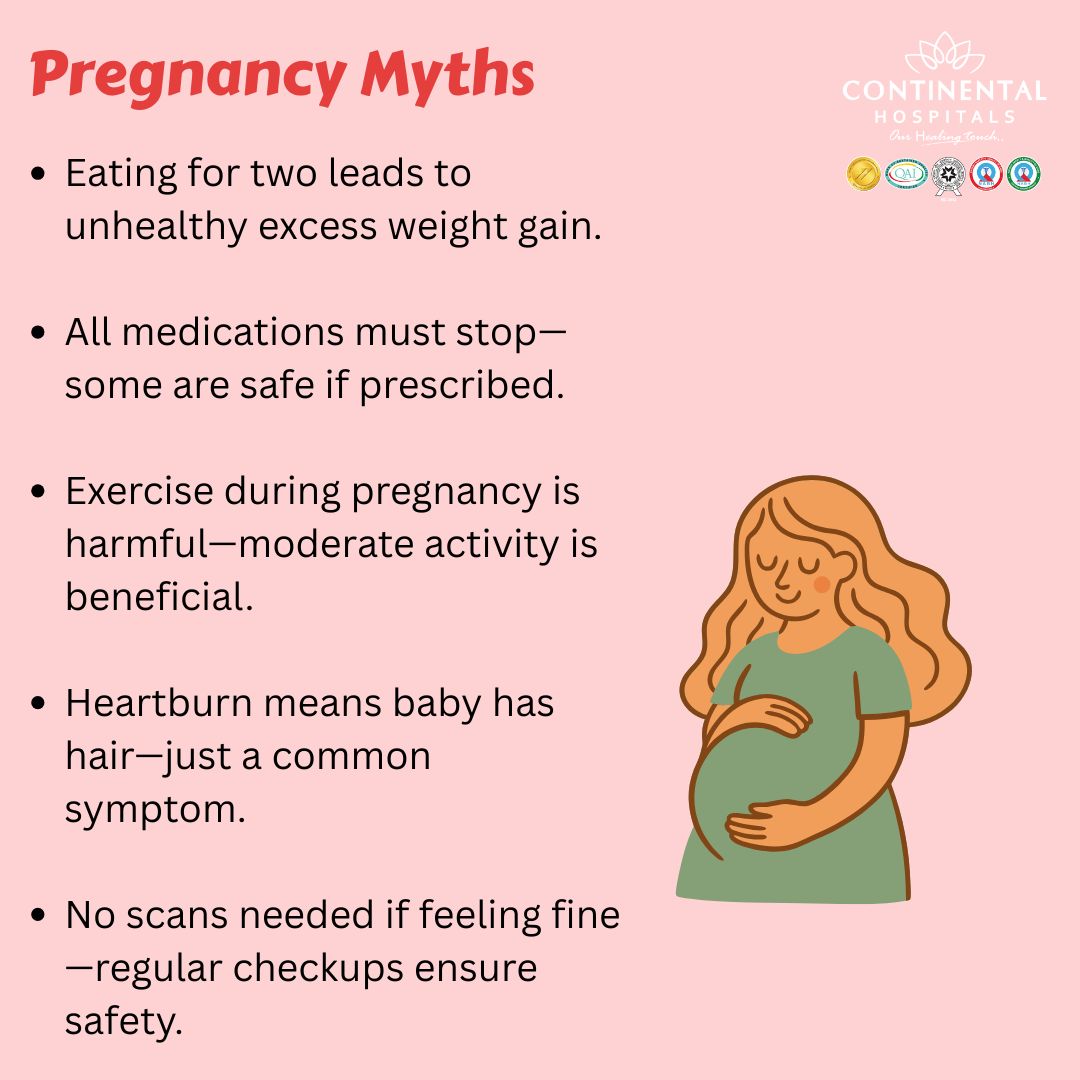
Common Pregnancy Myths That Can Harm Women’s Health
1. Myth: You Need to Eat for Two?
One of the most common pregnancy myths is that a pregnant woman must eat double the quantity of food.

Truth:
You do not need to eat twice as much. You need to eat twice as healthy. Pregnancy nutrition should focus on quality, not quantity.
Healthy pregnancy tips include:
• Eating balanced meals with protein, iron, calcium, and folic acid
• Including fruits, vegetables, whole grains, and healthy fats
• Avoiding junk food and excess sugar
Overeating can lead to excessive weight gain, gestational diabetes, and high blood pressure.
2. Myth: Exercise in Pregnancy Is Dangerous?
Many women are told to avoid physical activity during pregnancy.
Truth:
In most cases, moderate exercise in pregnancy is safe and beneficial. Walking, prenatal yoga, and light stretching improve blood circulation, reduce back pain, and prepare the body for delivery.
Exercise in pregnancy can help:
• Control weight gain
• Reduce stress
• Improve sleep
• Lower the risk of complications
However, always consult your obstetrician before starting any fitness routine.
3. Myth: Heartburn Means the Baby Has More Hair?
This is a popular belief among families.
Truth:
Heartburn during pregnancy is caused by hormonal changes and pressure on the stomach. It has nothing to do with how much hair the baby has.
Ignoring persistent heartburn can lead to discomfort and poor nutrition. Proper pregnancy care includes discussing such pregnancy symptoms with your doctor.
4. Myth: You Should Avoid All Medicines During Pregnancy?
Some women stop taking necessary medications out of fear.
Truth:
Not all medicines are harmful. In fact, stopping prescribed treatment without medical advice can be dangerous.
If you are pregnant and have conditions such as thyroid disorders, diabetes, or hypertension, proper medical supervision is essential. Never stop or start medicines without consulting your specialist.
5. Myth: Morning Sickness Only Happens in the Morning?
This is one of the most misunderstood pregnancy myths.
Truth:
Nausea and vomiting can happen at any time of the day. Some women may experience it throughout the day.
Severe vomiting can lead to dehydration and weakness. If pregnancy symptoms become intense, seek medical help immediately.
6. Myth: Stress Does Not Affect Pregnancy?
Many believe emotional health does not impact the baby.
Truth:
Emotional well-being is very important for a healthy pregnancy. Long-term stress can increase blood pressure and affect sleep and appetite.
Good pregnancy care includes:
• Regular prenatal visits
• Adequate rest
• Support from family
• Professional counseling if needed
Mental health is as important as physical health during pregnancy.
7. Myth: Bed Rest Is Always Necessary?
Unless your doctor advises bed rest for specific medical reasons, complete inactivity is not required.
Staying active helps improve blood flow and prevents complications such as blood clots. Controlled movement and light activity support a healthy pregnancy.
Pregnancy Nutrition Facts Every Woman Should Know
Proper pregnancy nutrition plays a major role in the growth and development of the baby.
Important nutrients include:
• Folic acid to prevent birth defects
• Iron to prevent anemia
• Calcium for strong bones
• Protein for baby’s growth
• Omega fatty acids for brain development
Avoiding food groups based on pregnancy myths can cause nutritional deficiencies. Always follow medically approved pregnancy tips from your obstetrician.
Recognizing Important Pregnancy Symptoms?
Not all symptoms should be ignored. Contact your doctor if you experience:
• Severe abdominal pain
• Heavy bleeding
• Severe swelling in hands or face
• Persistent headaches
• Reduced baby movements
Timely pregnancy care can prevent serious complications.
Why choose Continental Hospitals?
• Recognized as the best hospital in Hyderabad
• NABH and JCI accredited institution ensuring global standards of quality and safety
• Experienced obstetricians, gynecologists, neonatologists, and fetal medicine specialists
• Advanced labor and delivery suites
• High-risk pregnancy management facilities
• Level III Neonatal Intensive Care Unit
• Comprehensive diagnostic and imaging services
• 24/7 emergency and maternal care support
Our accreditations reflect our dedication to patient safety, clinical excellence, and ethical healthcare practices. Every pregnant woman receives personalized care based on her medical needs.
Practical Pregnancy Tips for a Healthy Journey
Follow these simple pregnancy tips:
• Attend regular prenatal checkups
• Maintain a balanced diet
• Stay hydrated
• Practice safe exercise in pregnancy
• Avoid alcohol and tobacco
• Take prescribed supplements regularly
• Get adequate sleep
• Communicate openly with your doctor
Ignoring medical advice due to pregnancy myths can put both mother and baby at risk.
The Importance of Evidence-Based Pregnancy Care
Medical science continues to evolve. What was believed decades ago may not be scientifically accurate today. Relying on evidence-based pregnancy care ensures:
• Early detection of complications
• Safe monitoring of fetal growth
• Proper management of pregnancy symptoms
• Reduced risk during delivery
At Continental Hospitals, our specialists combine clinical expertise with advanced technology to provide safe and comprehensive pregnancy care.
When Should You Consult a Doctor?
If you are pregnant and notice unusual pregnancy symptoms or have concerns about pregnancy myths, do not rely on online advice or unverified sources.
Consult a qualified obstetrician immediately if you experience:
• Severe nausea or vomiting
• High blood pressure
• Bleeding or fluid leakage
• Persistent abdominal pain
• Sudden swelling
Early consultation can protect both mother and baby.
Conclusion
Pregnancy myths can create confusion, fear, and sometimes serious health risks. Understanding the truth helps women make informed decisions and experience a safe and healthy pregnancy.
Every pregnant woman deserves accurate guidance, compassionate support, and expert medical care. Do not let pregnancy myths control your choices. Trust qualified healthcare professionals who prioritize your well-being.
If you are pregnant or planning pregnancy and have concerns about pregnancy symptoms, pregnancy nutrition, or safe exercise in pregnancy, consult our best gynecologist at Continental Hospitals, the best hospital in Hyderabad. Early medical guidance can make all the difference in ensuring a healthy pregnancy and safe delivery.
Related Blog Topics: