.webp)

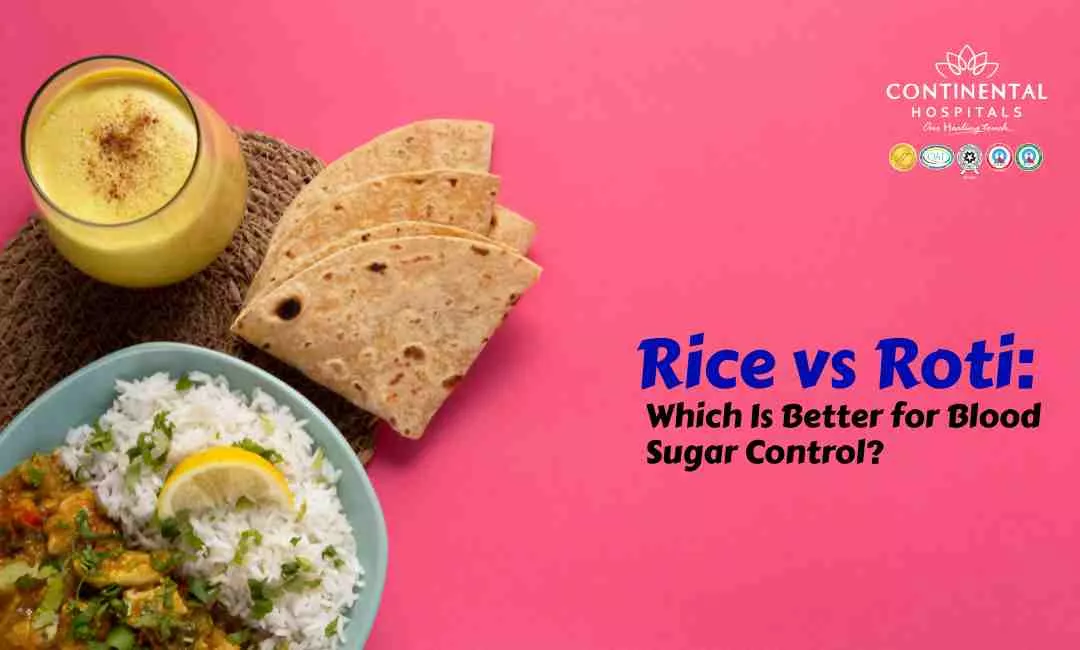
Managing blood sugar levels has become an important health goal for many people, especially those living with diabetes, prediabetes, or weight concerns. One common question seen in Indian households and clinics is simple but significant: rice vs roti, which is better for blood sugar control?
Rice and roti are staple foods across India. Both provide energy, comfort, and nutrition, yet they affect the body differently. Understanding how rice vs roti impacts blood sugar, weight, and overall health can help you make smarter daily food choices without giving up traditional meals.
Why Blood Sugar Control Matters?
Blood sugar levels rise after eating carbohydrates. When blood sugar remains high for long periods, it can increase the risk of diabetes complications, heart disease, nerve damage, kidney problems, and weight gain.
Choosing the right carbohydrates plays a major role in:
- Keeping blood sugar stable
- Preventing sudden sugar spikes
- Supporting long term metabolic health
- Managing weight and energy levels
That is why the debate around rice vs roti blood sugar control matters so much.
Fluctuating blood sugar or diabetes concerns? Visit our Diabetology & Endocrinology Department at Continental Hospitals.
Understanding Rice and Its Effect on Blood Sugar
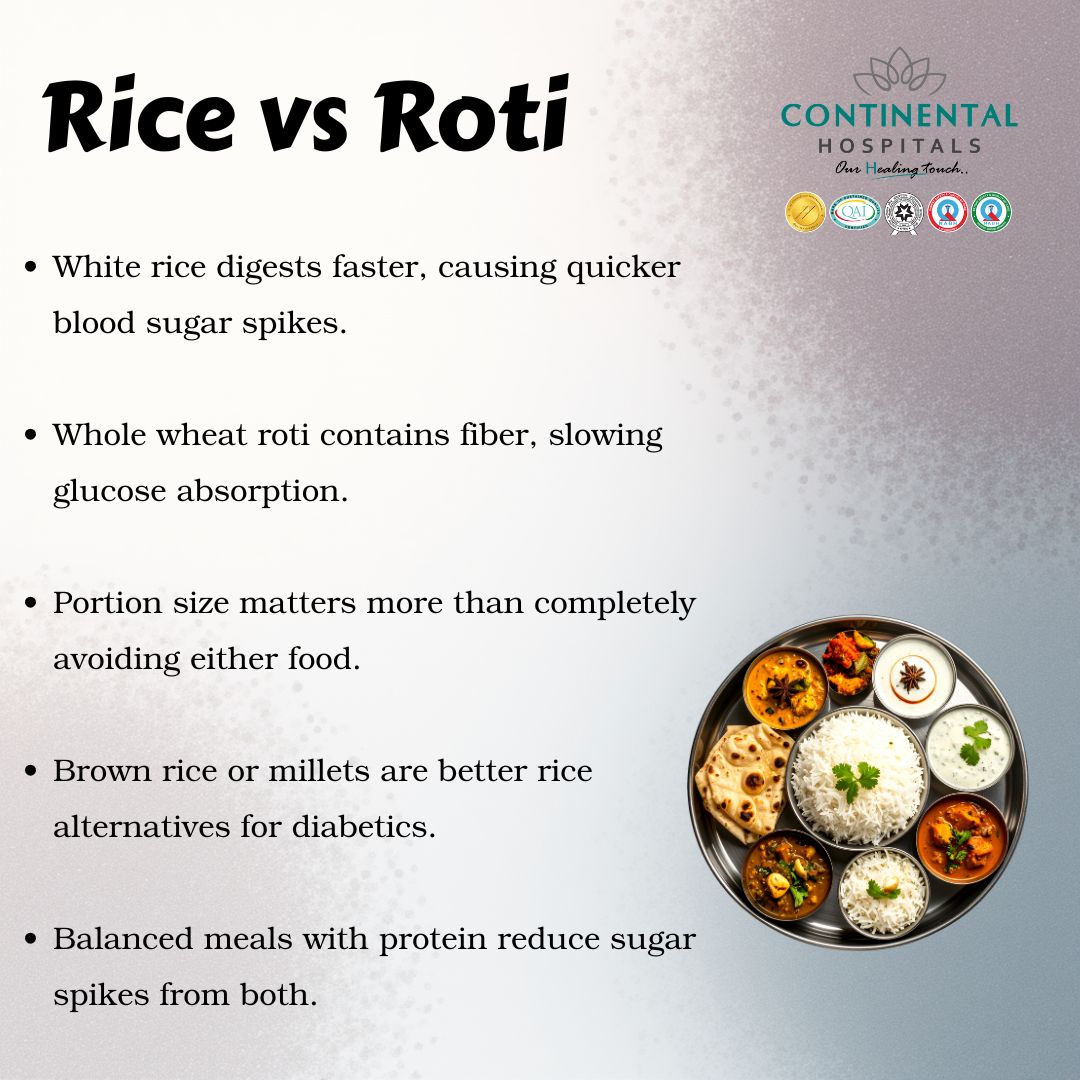
Rice is widely consumed in India, especially white rice. It is easy to digest and provides quick energy, but this can also cause rapid blood sugar spikes.
- Rice Nutrition Basics
- High in carbohydrates
- Low in fiber, especially white rice
- Easily digested
- Raises blood glucose quickly
Is Rice Good for Diabetics?
This depends on the type and portion size.
White rice tends to increase blood sugar faster due to its high glycemic index. Brown rice, hand pounded rice, and parboiled rice contain more fiber and slow digestion slightly, making them a better option for blood sugar control when eaten in moderation.

Rice vs roti for diabetes often favors roti, but rice does not need to be completely avoided. The key is balance.
Understanding Roti and Its Effect on Blood Sugar
Roti is usually made from whole wheat flour. Compared to white rice, roti digests more slowly and releases glucose gradually.
Roti Nutrition Basics
- Contains complex carbohydrates
- Higher fiber content
- Slower digestion
- More stable blood sugar response
Is Roti Good for Diabetics?
Yes, roti made from whole wheat, multigrain, or millet flours is often considered better for diabetics. The fiber helps slow glucose absorption and reduces sharp blood sugar spikes.
This is why rice vs roti which is better for diabetes usually leans toward roti.
Rice vs Roti Blood Sugar Impact Explained Simply
| Factor | Rice | Roti |
|---|---|---|
| Digestion speed | Fast | Slower |
| Fiber content | Low in white rice | Higher |
| Blood sugar spike | Higher | Lower |
| Satiety | Shorter | Longer |
| Portion control | Easy to overeat | Easier to manage |
When comparing rice vs roti blood sugar response, roti often offers better control, especially for people with diabetes or insulin resistance.
Rice vs Roti Calories and Weight Management
When it comes to rice vs roti calories, both provide similar energy when eaten in equal portions. However, how the body processes them differs.
Rice vs Roti for Weight Loss
- Rice is easy to overeat because it digests quickly
- Roti keeps you full for longer due to fiber
- Stable blood sugar helps reduce cravings
Rice vs Roti for Fat Loss
Fat loss depends on stable insulin levels. Frequent sugar spikes can promote fat storage. Roti supports better insulin balance, making it a better option for fat loss when paired with vegetables and protein.
Rice vs Roti Nutrition Comparison
Rice Nutrition
- Good source of energy
- Low fiber in refined varieties
- Limited protein
Roti Nutrition
- Higher fiber
- Contains minerals like iron and magnesium
- Supports gut health
From a nutrition perspective, rice vs roti nutrition favors roti for people focusing on blood sugar control and digestive health.
Rice vs Roti Which Is Better Overall?
There is no single answer for everyone. The choice depends on health condition, activity level, and portion size.
Choose Rice If:
- You are very active
- You prefer brown or parboiled rice
- You eat small portions with vegetables and protein
Choose Roti If:
- You have diabetes or prediabetes
- You want better blood sugar control
- You are aiming for weight or fat loss
For many people, mixing both wisely works best rather than eliminating one completely.
Best Food for Blood Sugar Control Tips
Use these simple strategies daily:
- Prefer whole grains over refined grains
- Control portion sizes
- Add vegetables to every meal
- Include protein like dal, curd, eggs, or paneer
- Avoid eating carbohydrates alone
- Monitor blood sugar regularly
These habits help manage rice vs roti blood sugar impact more effectively.
Common Questions People Ask?
Rice vs Roti which is better?
For blood sugar stability, roti is usually better.
Rice vs Roti for diabetes?
Whole wheat roti is preferred, but small portions of healthy rice varieties can be included.
Calories in rice vs roti?
Calories are similar, but roti provides better satiety and glucose control.
Is rice good for diabetics?
Only in controlled portions and healthier forms.
Is roti good for diabetics?
Yes, especially whole wheat or multigrain roti.
Why Choose Continental Hospitals?
Continental Hospitals is recognized as one of the best hospitals in Hyderabad, offering patient focused care supported by advanced medical expertise. The hospital is known for international quality standards, strong clinical governance, and globally recognized accreditations.
At Continental Hospitals:
- Care follows globally accepted clinical protocols
- Multispecialty teams work together for holistic treatment
- Nutrition, endocrinology, and lifestyle guidance are integrated
- Patient safety and quality outcomes are prioritized
From preventive care to chronic disease management, Continental Hospitals delivers trusted healthcare under one roof.
Conclusion
The debate around rice vs roti is not about choosing one forever and rejecting the other. It is about understanding how each food affects blood sugar and making informed decisions. Roti generally offers better blood sugar control, while rice can still be enjoyed in the right form and quantity.
Smart choices, balanced meals, and professional guidance can help you enjoy food while protecting your health.
If you suffer from fluctuating blood sugar levels, prediabetes, diabetes, or weight related concerns, do not self manage. Consult our best Diabetologist or Endocrinologist at Continental Hospitals. Early intervention and personalised nutrition advice can protect you from long term complications and help you live healthier every day.
Related Blog Topics: