.webp)

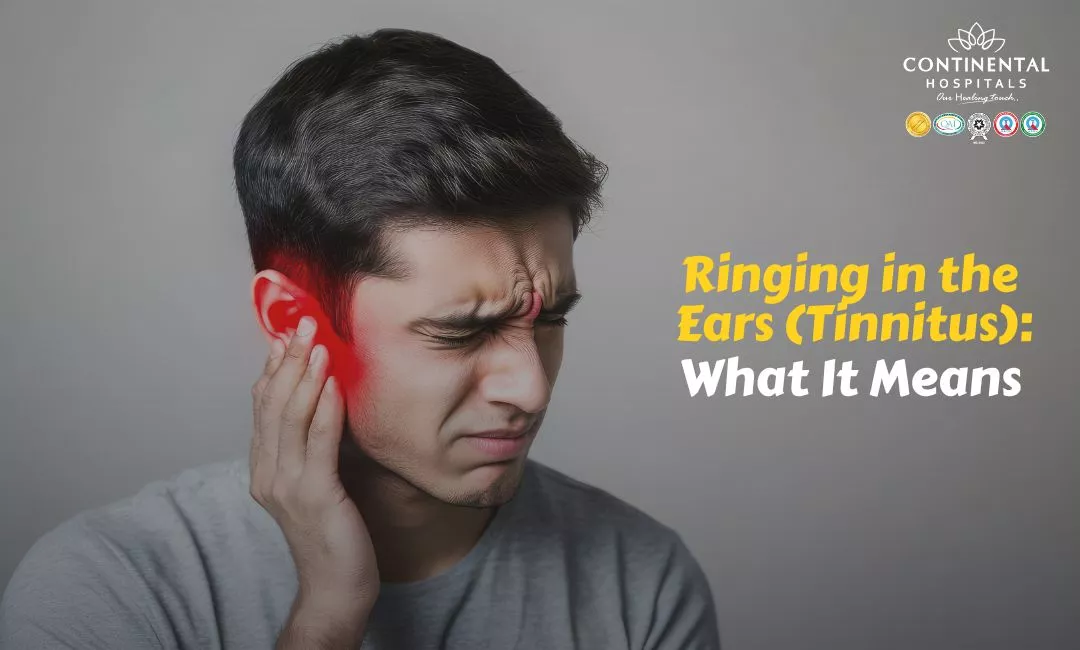
Ringing in the Ears is a condition many people experience at some point in life. For some, it is a mild and temporary sound. For others, it becomes a persistent issue that affects sleep, focus, and overall quality of life. This condition is medically known as tinnitus. Understanding what tinnitus means, why it happens, and how it can be managed is the first step toward relief.
What Is Ringing in the Ears?
Ringing in the Ears refers to hearing sounds when there is no external source. These sounds may be heard in one ear or both ears. The tinnitus sound can vary from person to person. Some hear ringing, while others notice buzzing, hissing, humming, clicking, or even whistling noises.
Visit our ENT Department at Continental Hospitals to consult expert ENT specialists for advanced diagnosis and care for ear and hearing conditions. Book your appointment today.
Many people ask, what does tinnitus sound like?
The answer is that it differs. The sound may be soft or loud, constant or occasional. In some cases, the sound becomes more noticeable in quiet environments, especially at night.
Ringing in the Ears is not a disease itself. It is usually a symptom of an underlying issue related to the ear, nerves, or overall health.
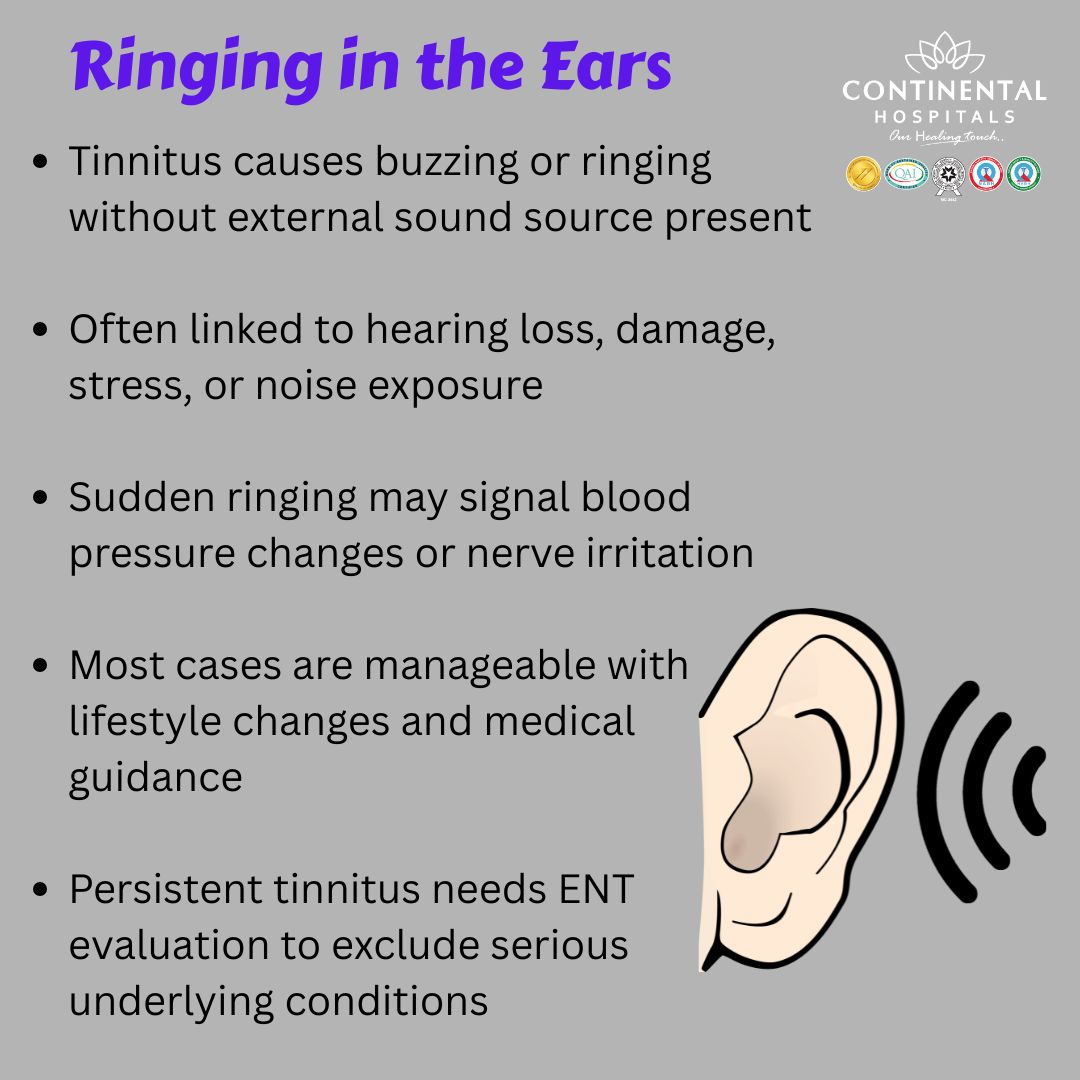
Common Symptoms of Tinnitus
People with Ringing in the Ears may experience one or more of the following symptoms:
- Continuous or intermittent ringing or buzzing sounds
- Ear ringing that worsens in silence
- Difficulty concentrating or focusing
- Trouble sleeping due to tinnitus sound
- Feeling of fullness or pressure in the ear
- Increased stress or anxiety due to constant noise
If these symptoms last for more than a few days or interfere with daily life, medical evaluation is important.
What Causes Tinnitus?
Understanding what causes tinnitus helps in choosing the right treatment. Some of the most common causes include:

- Exposure to loud noise from headphones, machinery, or concerts
- Age related hearing loss
- Earwax buildup causing ear ringing
- Ear infections or fluid in the middle ear
- Problems with the inner ear or auditory nerve
- Head or neck injuries
- Certain medications that affect hearing
- High blood pressure or circulation issues
- Stress and anxiety
In many cases, Ringing in the Ears is linked to hearing damage. Even short exposure to loud sounds can affect delicate inner ear cells.
Types of Ringing in the Ears
Ringing in the Ears can be classified into different types:
Subjective tinnitus
This is the most common type. Only the patient can hear the sound.
Objective tinnitus
This is rare. A doctor may also hear the sound during examination, often related to blood flow or muscle movements.
Pulsatile tinnitus
The tinnitus sound follows the rhythm of the heartbeat. This type needs careful evaluation.
Knowing the type helps doctors plan the right approach for tinnitus relief.
Is Ringing in the Ears Serious?
Many people worry when they experience ear ringing. Is it dangerous?
In most cases, tinnitus is not life threatening. However, persistent Ringing in the Ears should never be ignored. It may signal an underlying condition that needs attention.
Seek medical help if you notice:
- Sudden tinnitus in one ear
- Ringing in the ears with hearing loss
- Tinnitus along with dizziness or balance problems
- Ear ringing after a head injury
Early diagnosis improves outcomes and helps prevent worsening symptoms.
How Is Tinnitus Diagnosed?
At Continental Hospitals, diagnosis begins with a detailed medical history and physical examination. The doctor may ask:
- When did the Ringing in the Ears start?
- Is it constant or occasional?
- Do you have hearing loss or ear pain?
- Does stress make it worse?
Diagnostic tests may include hearing tests, ear examination, and imaging if required. Identifying the root cause is key to effective tinnitus treatment.
How to Stop Tinnitus and Manage Symptoms?
Many patients ask, how to stop tinnitus?
While there may not always be a complete tinnitus cure, several treatments can provide significant relief.
Common tinnitus relief approaches include:
- Treating earwax or infections
- Managing underlying medical conditions
- Hearing aids for hearing related tinnitus
- Sound therapy to reduce awareness of tinnitus sound
- Counseling to manage stress and anxiety
- Lifestyle changes to protect hearing
Avoiding loud noise and reducing stress play a major role in stopping ringing in ears from getting worse.
Simple Tips to Reduce Ringing in the Ears
You can support medical treatment with these daily habits:
- Keep volume low when using earphones
- Avoid prolonged exposure to loud sounds
- Manage stress through relaxation techniques
- Maintain healthy blood pressure
- Get enough rest and sleep
These steps may not cure tinnitus, but they help reduce the impact of ear ringing on daily life.
Why Choose Continental Hospitals for Tinnitus Care?
Continental Hospitals is recognized as one of the best hospitals in Hyderabad, known for advanced care and patient focused treatment.
Reasons to choose Continental Hospitals:
- Experienced ENT specialists and audiologists
- Advanced diagnostic facilities for accurate evaluation
- Comprehensive care for Ringing in the Ears and hearing disorders
- Multidisciplinary approach for complex cases
- International standards of patient safety and care
Continental Hospitals is accredited by leading national and international healthcare accreditation bodies, reflecting excellence in clinical quality, patient safety, and ethical medical practices.
The hospital follows strict protocols to ensure accurate diagnosis, evidence based treatment, and compassionate care for every patient.
When Should You See a Doctor?
Do not delay medical consultation if Ringing in the Ears:
- Persists for weeks
- Affects sleep or concentration
- Occurs suddenly without a clear reason
- Is accompanied by hearing loss or dizziness
Early evaluation improves the chances of effective tinnitus relief and protects long term hearing health.
Conclusion
Ringing in the Ears can be frustrating, confusing, and sometimes distressing. While tinnitus may not always be completely curable, understanding its causes and seeking timely medical care can greatly reduce its impact. With proper diagnosis, lifestyle changes, and expert guidance, most people can learn how to stop tinnitus from controlling their lives.
Ignoring persistent ear ringing may lead to worsening symptoms. Listening to your body and getting the right care is essential.
consult our Best ENT specialists at Continental Hospitals. Our team is trained to diagnose and manage complex ear and hearing conditions with precision and care. Book an appointment today for trusted, advanced ENT care at one of the best hospitals in Hyderabad.
Related Blog Topics: