.webp)


Winter is a time when the body works harder to stay warm, fight infections, and maintain energy. As the temperature drops, viruses spread easily, immunity becomes weaker, and people of all age groups face a higher risk of respiratory infections, throat problems, digestive issues, and fatigue. Understanding why winter needs extra care and how to protect your immune system can help you stay healthy throughout the season. This article explains practical winter immunity tips, natural boosters, diet recommendations, vaccines, sleep habits, air quality guidance, and when to seek medical help. All information is prepared in a simple and SEO friendly format for readers of Continental Hospitals.
Why Immunity Drops in Winter?
Cold months bring specific challenges that make infections more common.
Here are a few reasons winter weakens your immunity:
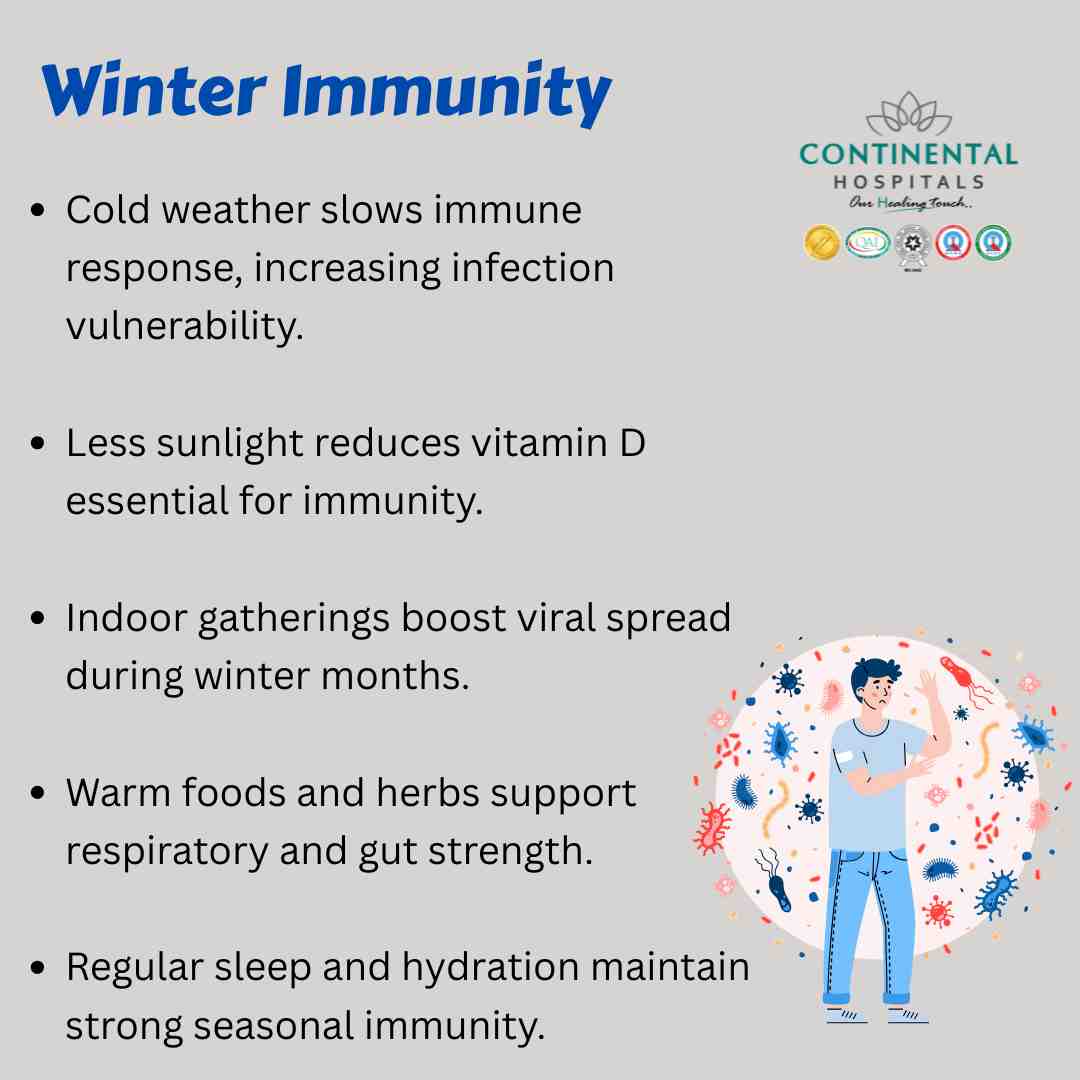
- Low sunlight exposure reduces vitamin D which plays a key role in immune strength
- People stay indoors more which increases close contact and germ transmission
- Dry air weakens the nasal barrier and allows viruses to enter easily
- Lifestyle changes such as reduced physical activity and disturbed sleep impact overall health
These factors create a perfect environment for cold, flu, throat infections, pneumonia, sinusitis, bronchitis, and digestive issues.
How to Boost Immunity in Winter Naturally?
Strengthening your immunity during winter is a combination of lifestyle habits, nutrition, and preventive care. Here are effective natural ways to support your body
- Stay hydrated with warm water, soups, and herbal drinks
- Include immunity rich spices such as ginger, turmeric, black pepper, cinnamon, and tulsi
- Add vitamin C foods like citrus fruits, guava, amla, and leafy vegetables
- Consume zinc rich options like nuts, seeds, legumes, and millets
- Include probiotic curd or buttermilk for better gut health
- Practice light exercise such as walking, yoga, or stretching
- Sit in sunlight for at least a short duration to support vitamin D levels
- Maintain proper personal hygiene to prevent germ spread
Natural immunity boosters work best when followed consistently throughout the season.
Winter Diet for Immunity Support
Your winter plate should be warm, nourishing, and rich in antioxidants. A good diet helps your immune cells function effectively.
Consider including the following
- Seasonal vegetables like carrots, beets, sweet potatoes, spinach, and broccoli
- Seasonal fruits such as oranges, pomegranates, apples, and grapes
- Nuts and seeds such as almonds, walnuts, pumpkin seeds, and flaxseeds
- Healthy proteins like lentils, eggs, paneer, lean meat, and legumes
- Whole grains including millet, brown rice, and oats
- Herbal drinks such as warm turmeric milk or ginger tea
Healthy fats from ghee, olives, and avocados also support immune strength in winter.

Vitamin D Supplementation in Winter Guide
One of the most important nutrients for winter immunity is vitamin D. Limited sunlight exposure causes deficiency which increases the risk of frequent infections, weak muscles, body pain, and fatigue.
Key points for vitamin D during winter
- Spend time in early morning sunlight whenever possible
- vitamin D rich foods such as eggs, fortified milk, and fish
- Supplementation can be helpful based on doctor recommendation
- Regular monitoring of vitamin D levels is useful for people with low immunity
A physician can guide you on correct supplementation based on your health status.
Best Vaccines for the Winter Season
Vaccination is an important part of winter immune protection, especially for children, elderly individuals, or people with chronic conditions.
- Flu vaccine
- Pneumococcal vaccine for those at higher risk
- COVID booster as advised
- Pertussis and other routine vaccinations for children
Vaccines reduce disease severity and infection rates. A doctor can provide age specific recommendations.
Sleep and Immunity Connection in Cold Months
Good sleep is a natural immune booster. During winter, people often sleep irregularly due to cold weather or late-night screen time.
Sleep tips for strong immunity:
- Maintain a consistent sleep schedule
- Avoid heavy meals and screen exposure close to bedtime
- Keep your bedroom warm and comfortable
- Follow a relaxing routine with reading or meditation
- Adults need approximately seven to eight hours of quality sleep
Proper sleep improves immune response and overall health.
Indoor Air Quality Tips for Winter
Many people spend most of their time indoors during winter. Poor indoor air quality can worsen allergies, asthma, cough, and infections.
- Keep windows open for short durations to allow ventilation
- Use air purifiers if needed
- Avoid burning incense, scented candles, or smoking indoors
- Clean bedding, curtains, and carpets regularly
- Add indoor plants that purify air
- Use a humidifier to maintain balanced moisture levels
A clean environment protects the respiratory system.
Winter Immune Support for Elderly
Elderly individuals need special immune support during winter because their immunity reduces with age. They may also have chronic conditions like diabetes, heart disease, or respiratory problems.
Suggested winter care for elderly:
- Keep them warm with proper clothing
- Encourage hydration and healthy meals
- Ensure timely vaccinations
- Support physical activity with gentle walking
- Monitor vitamin D levels
- Watch for early signs of infections such as fever, cough, weakness, or reduced appetite
Early care prevents complications.
When to See a Doctor for Recurring Winter Infections?
You should seek medical help if winter infections occur repeatedly or symptoms worsen. This helps diagnose underlying causes such as allergies, low immunity, vitamin deficiencies, or chronic respiratory issues.
Consult a doctor if you experience:
- Persistent cough lasting more than a week
- High fever
- Repeated throat infections
- Breathing difficulty
- Severe body pain
- Frequent cold and sinus problems
- Symptoms not improving with home care
Early medical evaluation ensures better treatment and faster recovery.
Why Choose Continental Hospitals for Winter Immune Care?
Continental Hospitals is known for clinical excellence, advanced infection control practices, and a patient first approach. The hospital maintains the highest standards of safety, hygiene, and diagnostic accuracy. It is accredited for following international quality protocols. Specialists in internal medicine, pulmonology, immunology, and infectious diseases provide complete winter health support. With modern diagnostic services, experienced doctors, and round the clock emergency care, Continental Hospitals ensures reliable and evidence based treatment for all age groups.
Conclusion
Winter brings unique health challenges but the right preventive steps can protect your immunity and keep you healthy throughout the season. A balanced diet, vitamin D care, regular sleep, clean indoor air, recommended vaccines, and timely medical guidance are essential for strong immunity. If you notice repeated infections or persistent symptoms, the expert team at Continental Hospitals is ready to help you with comprehensive winter care.
For personalised evaluation and treatment, book an appointment with our best Internal Medicine Specialist at Continental Hospitals.