.webp)

Quality sleep is one of the strongest foundations of good health. Even small improvements in your nightly routine can transform your energy, mood, immunity, metabolism, and overall well-being. Sleepmaxxing is a simple and effective approach that focuses on optimizing every part of your sleep cycle. It includes habits, foods, lifestyle changes, and tracking methods that help you sleep deeper, fall asleep faster, and wake up refreshed.
What is Sleepmaxxing?
Sleepmaxxing means creating the best possible environment and habits for high-quality sleep. Instead of focusing on one or two sleep tips, it takes a more complete approach. It includes your evening routine, daily activities, diet, technology usage, bedroom setup, and stress management.
When you combine these elements consistently, your sleep becomes deeper, more restorative, and more predictable.
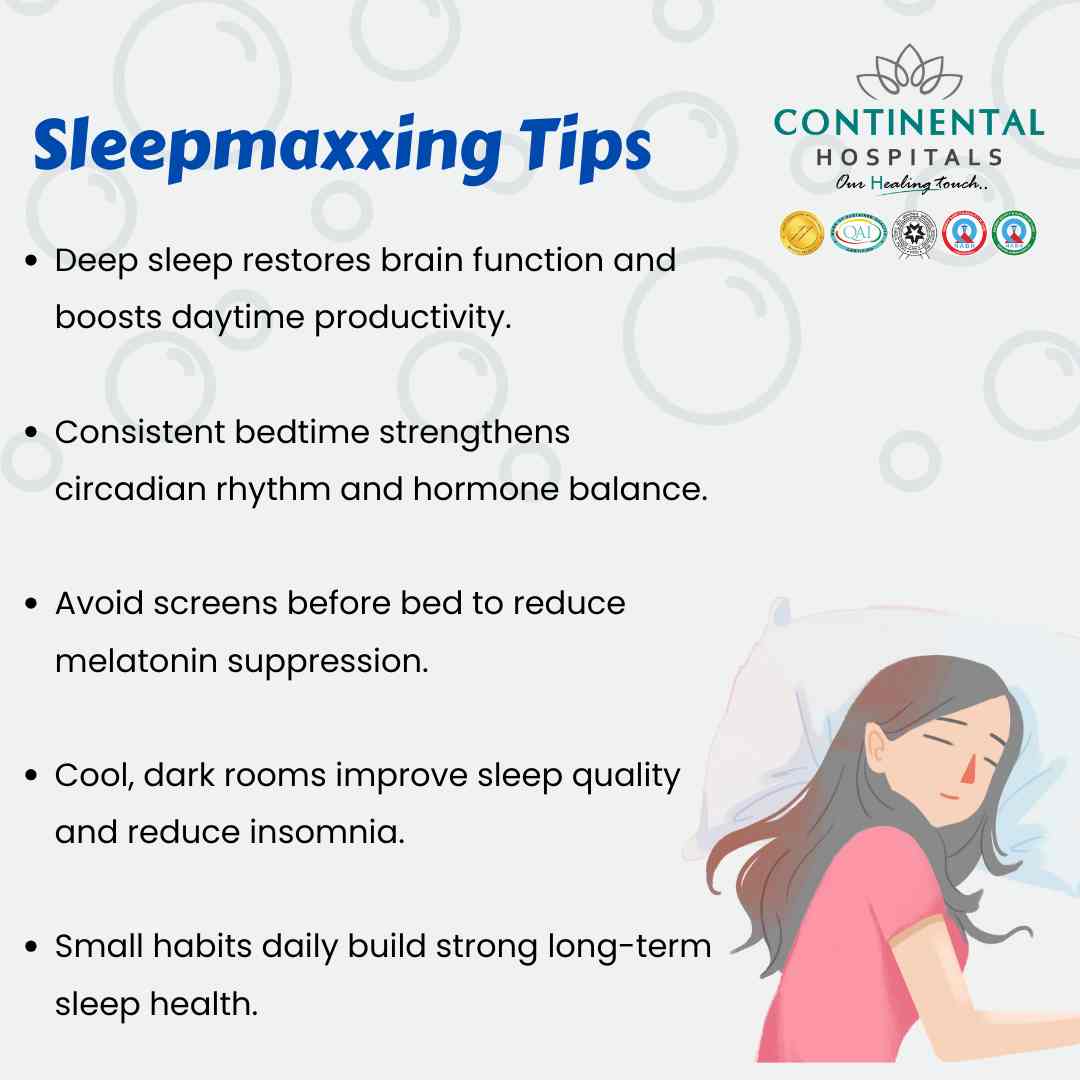
How to Optimize Sleep for Better Health?
Good sleep supports heart health, brain health, emotional balance, digestive health, and hormone stability. Here's how you can optimize sleep effectively.
Keep a Consistent Sleep Schedule
Going to bed and waking up at the same time every day trains your internal clock. A regular routine supports faster sleep onset and reduces nighttime awakenings.
Create a Wind Down Routine
Spend the last hour of the day on calming activities such as light reading or soft music. Avoid bright screens during this time.
Keep Your Bedroom Cool and Quiet
A comfortable sleep environment plays a major role. Use curtains, quiet fans, or white noise machines if needed.
Choose the Right Mattress and Pillow
Comfortable bedding reduces pressure on the body and improves sleep posture.

Avoid Large Meals Close to Bedtime
Heavy meals make it difficult for your body to relax. Aim for lighter food in the evening.
Limit Caffeine After Afternoon
Caffeine stays in your body for several hours and can delay sleep if taken late in the day.
Sleepmaxxing Tips for Beginners
If you are just getting started, these simple steps make the biggest impact:
- Set a fixed bedtime.
- Stop screen use one hour before bed.
- Drink warm herbal teas like chamomile or lavender.
- Keep your room dark and cool.
- Get morning sunlight exposure.
- Avoid naps longer than half an hour.
- Reduce noise using earplugs if needed.
- Track your sleep patterns with a simple sleep journal.
Best Sleep Hygiene Routine
A good sleep hygiene routine is essential for long-term sleep quality. You can follow this structured approach:
Morning
- Spend ten to fifteen minutes outside for natural light exposure.
- Do simple stretching or a short walk.
- Eat a balanced breakfast.
Afternoon
- Stay hydrated.
- Keep caffeine intake limited.
- Maintain proper posture to prevent end of day fatigue.
Evening
- Reduce blue light from screens using night mode.
- Eat an early dinner.
- Keep conversations and activities calm.
- Dim your room lights gradually.
- Practice deep breathing for five minutes.
Night
- Keep your room cool.
- Maintain a dark environment.
- Avoid overthinking by writing down next day tasks.
Foods That Help You Sleep Better
Some foods can naturally improve your sleep quality by supporting melatonin production and calming the nervous system.
Helpful Foods Include:
- Warm milk
- Almonds
- Kiwi
- Banana
- Oats
- Walnuts
- Herbal teas
- Yogurt
- Whole grains
These foods contain nutrients such as magnesium, tryptophan, and melatonin which promote better sleep.
Natural Ways to Fall Asleep Faster
If you often struggle to fall asleep, try these natural methods:
- Practice slow breathing for five minutes.
- Take a warm shower before bed.
- Read something light.
- Listen to calming sounds.
- Try progressive muscle relaxation.
- Avoid checking the time repeatedly.
These techniques lower stress signals and help the body relax quickly.
Exercises That Improve Sleep Quality
Regular physical activity strengthens your sleep cycle. You do not need intense workouts. Consistency is more important.
Helpful Exercises:
- Brisk walking
- Light jogging
- Yoga
- Stretching
- Cycling
- Swimming
- Deep breathing practices
Avoid heavy workouts too close to bedtime because they increase alertness.
Sleep Tracking Device Accuracy
Sleep tracking devices are becoming common. They help you understand your sleep duration, sleep stages, and wake-up patterns. Their accuracy varies based on the device, technology, and how you use it.
Most devices accurately track total sleep time.
- They offer reasonable insights into sleep quality.
- They may not always detect sleep stages perfectly.
- They can help you identify trends and improve routines.
Tracking is helpful, but it should not create stress. Use the data as guidance rather than strict rules.
When to See a Sleep Specialist
You should consult a sleep specialist if you experience:
- Snoring that disturbs others
- Frequent waking at night
- Difficulty falling asleep for several nights a week
- Daytime sleepiness affecting work
- Morning headaches
- Restless legs or cramps
- Breathing pauses during sleep
A sleep specialist can diagnose issues such as sleep apnea, insomnia, or circadian rhythm disorders and provide personalized treatment.
Why Choose Continental Hospitals for Sleep Related Concerns?
Continental Hospitals provides advanced care for sleep related issues. The hospital follows international treatment protocols and uses modern diagnostic tools including sleep studies and respiratory assessments. The medical team includes experienced sleep specialists, pulmonologists, neurologists, and ENT experts.
The hospital maintains high standards of patient safety and quality care with accreditations that reflect excellence in clinical services and patient outcomes. The environment is designed for comfort and accuracy in sleep evaluation, offering detailed reports and guided treatment plans.
Conclusion
Sleepmaxxing gives you a structured way to improve your sleep quality and overall well-being. By focusing on routines, nutrition, relaxation, and lifestyle habits, you can optimize sleep for better health. If you suffer from persistent sleep issues, low energy, morning tiredness, snoring, or disturbed sleep, a specialist evaluation can help you find the right solution.
Continental Hospitals offers comprehensive care for all sleep related concerns with expert doctors, advanced sleep diagnostics, and evidence based treatment approaches.
If you suffer from ongoing sleep problems or symptoms that affect your daily life, consult our best sleep specialist at Continental Hospitals for expert evaluation and personalized treatment.