.webp)

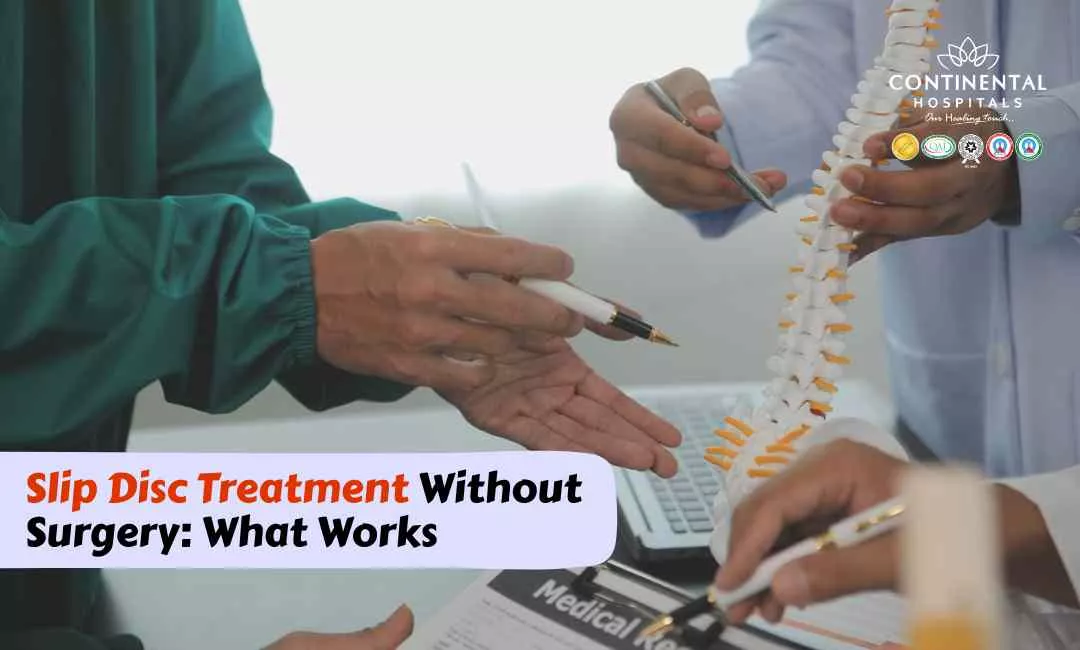
Back pain that shoots down the leg, neck stiffness that limits movement, or numbness in the arms or feet often leads people to a worrying diagnosis a slip disc. Many patients immediately fear surgery. The good news? In most cases, slip disc treatment without surgery is not only possible but highly effective when started early and guided by specialists.
What Is a Slip Disc?
A slip disc, also called a herniated or prolapsed disc, occurs when the soft inner portion of a spinal disc pushes out through its outer layer. This can irritate nearby nerves, leading to pain, tingling, weakness, or numbness.
It commonly affects:
- Lower back causing leg pain or sciatica
- Neck causing shoulder or arm pain
Not every disc problem needs surgery. Many improve with conservative treatment.
Persistent back or neck pain, radiating pain in the arms or legs, or numbness should never be ignored. Visit the top orthopedic doctors in Hyderabad at Continental Hospitals for expert evaluation and advanced treatment to restore your mobility and improve your quality of life.
What Are the Common Causes of a Slip Disc?
Understanding the cause helps guide treatment:
- Poor posture during long sitting hours
- Sudden lifting of heavy objects
- Repetitive bending or twisting
- Age related disc degeneration
- Obesity and weak core muscles
- Lack of physical activity
Early care can prevent long term nerve damage.
Symptoms You Should Not Ignore?
Slip disc symptoms vary depending on the affected area. Warning signs include:

- Persistent back or neck pain lasting more than a few days
- Pain radiating to arms or legs
- Numbness or tingling in hands or feet
- Muscle weakness
- Pain that worsens with movement, coughing, or sitting
If symptoms affect daily activities, medical evaluation is essential.
Slip Disc Treatment Without Surgery: What Actually Works?
Most patients recover with non surgical treatment. The key is a structured, doctor guided approach.
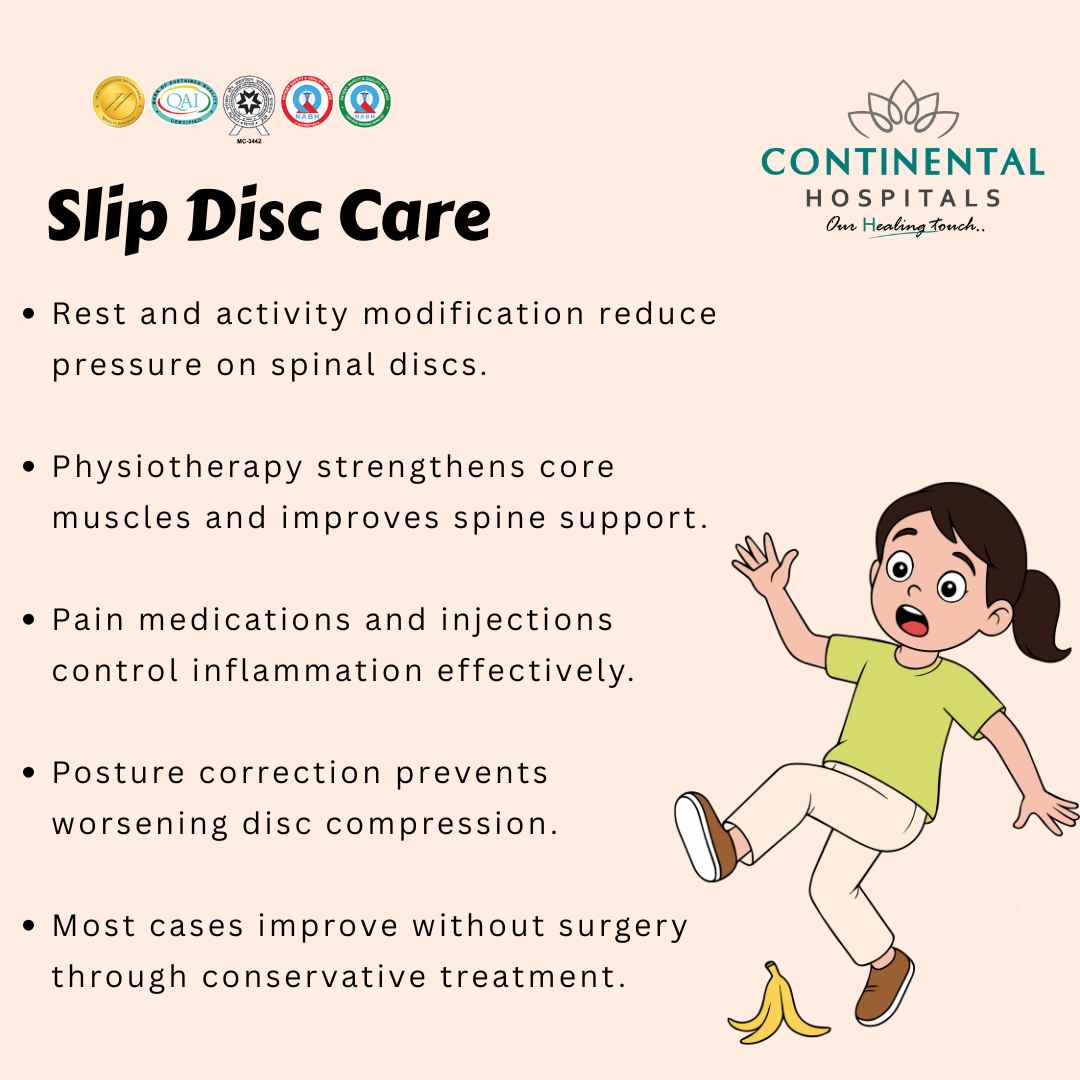
1. Rest and Activity Modification
Short term rest helps reduce inflammation. Complete bed rest is not advised.
What helps?
- Avoid heavy lifting
- Avoid bending and twisting
- Maintain gentle movement as advised
- Use ergonomic chairs and proper posture
This reduces pressure on the affected disc and nerves.
2. Medications for Pain and Inflammation
Doctors may prescribe medications to control symptoms and allow movement.
Common options include:
- Pain relievers
- Anti inflammatory medicines
- Muscle relaxants
- Nerve pain medications
These do not cure the disc but help manage pain while healing occurs.
3. Physiotherapy and Exercise Therapy
Physiotherapy is one of the most effective non surgical treatments.
A guided program focuses on:
- Strengthening core and back muscles
- Improving spinal flexibility
- Correcting posture
- Reducing nerve compression
Physiotherapy helps prevent recurrence and improves long term spine health.
4. Spinal Traction and Decompression Therapy
In selected cases, spinal traction may be advised.
Benefits include:
- Reduced disc pressure
- Improved disc hydration
- Relief from nerve compression
This therapy must be supervised by trained specialists.
5. Heat and Cold Therapy
Simple methods can support recovery:
- Cold packs reduce inflammation in early stages
- Heat therapy relaxes muscles and improves blood flow
These therapies provide temporary relief and complement medical treatment.
6. Lifestyle Changes That Support Healing
Small changes can make a big difference.
Helpful habits include:
- Maintaining healthy body weight
- Regular low impact exercise like walking
- Avoiding prolonged sitting
- Using proper sleeping positions
- Strengthening abdominal and back muscles
Lifestyle correction is essential to avoid repeat disc problems.
7. Epidural and Nerve Block Injections
When pain is severe and limits physiotherapy, injections may help.
These treatments:
- Reduce inflammation around nerves
- Provide pain relief
- Allow participation in rehabilitation
They are minimally invasive and often delay or avoid surgery.
How Long Does Non Surgical Treatment Take?
Recovery time varies:
- Mild cases improve within a few weeks
- Moderate cases may take several weeks to months
- Consistency with therapy speeds recovery
Regular follow up ensures treatment is adjusted as needed.
When Is Surgery Considered?
While most cases respond well to conservative care, surgery may be advised if:
- Pain does not improve despite treatment
- Progressive muscle weakness develops
- Loss of bladder or bowel control occurs
- Severe nerve compression is confirmed
Early evaluation helps prevent complications and unnecessary surgery.
Why Early Diagnosis Matters?
Ignoring symptoms can lead to:
- Chronic pain
- Permanent nerve damage
- Reduced mobility
- Lower quality of life
Timely diagnosis allows effective non surgical treatment and faster recovery.
Why Choose Continental Hospitals?
For patients seeking the best hospital in Hyderabad for spine care, Continental Hospitals offers advanced, patient focused treatment.
Key strengths include:
- Expert orthopedic doctors, neurosurgeons, and spine specialists
- Advanced imaging and diagnostic facilities
- Evidence based non surgical treatment protocols
- Dedicated physiotherapy and rehabilitation services
- International quality standards and accreditations
- Multidisciplinary care under one roof
The focus is always on relieving pain, restoring function, and avoiding surgery whenever safely possible.
If You Are Suffering, What Should You Do?
Do not self diagnose or delay care. Persistent back or neck pain is not normal.
Seek medical help if:
- Pain affects daily work or sleep
- Symptoms spread to arms or legs
- Numbness or weakness develops
- Pain keeps returning despite rest
Early consultation improves outcomes.
Conclusion
Slip disc treatment without surgery works for most patients when guided by experienced specialists. With the right combination of medications, physiotherapy, lifestyle changes, and advanced pain management techniques, many people recover fully and return to normal life.
Ignoring symptoms or delaying treatment can worsen the condition. Choosing the right hospital and care team makes a critical difference.
If you suffer from persistent back or neck pain, radiating leg or arm pain, or numbness, consult our Best Orthopedic Specialists in Hyderabad at Continental Hospitals today. Early care can help you recover faster and return to an active, pain-free life.