.webp)

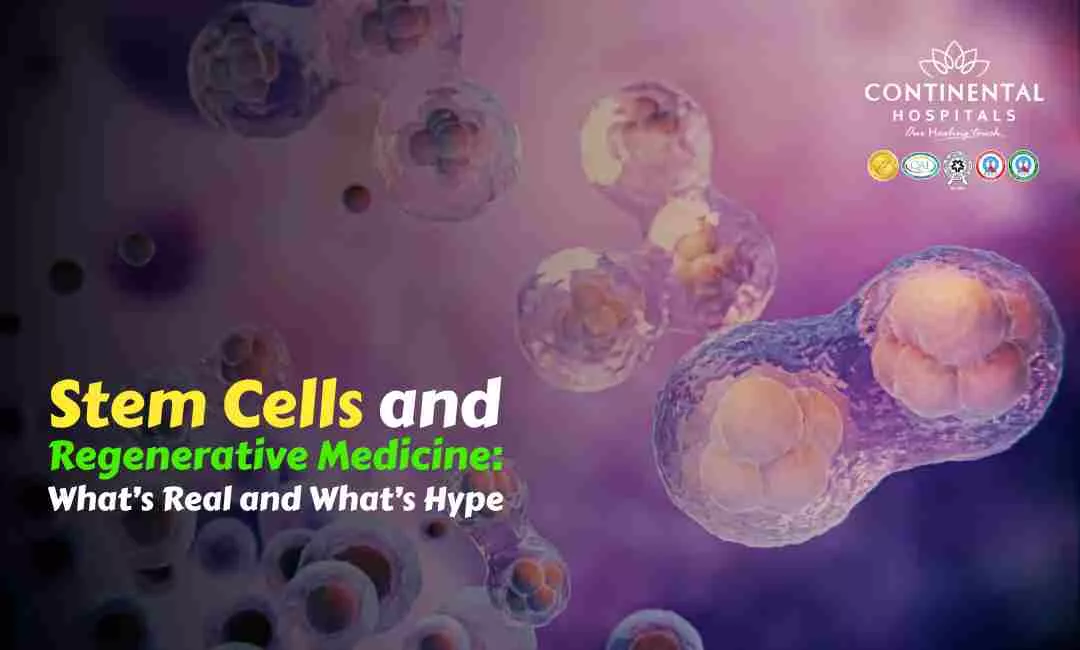
Stem cells and regenerative medicine are often spoken about as breakthrough solutions that can repair damaged organs, reverse disease, and even slow aging. From news articles to social media posts, claims sound promising. But how much of it is real, and how much is exaggerated? This article explains stem cell therapy in clear, simple language so patients and families can make informed decisions based on science, not hype.
At Continental Hospitals, known as one of the best hospitals in Hyderabad, we believe in patient education backed by evidence based medicine and ethical clinical practices.
Understanding Stem Cells in Simple Terms
Stem cells are special cells in the body that can develop into different types of cells. Unlike regular cells, stem cells can divide and renew themselves over time. This unique ability makes them important in healing and tissue repair.
There are different types of stem cells, including:
- Embryonic stem cells
- Adult stem cells
- Induced pluripotent stem cells
In clinical practice today, adult stem cells are the most commonly researched and used, especially those derived from bone marrow, blood, or fat tissue.
What Is Regenerative Medicine?
Regenerative medicine focuses on helping the body repair, replace, or regenerate damaged tissues. Instead of only treating symptoms, this approach aims to restore function at a cellular level.
Regenerative medicine may include:
- Stem cell based therapies
- Platelet rich plasma therapy
- Tissue engineering
- Gene based therapies
Some of these treatments are already part of standard care, while others are still under research.

What Is Real About Stem Cell Therapy?
Stem cell science is real, and it is already helping patients in specific, approved medical conditions.
Where Stem Cell Therapy Is Proven
Stem cell treatments are currently well established and accepted for:
- Blood cancers like leukemia and lymphoma
- Bone marrow disorders
- Certain immune system conditions
- Recovery after high dose cancer treatment
Bone marrow transplants, which use stem cells, have been saving lives for decades. These therapies are strictly regulated and supported by strong clinical evidence.
Ongoing Research with Positive Results
Research is ongoing in areas such as:
- Orthopedic conditions
- Neurological disorders
- Heart muscle recovery
- Autoimmune diseases
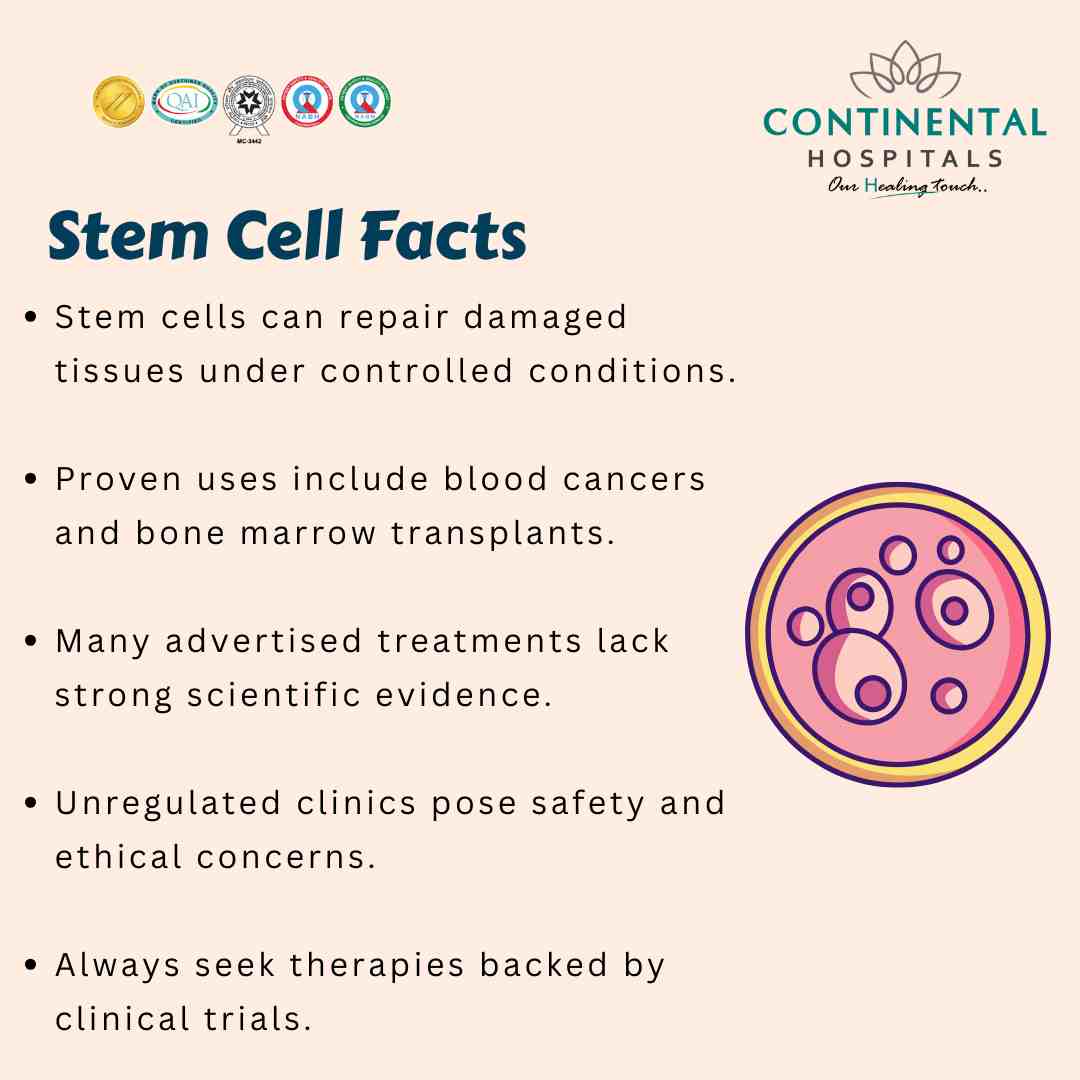
While early studies show promise, these treatments are often available only as part of controlled clinical trials.
What Is Hype and Misleading Information?
With increasing interest, many clinics across the world advertise stem cell treatments as miracle cures. This is where patients need to be cautious.
Common Myths to Watch Out For
- Stem cells can cure all diseases
- One injection can reverse aging
- Stem cell therapy is risk free
- Results are immediate and permanent
These claims are not supported by scientific evidence.
Why Unregulated Treatments Are Risky?
Unapproved stem cell procedures can lead to:
- Infections
- Immune reactions
- Tumor formation
- No improvement at all
In India, ethical hospitals follow guidelines issued by national and international medical bodies. Treatments are offered only when safety and efficacy are proven.
Stem Cells in Orthopedics and Joint Problems
One of the most talked about uses of stem cells is for joint pain and arthritis. Patients often ask, do stem cells cure knee arthritis?
The honest answer is?
Stem cells may help reduce inflammation and improve symptoms in selected cases, but they do not regrow a completely damaged joint. They are not a replacement for surgery when advanced joint destruction is present.
At the best hospital in Hyderabad, treatment decisions are made after thorough clinical evaluation, imaging, and patient counseling.
Stem Cells in Neurological Disorders
Conditions like stroke, spinal cord injury, and Parkinson’s disease are areas of active research. Some clinical trials show improvement in function, but these therapies are still experimental.
Patients should always ask:
- Is this treatment approved?
- Is it part of a clinical trial?
- What evidence supports it?
Ethical transparency is essential.
The Role of Ethics and Regulation
True regenerative medicine follows strict ethical rules. Every genuine treatment must go through:
- Laboratory research
- Animal studies
- Human clinical trials
- Regulatory approvals
Skipping steps for commercial gain is unsafe and unethical.
At Continental Hospitals, patient safety comes first. Any regenerative therapy is considered only after meeting approved clinical standards.
Why Choose Continental Hospitals?
Continental Hospitals is widely recognized as one of the best hospitals in Hyderabad, offering advanced medical care across specialties.
What Sets Us Apart?
• Internationally trained specialists
• Multidisciplinary approach to care
• Advanced diagnostic and treatment facilities
• Evidence based medical protocols
• Strong focus on patient education
Global Accreditations
Continental Hospitals is accredited by:
- Joint Commission International (JCI)
- NABH
- NABL
These accreditations ensure the highest standards of patient safety, clinical quality, and ethical medical practices.
How We Approach Regenerative Medicine
At Continental Hospitals, regenerative medicine is approached responsibly.
Our process includes:
- Detailed patient evaluation
- Review of scientific evidence
- Clear explanation of benefits and limitations
- Ethical clinical decision making
We believe patients deserve honest answers, not exaggerated promises.
Is Stem Cell Therapy Right for You?
Stem cell therapy is not for everyone. The right treatment depends on:
- Your medical condition
- Stage of the disease
- Available scientific evidence
- Overall health status
Only a qualified specialist can guide you after careful assessment.
Conclusion
Stem cells and regenerative medicine are powerful areas of modern science, but they are not magic solutions. While some treatments are proven and life saving, others are still under research. Understanding the difference between real science and hype can protect patients from false hopes and unsafe procedures.
At Continental Hospitals, the best hospital in Hyderabad, we are committed to ethical, evidence based care that puts patient safety first.
If you are suffering from chronic pain, blood disorders, immune system conditions, or require advanced regenerative care, consult our experienced specialists at Continental Hospitals. Our team of orthopedicians, hematologists, neurologists, and regenerative medicine experts will guide you with scientifically proven and ethical treatment options. Schedule an appointment today to receive trusted care from a hospital committed to excellence and patient safety.