.webp)


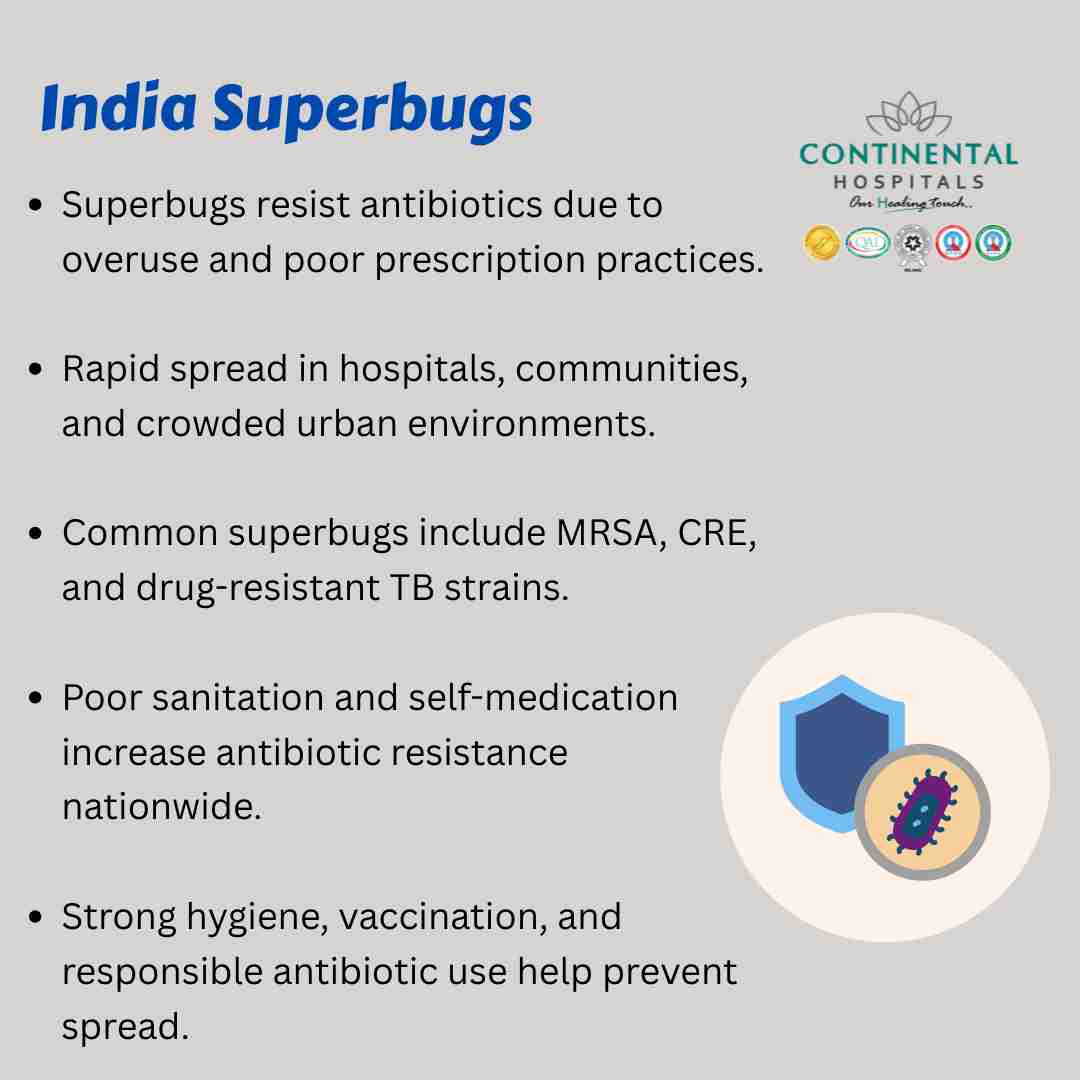
Superbugs in India are becoming a major public health concern, affecting children, adults, and older individuals alike. These infections are caused by bacteria that no longer respond to commonly used antibiotics. This problem is known as antibiotic resistance India, and it is increasing every year due to antibiotic misuse, self-medication, poor infection control practices, and the rapid spread of drug resistant infections in communities and hospitals.
What are superbugs?
Superbugs are bacteria that have become resistant to multiple antibiotics. When an infection is caused by these bacteria, the usual medicines fail to work. This makes treatment longer, harder, and more complicated.
Some of the common superbugs seen in India include
- Methicillin resistant Staphylococcus aureus
- Drug resistant tuberculosis
- Carbapenem resistant Enterobacteriaceae
- Vancomycin resistant Enterococci
These organisms can spread easily in hospitals, crowded living areas, and among people with weak immunity.
Why superbugs are rising in India?
Antibiotic resistance India is increasing due to several reasons linked to behaviour, healthcare practices, and environmental factors.
- Overuse and misuse of antibiotics without medical supervision
- Self-treatment for fever, cold, and viral infections where antibiotics do not help
- Incomplete antibiotic courses
- Unregulated sale of antibiotics
- Overuse of antibiotics in livestock and agriculture
- Growing number of hospital acquired infections
- Poor infection control in some healthcare settings
- Resistance spreading through contaminated water and environment
As a result, infections that were once easy to treat are now becoming difficult and sometimes life threatening.
Symptoms and warning signs of superbug infections
Superbug symptoms can look like regular infections but may become severe quickly. You should be alert if you experience
- Fever that does not respond to standard treatment
- Pain, redness, or swelling around a wound that keeps worsening
- Persistent cough with breathlessness
- Severe diarrhoea after a recent antibiotic course
- Burning sensation during urination with no relief
- Repeated infections within short intervals
- Slow healing after surgery or hospitalization
If you notice these warning signs, early medical evaluation is critical. Delayed treatment increases complications.

How superbugs spread?
Resistant bacteria spread from person to person and through contaminated surfaces, medical devices, food, and water. Hospital acquired infections are a common source, especially for patients in ICUs, post surgical wards, or those with prolonged hospital stays.
Common modes of transmission include
- Touching infected wounds or surfaces
- Not washing hands after using the restroom
- Sharing personal items
- Improper sterilization of medical equipment
- Contaminated drinking water
- Crowded areas with poor hygiene
Risks of antibiotic misuse
Antibiotic misuse risks are serious and long lasting. Using antibiotics incorrectly allows bacteria to adapt, mutate, and become stronger. Every unnecessary antibiotic weakens future treatment options.
Major risks include
- Increased drug resistant infections
- More hospital admissions
- Higher chance of treatment failure
- Longer illness and recovery time
- Need for stronger antibiotics with more side effects
- Higher risk of community spread of resistant bacteria
Responsible use of antibiotics under medical supervision is essential for protecting yourself and the community.
Prevention tips to avoid resistant bacteria
Preventing resistant bacteria is possible with consistent habits. The following steps reduce the risk of drug resistant infections and support public health India initiatives.
- Wash hands regularly with soap and water
- Avoid self medicating with antibiotics
- Complete your prescription as advised
- Get vaccinated on time
- Maintain personal and household hygiene
- Consume clean, safe drinking water
- Follow safe food handling and cooking methods
- Avoid contact with infected wounds
- Choose accredited hospitals with strong infectious disease control practices
- Use protective masks and hygiene precautions in crowded places
Why superbugs matter for India?
AMR India is one of the fastest growing health challenges. Antibiotic resistance increases healthcare costs, hospital stay duration, and risk of severe complications. It also affects the success of surgeries, cancer treatments, transplants, and intensive care.
Public health India experts warn that if resistance continues to rise, many life saving medical procedures may become unsafe due to the high risk of untreatable infections. Effective infectious disease control at both community and hospital level is essential to break the chain of resistance.
Why choose Continental Hospitals?
Continental Hospitals in Hyderabad is a leading centre for infectious disease care, antibiotic stewardship, and advanced diagnosis of superbug infections. The hospital follows strict infection control protocols aligned with international quality standards. Continental Hospitals is accredited by globally recognized bodies that ensure safety, hygiene, and clinical excellence.
Key strengths include
- Dedicated infectious diseases specialists
- Advanced microbiology and molecular diagnostics
- Strict hospital infection control and monitoring
- Antibiotic stewardship programs for safe antibiotic use
- State of the art ICUs with enhanced infection prevention
- Multi disciplinary expert team for complex drug resistant infections
- Transparent communication and patient centred care
Continental Hospitals places strong focus on quality, safety, and reliable treatment outcomes.
Simple tips for families to stay safe
- Avoid unnecessary antibiotics
- Keep vaccination schedules updated
- Maintain hygiene at home and workplace
- Consult a doctor at the first sign of infection
- Ensure wounds are cleaned and covered
- Choose accredited hospitals for any treatment or surgery
- Follow doctors advice strictly for antibiotic courses
Conclusion
Superbugs in India are growing rapidly due to antibiotic misuse and rising drug resistant infections. Understanding how superbugs spread and how to prevent them is important for every family. Early diagnosis, proper treatment, and choosing the right healthcare facility can significantly reduce complications. With strong hygiene habits and responsible antibiotic use, we can protect ourselves and help control antibiotic resistance India.
If you suffer from repeated infections, slow healing, persistent fever, or symptoms that do not improve with usual treatment, consult our top infectious diseases specialist at Continental Hospitals. Early care helps prevent complications and ensures safer recovery.