.webp)


Exercise is an essential part of a healthy lifestyle. Regular physical activity strengthens muscles, improves heart health, boosts mental well-being, and helps maintain an ideal weight. However, many people do not realize that too much exercise can be harmful. Overexercising or pushing the body beyond its limits can lead to serious health risks.
What Happens When You Overexercise?
While staying active is important, exercising excessively can create physical and mental stress on the body. The risks increase when people follow extreme workout routines without sufficient rest or nutrition. Overexercising may lead to fatigue, injuries, and long-term health complications.
Visit our General Physician department today for expert care on exercise-related injuries and health concerns.
Common Risks of Too Much Exercise
Muscle and Joint Injuries
Overexercising can strain muscles, ligaments, and joints. High-intensity workouts every day without adequate recovery may lead to chronic injuries like tendinitis, stress fractures, or joint pain. Gym enthusiasts who ignore rest days often face these complications.
Weakened Immune System
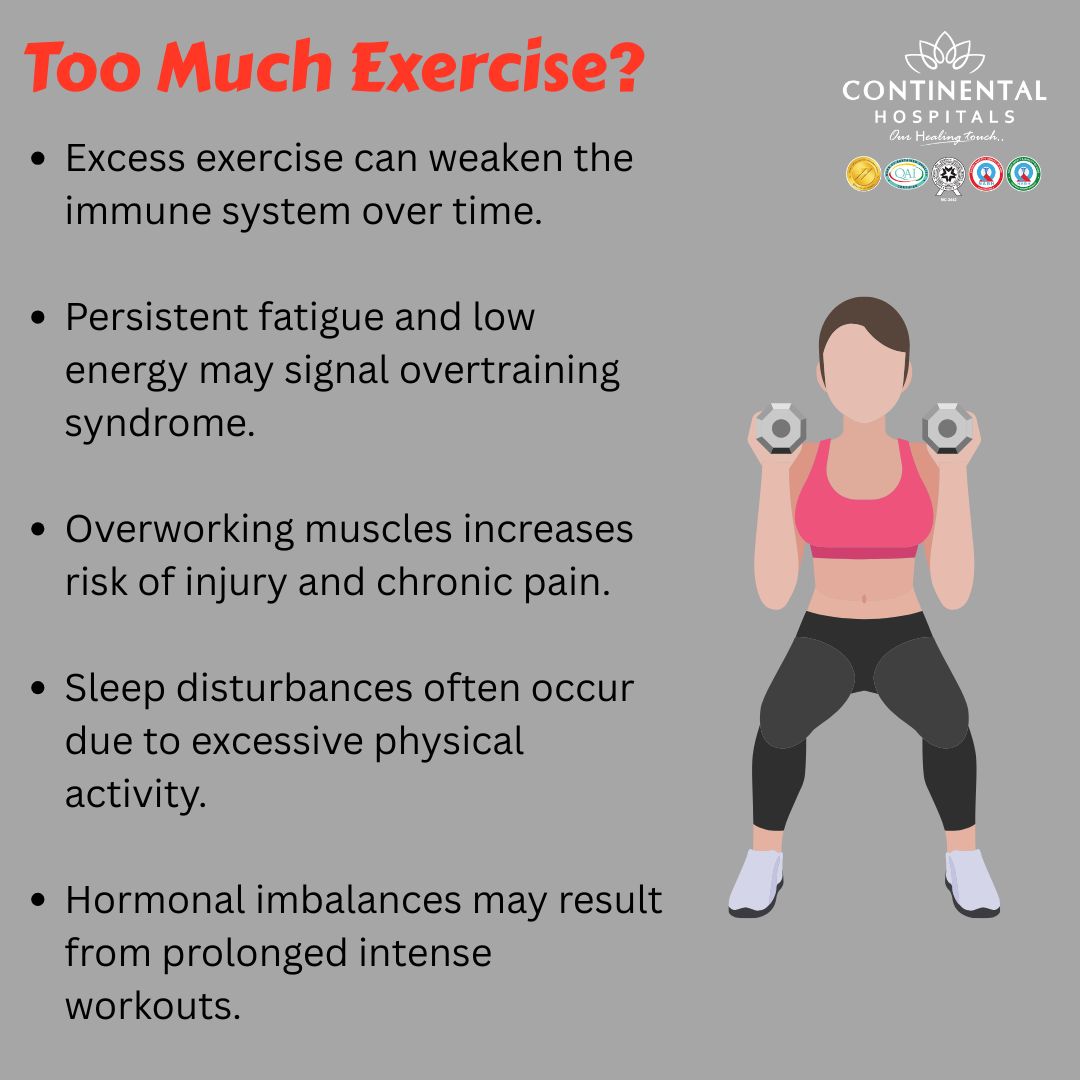
Too much exercise can suppress the immune system, making the body more vulnerable to infections. If you notice frequent colds or slow recovery after minor illnesses, your workout intensity might be too high.
Hormonal Imbalance
Overtraining can disrupt hormonal levels, affecting metabolism, mood, and energy. In women, excessive exercise may cause irregular menstrual cycles or even amenorrhea. Men may experience reduced testosterone levels, impacting muscle growth and energy.
Mental Health Issues
Exercise addiction or compulsive workout behavior can lead to anxiety, irritability, and depression. The obsession with maintaining intense workout routines may interfere with social life, sleep, and overall happiness.
Heart Problems
Excessive high-intensity workouts can put extra strain on the heart. While exercise is generally heart-protective, overtraining can increase the risk of arrhythmias or other cardiovascular issues in vulnerable individuals.

Signs You Might Be Overexercising
It is important to listen to your body. Common symptoms of overtraining include:
- Persistent fatigue even after rest
- Decreased performance despite regular workouts
- Frequent injuries or slow recovery
- Sleep disturbances
- Mood swings or irritability
- Loss of appetite or sudden weight changes
Tips to Exercise Safely
Maintaining a balanced approach to fitness can prevent the negative consequences of overexercising. Here are some guidelines:
Follow a Balanced Workout Routine
Include strength training, cardio, and flexibility exercises, but avoid doing intense workouts daily. Allow your muscles time to recover between sessions.
Prioritize Rest and Recovery
Rest days are as important as workout days. Sleep and active recovery help repair muscles, prevent injuries, and maintain energy levels.
Listen to Your Body
Do not ignore persistent pain, extreme fatigue, or unusual symptoms. Adjust your workout intensity when needed.
Maintain Proper Nutrition
Fuel your body with a balanced diet that includes carbohydrates, proteins, fats, vitamins, and minerals. Proper nutrition supports energy, recovery, and overall performance.
Stay Hydrated
Dehydration can worsen the effects of overtraining. Drink enough water before, during, and after workouts.
Consult Experts
Work with certified fitness trainers and medical professionals to design safe and effective exercise plans.
Why Choose Continental Hospitals for Exercise-Related Health Concerns?
Continental Hospitals in Hyderabad is recognized for its state-of-the-art facilities and comprehensive care. Accredited by leading national and international healthcare organizations, the hospital ensures high-quality treatment in a patient-friendly environment. Our multidisciplinary team includes experts in orthopedics, cardiology, sports medicine, and physiotherapy to address exercise-related injuries and complications.
The hospital provides:
- Advanced diagnostic facilities to identify musculoskeletal, cardiac, and hormonal issues
- Personalized rehabilitation programs for post-injury recovery
- Preventive care strategies for maintaining long-term fitness
- Expert guidance on safe workout routines and nutrition
Points to Remember About Overexercising
- More exercise is not always better
- Rest is a critical part of fitness
- Persistent pain or fatigue is a warning sign
- Professional guidance can prevent serious injuries
- Mental health matters as much as physical health
Conclusion
Exercise is beneficial when done correctly, but overexercising carries hidden risks. Listening to your body, following structured workout plans, and including rest days are key to safe and effective fitness. Ignoring warning signs can lead to serious health issues, from joint injuries to hormonal imbalances and heart problems.
If you experience unusual fatigue, persistent pain, or other symptoms related to overtraining, it is important to seek professional care. At Continental Hospitals, Hyderabad, our team of specialists can provide comprehensive evaluation and treatment. With accredited facilities and expert care, we guide you toward safe exercise routines and overall well-being.
Consult our Best General Physician today if you suffer from exercise-related injuries or health concerns.
Related Blog Topics: