post-title

Is Left Shoulder Pain a Sign of a Heart Problem?

Written by - Editorial Team
Medically Reviewed by - Dr Meeraji Rao Dandangi

Left shoulder pain is a common symptom that many people experience at some point in life. While it’s often caused by muscle strain, injury, or arthritis, in some cases, it could be a sign of a serious heart problem. Understanding when shoulder pain may be linked to the heart can help you seek medical attention in time and potentially save your life.

What Causes Left Shoulder Pain?

Left shoulder pain can result from many conditions. Common causes include:

  • Muscle strain due to overuse or poor posture
  • Joint inflammation such as arthritis
  • Tendon injuries like rotator cuff tears
  • Nerve compression from the neck or spine

However, pain in the left shoulder can sometimes signal a heart-related issue, especially when accompanied by other symptoms such as chest discomfort, shortness of breath, sweating, or dizziness.
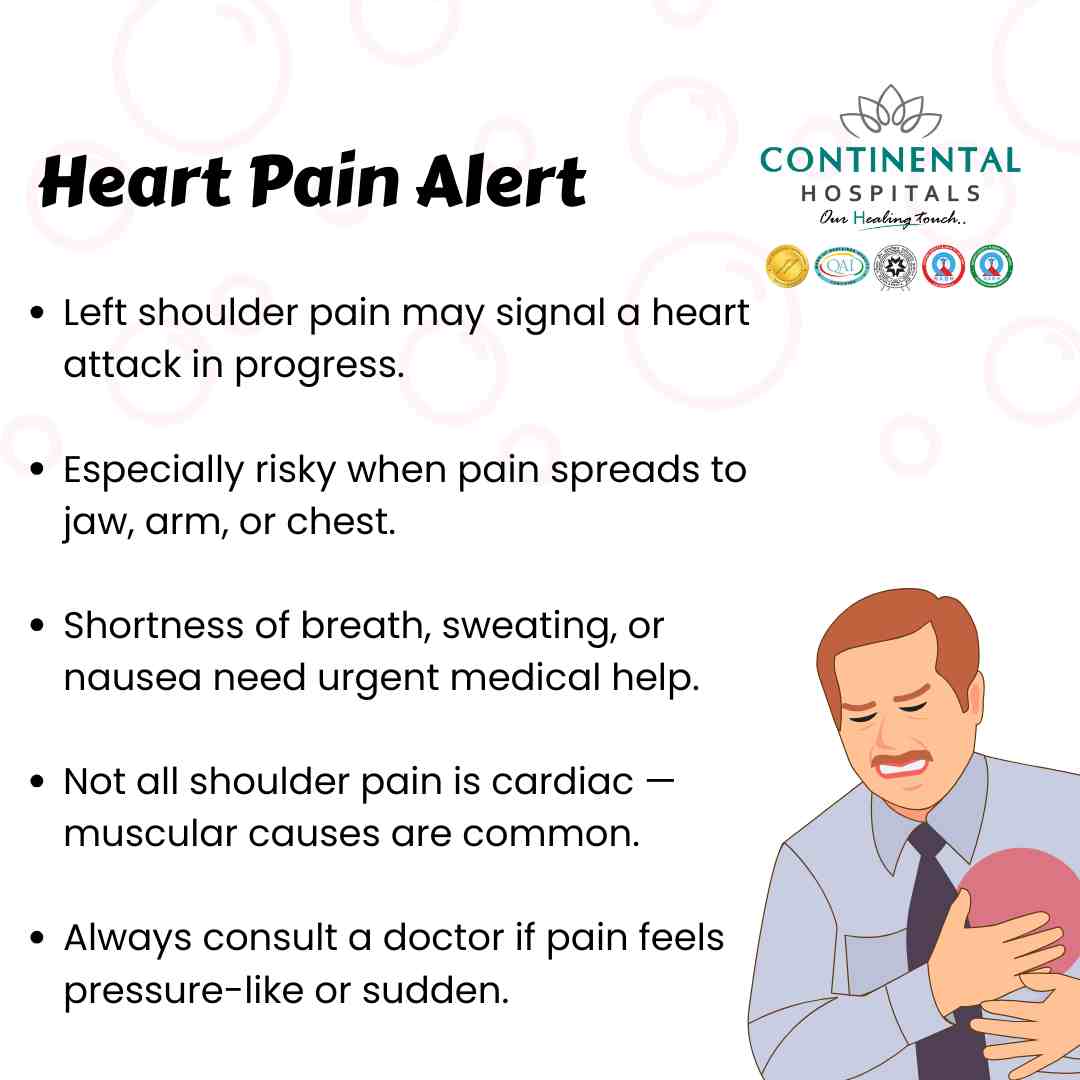
Left shoulder pain or chest discomfort could be a warning sign. Visit the Best Cardiology Doctors in Hyderabad at Continental Hospitals for expert consultation with our experienced cardiologists in Hyderabad.

Can Heart Problems Cause Shoulder Pain?

Yes, heart problems can cause pain in the left shoulder. This happens due to referred pain, where pain originating in one part of the body is felt in another. The nerves that supply the heart and shoulder are closely connected. When the heart muscle doesn’t receive enough blood due to a blockage or spasm, pain signals can spread to the left arm, shoulder, neck, jaw, or even the back.

This type of pain is common in conditions like angina or heart attack (myocardial infarction). While not everyone experiences the same symptoms, recognizing warning signs is crucial.

What are the warning signs of a heart problem?

If your left shoulder pain is linked to a heart issue, it will usually come with additional symptoms. Watch for the following warning signs:

  • Discomfort or heaviness in the chest that may spread to the left shoulder, arm, or jaw
  • Tightness, squeezing, or burning sensation in the chest
  • Sudden shortness of breath or difficulty breathing
  • Nausea, vomiting, or indigestion-like feeling
  • Profuse sweating or cold, clammy skin
  • Unexplained fatigue or dizziness

If you notice these symptoms together with left shoulder pain, seek emergency medical care immediately. Timely treatment can prevent serious complications and improve outcomes.

Second Opinion

What is the difference between heart pain and muscle pain?

It’s not always easy to tell the difference between shoulder pain caused by a muscle problem and pain due to a heart issue. However, there are some key differences:

Heart-Related Pain Muscle or Joint Pain
Comes suddenly, often after exertion or stress Usually follows physical activity, injury, or strain
May radiate to the jaw, arm, or back Localized to the shoulder or upper back
Accompanied by chest pressure, sweating, or nausea Worsens with movement or touch
Does not improve with rest Improves with rest, ice, or pain relief medications

If you’re unsure about the cause, it’s always safer to get a cardiac evaluation.

When Should You See a Doctor?

You should see a doctor if your left shoulder pain:

  • Persists for more than a few days
  • Occurs during physical activity or emotional stress
  • Comes with chest discomfort, breathlessness, or nausea
  • Feels like pressure or heaviness rather than sharp pain

Ignoring these symptoms could delay diagnosis and treatment of a heart condition.

How do doctors diagnose the cause of shoulder pain?

At Continental Hospitals, our team of  Best Cardiologists in Hyderabad and specialists use advanced diagnostic tools to identify whether your pain is heart-related or musculoskeletal. Tests may include:

Electrocardiogram (ECG): Measures the heart’s electrical activity to detect abnormalities.

Echocardiogram: Uses ultrasound to assess heart function and structure.

Need an Appointment?

Blood Tests: Check for cardiac enzymes released during a heart attack.

Stress Test: Monitors heart performance during exercise or controlled stress.

Imaging Studies: X-rays or MRI scans may be used to rule out bone or muscle causes.

How is heart-related shoulder pain treated?

If shoulder pain is caused by a heart issue, treatment depends on the underlying condition. It may include:

Medications: To improve blood flow, lower blood pressure, or reduce cholesterol levels.

Angioplasty or Stenting: To open blocked arteries and restore normal circulation.

Lifestyle Modifications: A heart-healthy diet, regular exercise, quitting smoking, and stress management play a vital role in recovery.

Rehabilitation and Follow-up: Cardiac rehabilitation programs help improve strength and prevent future complications.

Why Choose Continental Hospitals for Cardiac Care?

Continental Hospitals, Hyderabad, is among the leading JCI-accredited and NABH-certified multispecialty hospitals in India, known for its excellence in patient safety, clinical quality, and advanced cardiac care. Our Cardiology Department is equipped with state-of-the-art infrastructure and a 24x7 cardiac emergency response team capable of handling complex heart emergencies.

We offer:

  • Advanced diagnostic and interventional cardiac facilities
  • Expert cardiologists and cardiac surgeons with decades of experience
  • Integrated ICU and post-cardiac care units
  • Personalized rehabilitation and recovery programs
  • Evidence-based treatment adhering to international standards

Our hospital follows strict infection control protocols and is recognized for its patient-centric care. Whether it’s an emergency or preventive heart check-up, we ensure every patient receives world-class attention and care.

How can I prevent heart-related shoulder pain?

Prevention starts with maintaining good heart health. Simple lifestyle changes can make a big difference:

  • Eat a balanced diet rich in fruits, vegetables, whole grains, and lean proteins
  • Exercise regularly under medical guidance
  • Maintain healthy blood pressure, cholesterol, and blood sugar levels
  • Avoid smoking and limit alcohol consumption
  • Manage stress through relaxation techniques like meditation or yoga
  • Go for regular health check-ups and heart screenings

Taking care of your heart today can help prevent life-threatening conditions tomorrow.

Conclusion

Left shoulder pain should never be ignored, especially if it comes with symptoms like chest tightness, shortness of breath, or sweating. While not all shoulder pain is heart-related, it’s always better to be cautious and get evaluated by a specialist. Early detection and treatment can save lives.

If you suffer from left shoulder pain or chest discomfort, consult our top cardiologists in Hyderabad, at Continental Hospitals.

Related Blogs:

  1. The Link Between Obesity and Heart Problems
  2. Is Chest Pain Always a Heart Problem?

Frequently Asked Questions

No, left shoulder pain is not always caused by a heart problem. It can result from muscle strain, arthritis, tendon injuries, nerve compression, or poor posture. However, in some cases, left shoulder pain may be a warning sign of a heart attack, especially when it occurs with chest pain, shortness of breath, sweating, nausea, dizziness, or pain spreading to the jaw or arm. Heart-related shoulder pain usually appears without a clear injury and may worsen with physical activity. It is important not to ignore sudden or unexplained left shoulder pain, particularly if you have risk factors such as diabetes, high blood pressure, high cholesterol, smoking, obesity, or a family history of heart disease. Seeking prompt medical evaluation can help identify the underlying cause and ensure timely treatment.
Heart attack-related shoulder pain often differs from pain caused by muscle or joint injuries. It may feel like pressure, heaviness, squeezing, or discomfort rather than a sharp pain. The pain can spread from the chest to the left shoulder, arm, neck, jaw, or upper back. It is frequently accompanied by symptoms such as chest tightness, difficulty breathing, cold sweats, nausea, vomiting, dizziness, or unusual fatigue. The discomfort usually does not improve with rest, stretching, or changing body position. If these symptoms appear suddenly or become severe, seek emergency medical care immediately. Early treatment significantly improves survival and reduces heart damage.
Yes, women often experience heart attack symptoms differently than men. Instead of severe chest pain, women may develop discomfort in the left shoulder, neck, jaw, upper back, or both arms. They may also experience unusual fatigue, nausea, indigestion, shortness of breath, dizziness, or cold sweats. Because these symptoms can be subtle or mistaken for other conditions, women may delay seeking medical attention. Recognizing these warning signs is essential, especially for women with diabetes, hypertension, obesity, or a family history of heart disease. Prompt evaluation by a healthcare professional can help prevent serious complications.
Many non-cardiac conditions can cause left shoulder pain. Common causes include rotator cuff injuries, frozen shoulder, tendonitis, bursitis, arthritis, muscle strain, cervical spine disorders, and pinched nerves. Shoulder pain may also occur due to acid reflux, gallbladder disease, or referred pain from the diaphragm. The location, duration, and pattern of pain often help doctors identify the cause. Pain that worsens with movement or improves with rest is more likely related to the muscles or joints. A thorough medical evaluation, including physical examination and imaging when needed, helps determine the exact diagnosis and appropriate treatment.
You should seek emergency medical care immediately if left shoulder pain occurs suddenly and is accompanied by chest pain, shortness of breath, sweating, nausea, vomiting, dizziness, fainting, or pain spreading to the jaw, neck, or left arm. These symptoms may indicate a heart attack or another life-threatening condition. Do not attempt to drive yourself if symptoms are severe. Calling emergency medical services ensures rapid assessment and treatment. Even if the symptoms improve after a few minutes, medical evaluation is still necessary because heart problems can sometimes present intermittently. Early diagnosis greatly increases the chances of successful treatment.
Doctors use several tests to determine whether left shoulder pain is caused by a heart problem. An electrocardiogram (ECG) is usually the first test to evaluate heart rhythm and detect signs of a heart attack. Blood tests measure cardiac biomarkers such as troponin, which indicate heart muscle injury. Depending on the findings, additional tests may include echocardiography, stress testing, coronary CT angiography, or coronary angiography. Doctors also review your medical history, symptoms, physical examination, and risk factors. These investigations help distinguish heart-related pain from musculoskeletal or neurological conditions and guide the most effective treatment plan.
Yes, some people experience a heart attack without significant chest pain. Instead, they may have pain or discomfort in the left shoulder, arm, jaw, neck, upper back, or stomach. This is more common in women, older adults, and people with diabetes. Additional symptoms may include shortness of breath, excessive sweating, nausea, dizziness, or extreme fatigue. Because these symptoms can be easily overlooked, it is important to seek medical attention whenever unexplained shoulder pain is associated with other warning signs. Early diagnosis and treatment reduce the risk of permanent heart damage and improve recovery outcomes.
Reducing the risk of heart-related shoulder pain starts with maintaining good cardiovascular health. Follow a balanced diet rich in fruits, vegetables, whole grains, and lean proteins while limiting salt, sugar, and saturated fats. Exercise regularly for at least 150 minutes each week, avoid smoking, maintain a healthy weight, and limit alcohol consumption. Keep blood pressure, cholesterol, and diabetes under good control through regular medical checkups and prescribed medications. Managing stress and getting adequate sleep also support heart health. If you have persistent or unexplained shoulder pain along with other concerning symptoms, seek medical evaluation without delay.
Disclaimer: The information provided in this blog is intended for general knowledge and informational purposes only, and does not constitute medical advice. Always consult with a qualified healthcare professional for any medical concerns or before making any decisions about your health.

Get in Touch With Us

Whether you are from India or abroad, we are here to help you with your medical queries. Please fill out the form below and our team will connect with you shortly.

  • ✔ Quick response from our medical experts
  • ✔ Secure data handling & privacy
  • ✔ Easy upload for reports & documents
banner_image

Chat with our medical experts on WhatsApp for quick assistance and hassle-free appointment booking

Recent Posts