.webp)


Weight loss surgery is a medical procedure designed to help individuals struggling with severe obesity achieve long-term weight loss and improve their overall health. Also known as bariatric surgery, these procedures include gastric sleeve surgery, gastric bypass surgery, and other permanent weight loss surgery options. At Continental Hospitals, Hyderabad, we offer advanced bariatric care with expert surgeons, state-of-the-art facilities, and international accreditations ensuring safe and effective treatment.
Understanding who is eligible for weight loss surgery and who is not is crucial before considering any procedure. Not every person struggling with weight is a candidate. Selecting the right patients ensures safety and maximizes the benefits of the surgery.
Who Is Eligible for Weight Loss Surgery?
Weight loss surgery is usually recommended for individuals who have tried other weight loss methods, such as diet changes, exercise, or medication, but have not achieved long-term results. Candidates for bariatric surgery generally meet specific criteria, including body mass index (BMI) levels, existing health conditions, and overall physical and mental health.
Visit our Bariatric Surgery Department at Continental Hospitals for expert guidance from assessment to post-surgery care.
1. Body Mass Index Criteria
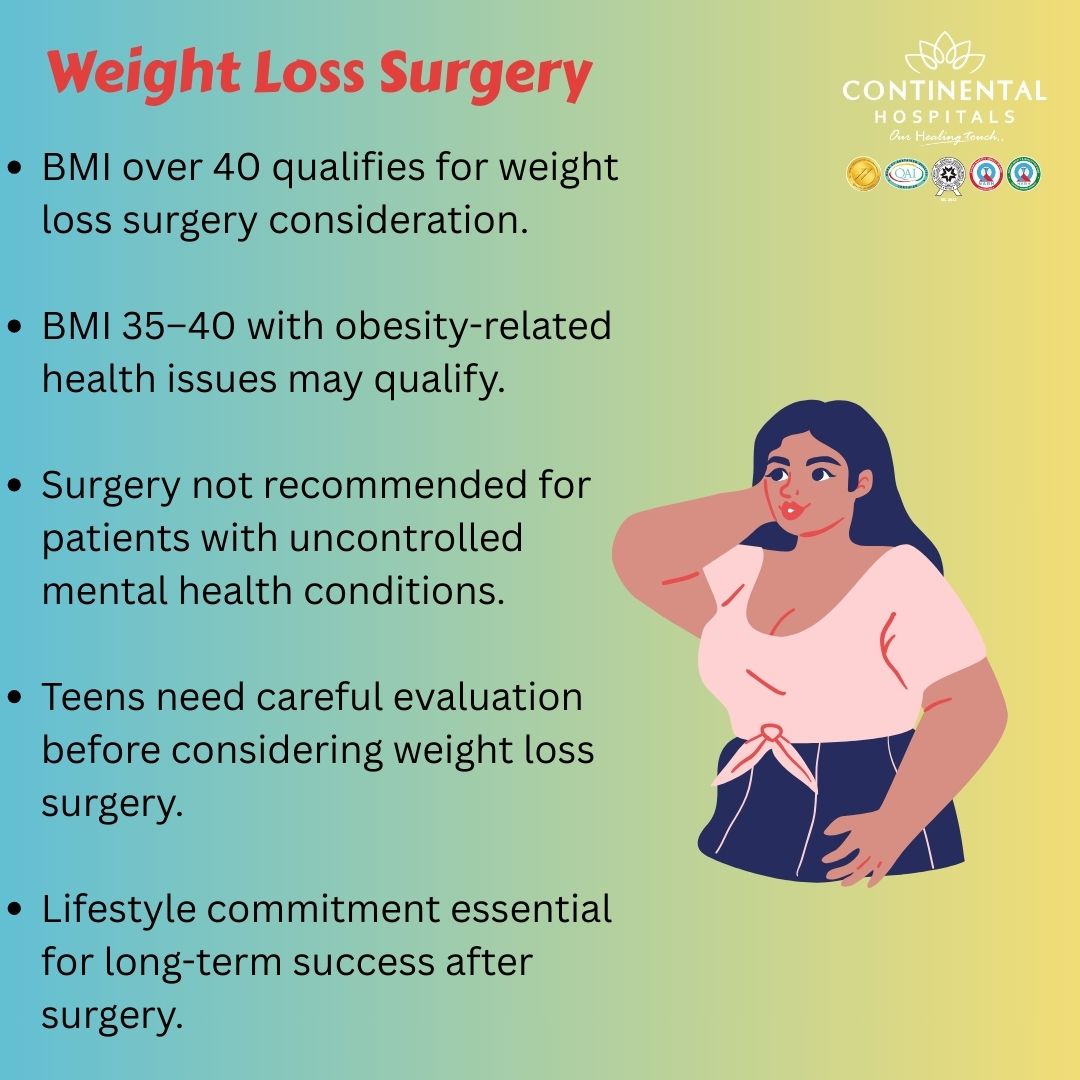
Individuals with a BMI of 40 or higher are usually eligible for weight loss surgery.
People with a BMI of 35-39.9 who also have obesity-related health issues, such as type 2 diabetes, high blood pressure, or sleep apnea, may also be considered.
Patients with a BMI below 35 may qualify in rare cases if they have serious health problems caused by obesity.

2. Health Conditions Improved by Surgery
Weight loss surgery is not only about losing weight but also about improving or resolving obesity-related health problems. Candidates often suffer from:
- Type 2 diabetes
- High blood pressure
- High cholesterol
- Obstructive sleep apnea
- Joint pain and mobility issues
Bariatric surgery can significantly reduce the risk of complications from these conditions, improving quality of life and overall longevity.
3. Commitment to Lifestyle Changes
Weight loss surgery requires a lifelong commitment to diet, exercise, and medical follow-up. Eligible candidates must demonstrate:
- Motivation to follow a post-surgery diet plan
- Willingness to engage in regular physical activity
- Commitment to attending follow-up appointments for long-term monitoring
Patients who cannot commit to these changes may not achieve optimal results from the surgery.
4. Psychological and Emotional Readiness
Mental and emotional readiness is equally important. Candidates are evaluated for:
- Emotional stability and realistic expectations
- Understanding the risks and benefits of surgery
- Ability to cope with lifestyle changes after surgery
Patients with untreated mental health conditions may need counseling before being cleared for surgery.
Who Is Not Eligible for Weight Loss Surgery?
While weight loss surgery can benefit many, it is not suitable for everyone. Some individuals are not considered candidates due to medical, psychological, or lifestyle factors.
1. Certain Medical Conditions
Patients with severe heart, lung, or liver disease may face higher surgical risks. Surgery may not be recommended for individuals with:
- Uncontrolled heart disease
- Severe liver or kidney disease
- Untreated endocrine disorders affecting weight
2. Pregnancy or Planning Pregnancy
Weight loss surgery is generally not performed on pregnant women. Those planning to become pregnant are advised to delay surgery until after childbirth and stabilization of weight.
3. Substance Abuse
Active alcohol or drug abuse can complicate surgery and recovery. Candidates must have a stable lifestyle and no ongoing substance dependence.
4. Lack of Commitment to Lifestyle Changes
Weight loss surgery is not a quick fix. Patients unwilling or unable to follow post-surgery diet, exercise, and follow-up plans are not suitable candidates.
Types of Weight Loss Surgery Available
At Continental Hospitals, Hyderabad, we offer a range of advanced bariatric procedures tailored to individual needs.
Gastric Sleeve Surgery
This procedure removes a portion of the stomach, reducing its size and limiting food intake. Gastric sleeve surgery is highly effective for long-term weight loss and improvement in metabolic conditions.
Gastric Bypass Surgery
Gastric bypass surgery reroutes the digestive system to reduce calorie absorption and promote weight loss. It is particularly effective for patients with severe obesity and type 2 diabetes.
Permanent Weight Loss Surgery
Other procedures aim to provide permanent solutions for obesity, including laparoscopic adjustments to the stomach and intestines to aid weight reduction and health improvement.
Benefits of Weight Loss Surgery
Weight loss surgery provides more than just shedding pounds. Some of the key benefits include:
- Significant and sustained weight loss
- Improvement or resolution of obesity-related health conditions
- Enhanced mobility and physical activity
- Increased confidence and mental well-being
- Reduced risk of heart disease, diabetes, and certain cancers
Key Points to Remember
- Weight loss surgery is a safe and effective treatment for eligible patients
- Not everyone is suitable; proper evaluation is essential
- Commitment to lifestyle changes is crucial for long-term success
- Choosing an accredited hospital ensures safety and high-quality care
Why Choose Continental Hospitals for Weight Loss Surgery?
Continental Hospitals, Hyderabad, is a leading center for bariatric surgery with international accreditations ensuring world-class safety and patient care. Our hospital offers:
- Experienced bariatric surgeons and multidisciplinary care teams
- State-of-the-art operation theatres and advanced surgical techniques
- Comprehensive pre-surgery evaluation and post-surgery follow-up
- Personalized weight loss plans and diet counseling
- Supportive environment for emotional and psychological well-being
Choosing an accredited hospital like Continental ensures that patients receive not only expert surgical care but also long-term support for a healthier, sustainable lifestyle.
Conclusion
Weight loss surgery is a life-changing procedure for individuals struggling with severe obesity and related health conditions. Understanding who is eligible and who is not is crucial to achieving safe and effective results. Ideal candidates are those with a high BMI, obesity-related health issues, and a commitment to lifestyle changes. Surgery is not suitable for everyone, particularly those with certain medical conditions, active substance abuse, or lack of commitment to post-surgery care.
consult our best bariatric surgeons at Continental Hospitals. Our team will guide you through the process, from eligibility assessment to post-surgery care, ensuring the best outcomes for your journey to permanent weight loss.
Related Blog Topics: