.webp)


Pregnancy is a phase where even small nutritional gaps can have a big impact on both mother and baby. One of the most essential nutrients during this time is folic acid. It plays a critical role in early fetal development and supports a healthy pregnancy. When folic acid levels are low during pregnancy, it can lead to serious complications that are often preventable with timely care and awareness.
What Is Folic Acid?
Folic acid is the synthetic form of vitamin B9. It helps the body make new cells, produce DNA, and form red blood cells. During pregnancy, this vitamin becomes even more important because the baby’s brain, spine, and nervous system develop rapidly in the early weeks.
Folic acid during pregnancy supports proper cell division and growth. Many women may not realize they are pregnant during the first few weeks, which is why maintaining adequate folic acid levels before and during pregnancy is strongly advised.
Visit Our Gynecology Department at Continental Hospitals for early care, accurate diagnosis, and personalized treatment to ensure a safe pregnancy and a healthy baby.
Why Is Folic Acid Important in Pregnancy?
Folic acid in pregnancy is essential for preventing birth defects and supporting maternal health. Adequate intake helps ensure proper development of the neural tube, which later forms the baby’s brain and spinal cord.
Key folic acid benefits during pregnancy include
• Supporting early fetal brain and spine development
• Reducing the risk of neural tube defects
• Helping prevent anemia in the mother
• Supporting healthy placental growth
• Promoting a healthy pregnancy outcome
When folic acid levels are insufficient, these protective benefits are reduced.
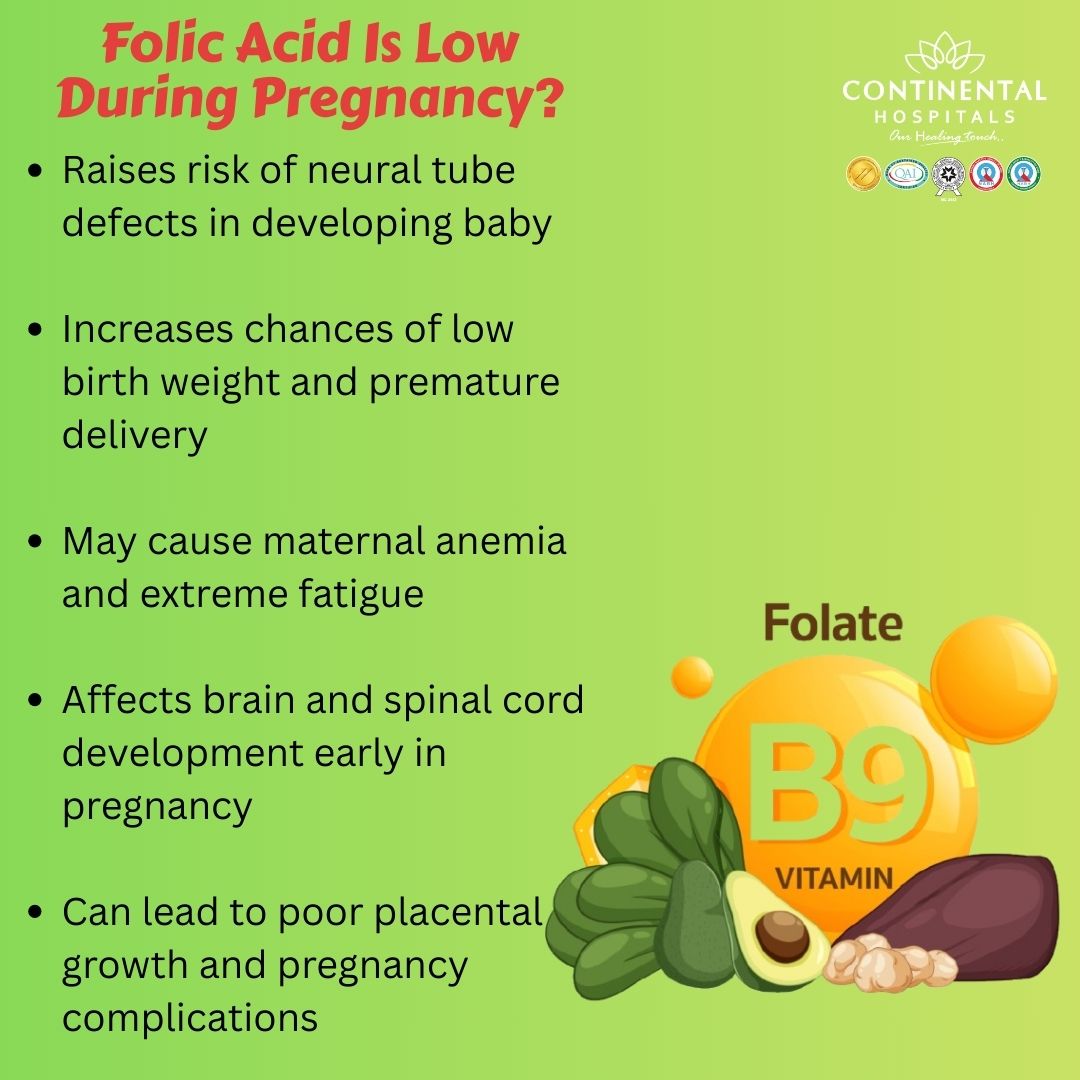
What Happens If Folic Acid Is Low During Pregnancy?
Low folic acid levels during pregnancy can affect both the mother and the baby. The impact is most severe in the first trimester, when the baby’s organs are forming.

Effects on the Baby
Folic acid deficiency increases the risk of neural tube defects. These are serious conditions that affect the brain and spinal cord.
Common risks include
• Spina bifida, where the spine does not develop properly
• Anencephaly, a severe condition affecting brain development
• Low birth weight
• Poor growth inside the womb
• Increased risk of premature birth
Vitamin B9 deficiency can also affect long term neurological development and overall health of the baby.
Effects on the Mother
Low folic acid during pregnancy can also affect maternal health.
Possible effects include
• Anemia causing weakness and fatigue
• Increased risk of pregnancy complications
• Higher chances of placental problems
• Reduced immunity leading to frequent infections
Folic acid deficiency can make pregnancy physically more exhausting and increase health risks if left unaddressed.
What Causes Folic Acid Deficiency?
Several factors can contribute to low folic acid levels during pregnancy.
Common causes include
• Poor dietary intake of folic acid rich foods
• Unplanned pregnancy without preconception supplementation
• Digestive disorders affecting nutrient absorption
• Certain medications that interfere with vitamin B9
• Increased nutritional demand during pregnancy
Women with previous pregnancy complications or nutritional deficiencies may be at higher risk and require closer monitoring.
Signs and Symptoms of Low Folic Acid
Folic acid deficiency may not always show clear symptoms, especially in the early stages. However, some warning signs can appear.
Possible symptoms include
• Constant tiredness or weakness
• Pale skin
• Shortness of breath
• Difficulty concentrating
• Mouth sores or tongue swelling
If these symptoms appear during pregnancy, it is important to consult a doctor for evaluation and blood tests.
How Much Folic Acid Is Needed During Pregnancy?
Doctors usually recommend folic acid supplements along with a balanced diet. The requirement may vary depending on individual health needs, previous pregnancy history, and risk factors.
Folic acid during pregnancy is most critical before conception and in the first trimester. However, continued intake throughout pregnancy supports ongoing growth and maternal health.
Always follow medical advice rather than self adjusting supplements.
Best Food Sources of Folic Acid
Along with supplements, natural food sources play an important role in maintaining adequate levels.
Folic acid rich foods include
• Green leafy vegetables like spinach and broccoli
• Lentils and beans
• Citrus fruits
• Fortified cereals and grains
• Nuts and seeds
Including these foods regularly helps support a healthy pregnancy and reduces the risk of vitamin B9 deficiency.
How Is Folic Acid Deficiency Diagnosed?
Doctors diagnose folic acid deficiency through blood tests. During antenatal checkups, nutritional screening helps identify deficiencies early.
Early diagnosis allows timely treatment and reduces risks to both mother and baby. Regular prenatal visits are essential to monitor nutritional status and overall pregnancy health.
Can Low Folic Acid Be Prevented?
Yes. Folic acid deficiency is one of the most preventable pregnancy related nutritional issues.
Simple prevention steps include
• Taking prescribed folic acid supplements
• Eating a balanced, nutrient rich diet
• Planning pregnancy with preconception counseling
• Attending regular antenatal checkups
• Managing existing health conditions under medical guidance
Prevention plays a key role in ensuring a healthy pregnancy and safe fetal development.
Why Choose Continental Hospitals for Pregnancy Care?
Continental Hospitals is recognized as one of the best hospitals in Hyderabad, offering comprehensive maternity and nutritional care under one roof. The hospital follows global clinical standards and is accredited by leading national and international healthcare quality bodies.
Why expectant mothers trust Continental Hospitals
• Experienced obstetricians and gynecologists
• Multidisciplinary care including nutrition and fetal medicine
• Advanced diagnostic and laboratory facilities
• Evidence based treatment protocols
• Patient centered approach with personalized care
The focus is always on safety, early detection, and holistic maternal and fetal wellbeing.
When Should You See a Doctor?
If you are planning pregnancy, already pregnant, or experiencing symptoms like extreme fatigue or weakness, consulting a doctor is important. Early medical guidance ensures that folic acid levels are adequate and pregnancy risks are minimized.
If you suffer from repeated pregnancy loss, anemia, or nutritional deficiencies, expert evaluation is essential to protect both mother and baby.
Conclusion
Folic acid plays a vital role in pregnancy, especially in the early stages of fetal development. Low folic acid levels during pregnancy can lead to serious complications, but the good news is that they are largely preventable with awareness, proper nutrition, and timely medical care.
A healthy pregnancy begins with informed choices and regular medical support. If you are pregnant or planning to conceive, do not ignore the importance of folic acid.
consult our Best Gynecology at Continental Hospitals. Early care, accurate diagnosis, and personalized treatment can help ensure a safe pregnancy and a healthy future for your baby.
Related Blog Topics: