.webp)

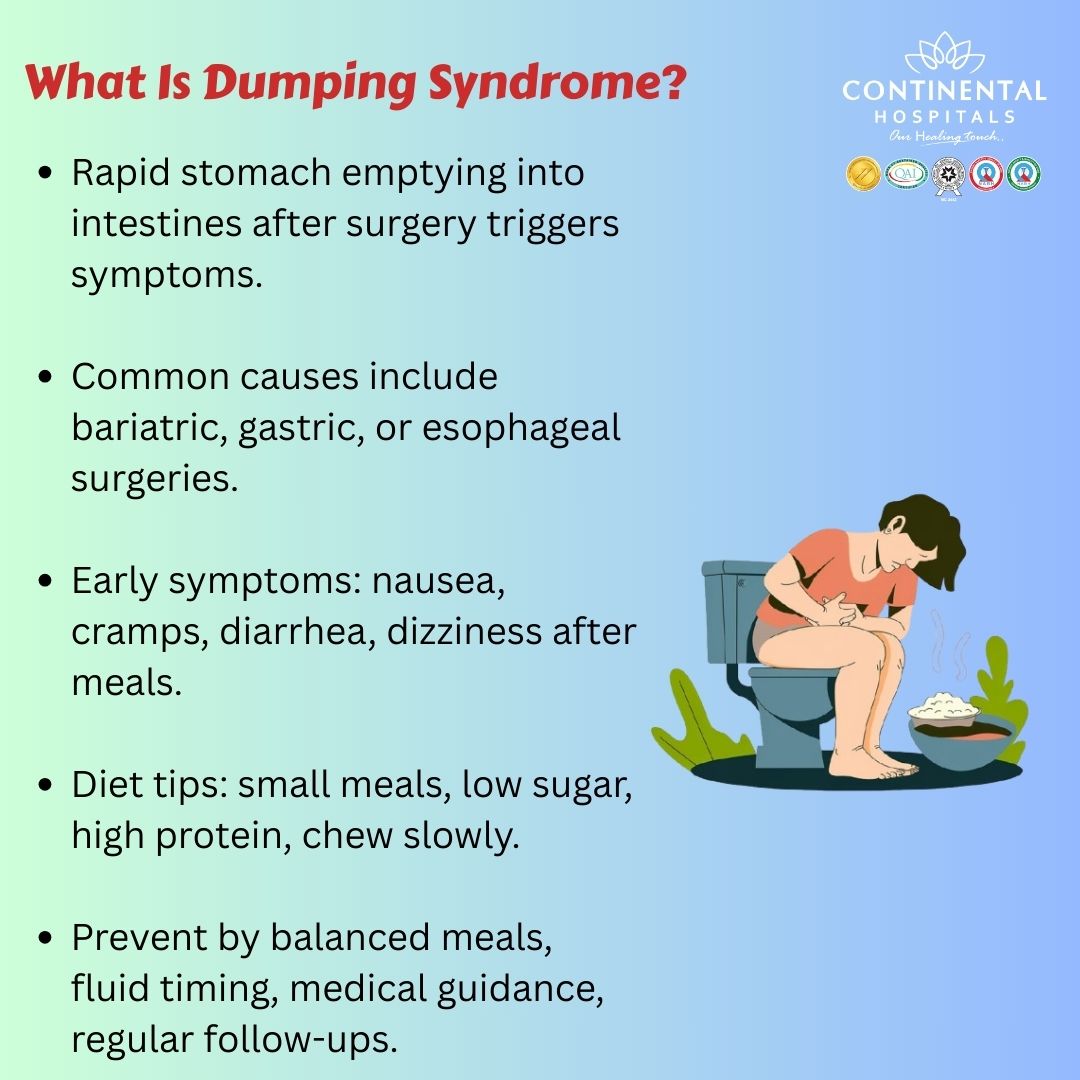
Dumping syndrome is a digestive condition that can affect people after certain stomach or weight loss surgeries. It happens when food moves too quickly from the stomach into the small intestine. This rapid movement can disturb digestion and lead to uncomfortable symptoms that affect daily life.
What Is Dumping Syndrome?
Dumping syndrome is a condition where partially digested food enters the small intestine too fast, especially foods high in sugar or refined carbohydrates. The small intestine is not prepared to handle this sudden load, which causes fluid shifts and hormonal changes in the body.
Dumping syndrome is most commonly seen after bariatric surgery or other stomach surgeries that change how the stomach stores and releases food. Not everyone who has surgery develops this condition, but it is a known and manageable complication.
Visit our Gastroenterology Department at Continental Hospitals for expert care and early treatment to restore digestive comfort and improve your quality of life.
Types of Dumping Syndrome
Dumping syndrome is divided into two main types based on when symptoms appear.
Early Dumping Syndrome
Early dumping syndrome usually occurs within 10 to 30 minutes after eating. It is caused by rapid movement of food into the intestine, which pulls fluid from the bloodstream into the gut.
Common early dumping syndrome symptoms include:

- Abdominal cramps and pain
- Bloating and nausea
- Diarrhea
- Rapid heartbeat
- Sweating and dizziness
Late Dumping Syndrome
Late dumping syndrome occurs one to three hours after a meal. It is linked to a sudden rise and fall in blood sugar levels.
Common late dumping syndrome symptoms include:
- Weakness and fatigue
- Shakiness or trembling
- Hunger
- Confusion or difficulty concentrating
- Sweating
Both forms can vary in severity from person to person.
Dumping Syndrome Causes
The most common dumping syndrome causes are related to surgical changes in the stomach.
Key causes include:
- Bariatric surgery such as gastric bypass or sleeve gastrectomy
- Surgery for stomach ulcers or stomach cancer
- Removal of part or all of the stomach
- Damage to the stomach valve that controls food release
After bariatric surgery, the stomach becomes smaller or bypasses part of the digestive tract. This limits its ability to slowly release food, leading to dumping syndrome.
Dumping Syndrome Symptoms to Watch For
Dumping syndrome symptoms may begin soon after surgery or develop gradually. Some people experience mild symptoms, while others have more severe episodes.
Common symptoms include:
- Nausea or vomiting after meals
- Abdominal discomfort
- Diarrhea or urgency to pass stools
- Lightheadedness or fainting
- Rapid pulse
- Low blood sugar symptoms in late dumping syndrome
If symptoms interfere with daily activities or nutrition, medical evaluation is important.
How Is Dumping Syndrome Diagnosed?
Doctors usually diagnose dumping syndrome based on symptoms, medical history, and previous surgeries. In some cases, tests may be advised to rule out other digestive conditions.
Diagnostic approaches may include:
- Review of eating habits and symptom timing
- Blood sugar monitoring
- Gastric emptying studies
- Nutritional assessment
Early diagnosis helps prevent complications such as malnutrition and poor quality of life.
Dumping Syndrome Diet Tips
Diet plays the most important role in controlling dumping syndrome. A structured dumping syndrome diet can significantly reduce symptoms.
Key Dietary Guidelines
- Eat smaller meals more frequently
- Chew food slowly and thoroughly
- Avoid sugary foods like sweets, desserts, and sweetened drinks
- Limit refined carbohydrates such as white bread and pastries
- Increase protein intake from eggs, lean meats, and legumes
- Include healthy fats in moderation
- Drink fluids between meals, not during meals
Foods to Prefer
- High fiber vegetables
- Whole grains in small portions
- Low sugar fruits
- Protein rich foods
Foods to Avoid
- Sugary beverages
- Processed snacks
- High fat fried foods
- Alcohol
Following a dumping syndrome diet under medical guidance improves digestion and energy levels.
Dumping Syndrome Treatment Options
Dumping syndrome treatment depends on symptom severity. Many people improve with dietary changes alone, but others may need additional care.
Treatment options include:
- Personalized nutrition counseling
- Medications to slow gastric emptying
- Blood sugar control strategies for late dumping syndrome
- Monitoring vitamin and mineral levels
In rare cases, surgical revision may be considered if symptoms are severe and unresponsive to treatment.
Can Dumping Syndrome Be Prevented?
Dumping syndrome prevention focuses on post surgery care and lifestyle habits.
Preventive steps include:
- Following post bariatric surgery diet plans strictly
- Avoiding high sugar foods from the beginning
- Eating mindfully and slowly
- Attending regular follow up visits
- Reporting early symptoms to your doctor
With proper education and support, many patients avoid long term complications.
Living Well With Dumping Syndrome
Dumping syndrome can be challenging, but it is manageable. Most patients see significant improvement within months by following dietary advice and medical guidance. Awareness, patience, and regular monitoring play a key role in recovery.
Learning to recognize trigger foods and meal patterns helps patients regain confidence and maintain good nutrition.
Why Choose Continental Hospitals?
Continental Hospitals is recognized as one of the best hospital in Hyderabad for advanced digestive and bariatric care. The hospital is known for its strong clinical standards, patient focused approach, and internationally aligned healthcare practices.
Continental Hospitals holds prestigious national and international accreditations that reflect high standards in patient safety, clinical excellence, and ethical care. These accreditations ensure that every patient receives evidence based treatment supported by modern infrastructure and experienced medical teams.
The hospital brings together expert bariatric surgeons, gastroenterologists, dietitians, and endocrinologists who work as a team to manage conditions like dumping syndrome effectively. From diagnosis to long term care, patients receive comprehensive and personalized treatment under one roof.
Conclusion
Dumping syndrome is a common but treatable condition, especially after bariatric surgery. Understanding dumping syndrome causes, recognizing symptoms early, and following a structured dumping syndrome diet can greatly improve quality of life. With the right medical guidance, most patients recover well and maintain healthy digestion.
If you suffer from dumping syndrome symptoms or digestive issues after bariatric surgery, consult our best gastroenterologists at Continental Hospitals. Early evaluation and expert care can help you return to a comfortable and healthy life.