.webp)

Managing High Blood Sugar does not mean giving up fruits completely. Fruits are natural, nutritious, and full of vitamins, minerals, and fiber. The key is choosing the right fruits, eating the right portions, and understanding how they affect blood sugar levels. This detailed guide is written to help people with diabetes, prediabetes, and anyone concerned about rising glucose levels make confident food choices.
Understanding High Blood Sugar
High Blood Sugar, also known as hyperglycemia, occurs when glucose levels in the blood rise above normal. It is commonly linked to diabetes mellitus, especially type 2 diabetes, but it can also affect people under stress, illness, or hormonal imbalance.
Visit our Endocrinology Department at Continental Hospitals, Hyderabad, for expert care, accurate diagnosis, and long-term glucose control.
Common symptoms of high blood sugar
- Increased thirst
- Frequent urination
- Fatigue
- Blurred vision
- Slow wound healing
If left uncontrolled, High Blood Sugar can damage the heart, kidneys, nerves, eyes, and blood vessels. Diet plays a major role in controlling blood sugar, and fruits are often misunderstood in diabetes care.
Can People With High Blood Sugar Eat Fruits?
Yes. Fruits can be safely included in a diabetes friendly diet when chosen wisely. Fruits contain natural sugars, but they also provide fiber, antioxidants, and essential nutrients that help regulate glucose absorption.
The focus should be on:
- Low glycemic index fruits
- High fiber content
- Controlled portion sizes
- Whole fruits instead of juices
Best Fruits for High Blood Sugar Control
Below are fruits that are considered safe and beneficial for people managing High Blood Sugar.
1. Apples
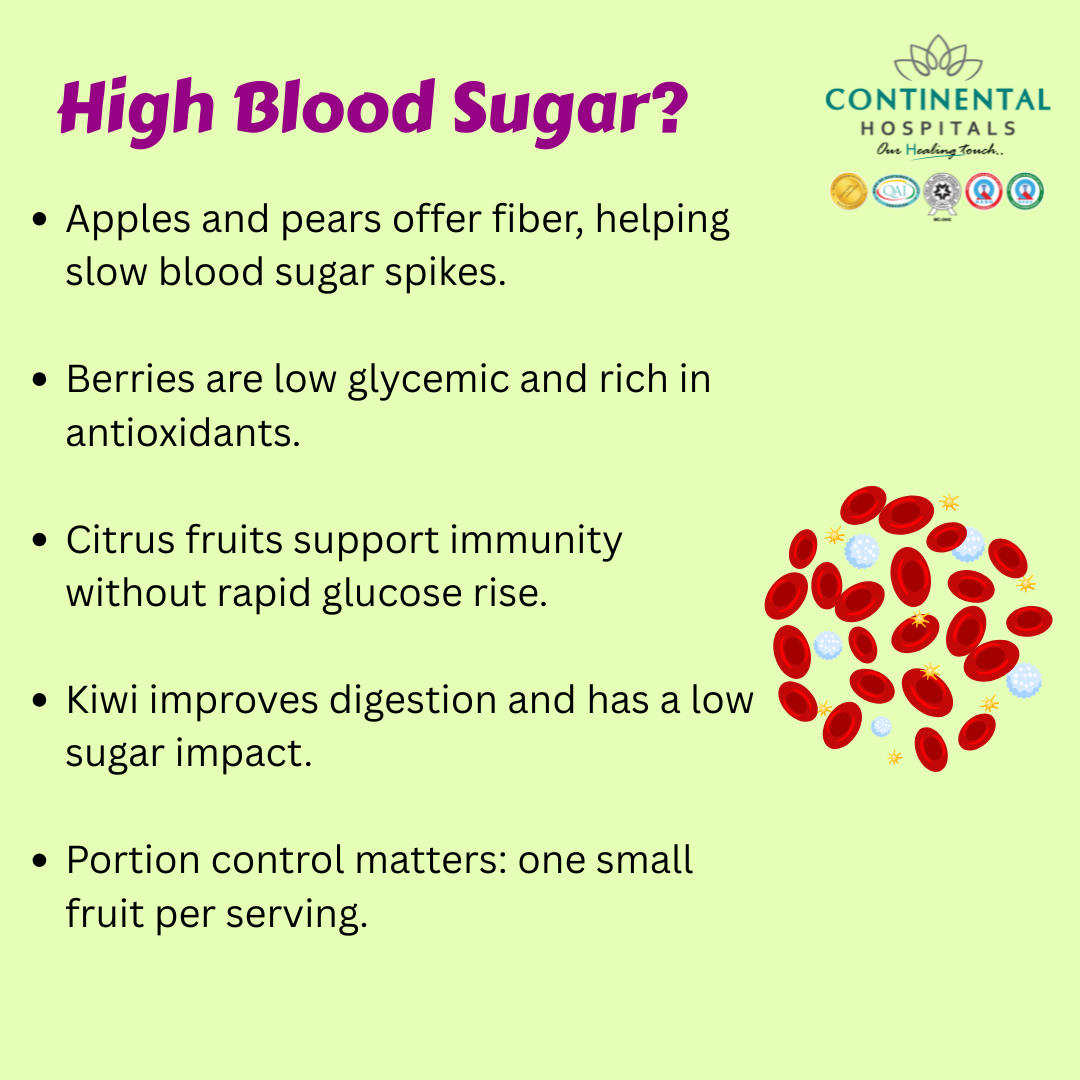
Apples are rich in soluble fiber, especially pectin, which slows sugar absorption. Eating apples with the skin helps maintain steady blood sugar levels.

Why they help?
- Low glycemic index
- High fiber
- Supports gut health
2. Berries
Strawberries, blueberries, raspberries, and blackberries are excellent fruits for diabetics.
Benefits include:
- Low sugar content
- High antioxidants
- Improve insulin sensitivity
3. Citrus Fruits
Oranges, lemons, and grapefruits are packed with vitamin C and fiber.
Safe when eaten:
- As whole fruits
- In moderate portions
- Without added sugar
4. Guava
Guava is highly recommended for people with High Blood Sugar.
Key benefits:
- High dietary fiber
- Low glycemic load
- Supports digestive health
5. Pears
Pears have a slow impact on blood sugar due to their fiber rich skin.
They help:
- Reduce glucose spikes
- Improve satiety
- Support weight management
6. Kiwi
Kiwi contains fiber and vitamin C, helping stabilize glucose levels.
Ideal for:
- Mid morning snacks
- Controlled portions
- Balanced meals
Fruits to Eat in Moderation
Some fruits can raise blood sugar levels faster and should be eaten carefully.
These include:
- Mango
- Banana
- Pineapple
- Sapota
- Grapes
These fruits are not forbidden, but portion control is essential.
Fruits to Avoid With High Blood Sugar
Certain fruits cause rapid glucose spikes and are best avoided or limited.
- Fruit juices
- Dried fruits like dates and raisins
- Canned fruits with syrup
- Fruit based desserts
These lack fiber and increase High Blood Sugar quickly.
How to Eat Fruits Safely With High Blood Sugar?
Following simple habits can make fruits safer for people with diabetes.
- Smart fruit eating tips
- Eat whole fruits, not juices
- Pair fruits with protein or nuts
- Avoid eating fruits alone at night
- Stick to one portion at a time
- Monitor blood sugar after meals
These practices help reduce the effects of High Blood Sugar causes related to diet.
Role of Fruits in Type 2 Diabetes Management
In type 2 diabetes, insulin resistance makes glucose control difficult. Fruits rich in fiber slow digestion and improve insulin response.
Regular intake of safe fruits helps:
- Reduce insulin resistance
- Control appetite
- Prevent sudden glucose spikes
- Support long term diabetes control
A balanced fruit intake lowers the effects of high blood sugar on the body.
Signs You Are Eating Fruits Incorrectly
If fruit intake is not planned well, you may notice:
- Sudden fatigue after eating
- Elevated glucose readings
- Increased hunger
- Weight gain
These are signs of high blood sugar and require dietary review with a healthcare professional.
Why Choose Continental Hospitals, Hyderabad?
Continental Hospitals is recognized as one of the best hospitals in Hyderabad, offering advanced care for diabetes and metabolic disorders.
What makes Continental Hospitals stand out?
- Internationally accredited hospital with NABH and JCI recognition
- Advanced diagnostic facilities for blood sugar monitoring
- Multidisciplinary team approach
- Personalized diabetes management plans
- Evidence based nutritional guidance
- Comprehensive patient education programs
Continental Hospitals follows global healthcare standards, ensuring safe, ethical, and high quality medical care for every patient.
Conclusion
Fruits are not the enemy of diabetes. When chosen wisely, they play a supportive role in controlling High Blood Sugar and improving overall health. Understanding which fruits are safe, how to eat them, and when to seek medical guidance makes a real difference in diabetes care.
With expert doctors, international accreditations, and patient focused care, Continental Hospitals, Hyderabad, provides comprehensive solutions for managing blood sugar, diabetes, and related conditions. Early diagnosis, correct nutrition, and specialist care can help you live a healthier and balanced life.
Consult Our Best Endocrinologist at Continental Hospitals, Hyderabad, for expert diagnosis, treatment planning, and long term glucose control.
Related Blog Topics: