.webp)

Food safety is no longer just a local issue. What we eat today often travels across countries before reaching our plates. This global movement of food has raised serious concerns about chemical residues, especially antibiotics used in animal farming. One such group of substances drawing worldwide attention is nitrofuran metabolites. These compounds are banned in many countries, yet traces are still detected in food products, making them a major public health concern.
What Are Nitrofuran Metabolites?
Nitrofurans are synthetic antibiotics that were once widely used in animal farming to prevent infections and promote growth. Due to their harmful effects, their use has been banned in food producing animals in many countries.
When nitrofurans break down in the body, they form nitrofuran metabolites. These metabolites remain in animal tissues for a long time and are difficult to remove through cooking or processing.
Concerned about food safety risks? visit our internal medicine speciality at Continental Hospitals, Hyderabad.
Key nitrofuran metabolites include
- 3 amino 2 oxazolidinone AOZ
- AMOZ nitrofuran related compounds
- Other nitrofuran metabolites AOZ derivatives
These substances are stable and can accumulate in food products consumed by humans.
Because food products are exported and imported worldwide, contamination in one region can affect consumers across many countries.
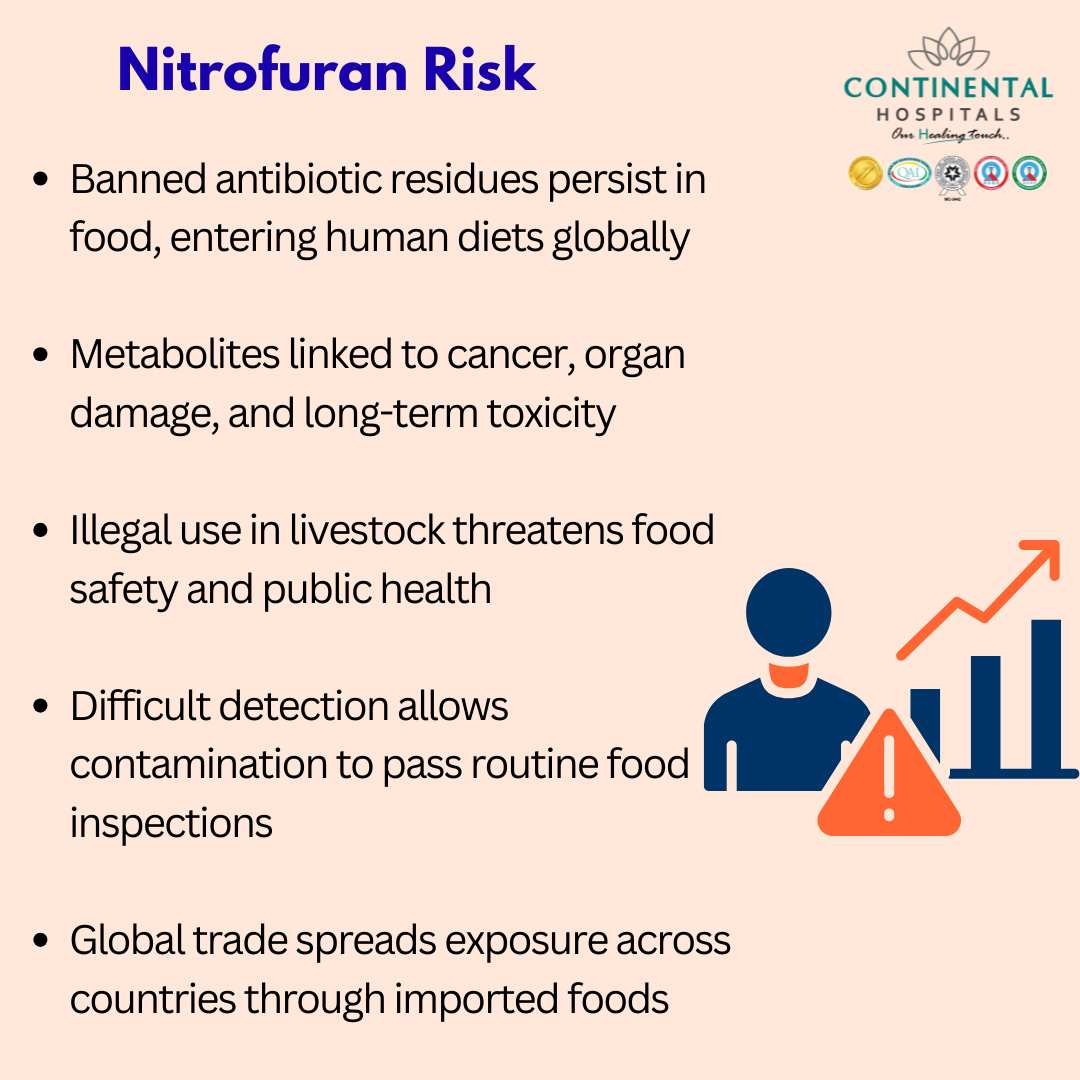
Key Nitrofuran Metabolites and Their Risks
3 Amino 2 Oxazolidinone AOZ

3 amino 2 oxazolidinone AOZ is one of the most commonly detected nitrofuran metabolites. It is linked to furazolidone use in animals. Studies suggest that AOZ may damage DNA and increase cancer risk with prolonged exposure.
AMOZ Nitrofuran Compounds
AMOZ nitrofuran metabolites are formed from nitrofurazone use. These compounds are known for their persistence in animal tissues and potential toxicity.
Due to these risks, international food safety authorities enforce strict zero tolerance policies for these residues.
Where Are Nitrofuran Metabolites Commonly Found?
Despite strict regulations, nitrofuran metabolites continue to be detected in various food products.
Nitrofuran Metabolites in Shrimp
Nitrofuran metabolites in shrimp are among the most reported cases globally. Shrimp farming once relied heavily on antibiotics to prevent disease. Even today, contaminated batches occasionally reach markets, raising food safety alerts.
Nitrofuran Metabolites in Fish
Nitrofuran metabolites in fish have been found in farm raised varieties. Fish farming environments can promote antibiotic misuse, leading to residue accumulation.
Nitrofuran Metabolites in Eggs
Nitrofuran metabolites in eggs occur when laying hens are exposed to contaminated feed or illegal antibiotic use. These residues can transfer directly into eggs consumed daily by many households.
Nitrofuran Metabolites in Honey
Nitrofuran metabolites in honey are detected when bees are exposed to contaminated environments or treated with banned substances. Since honey is often consumed raw, the risk of exposure increases.
How Do Nitrofuran Metabolites Affect Human Health?
The health impact of nitrofuran metabolites depends on exposure level and duration.
- Increased cancer risk with long term exposure
- Liver and kidney stress
- Hormonal imbalance
- Genetic mutations at the cellular level
Children, pregnant women, and individuals with weakened immune systems may be more vulnerable to these effects.
Why Are These Metabolites Hard to Control?
Nitrofuran metabolites are difficult to eliminate because
- They bind strongly to animal tissues
- They remain stable even after cooking
- They require advanced laboratory testing for detection
- This makes routine screening essential in food safety monitoring programs.
How Are Nitrofuran Metabolites Detected?
Detection of nitrofuran metabolites requires advanced analytical techniques. Specialized laboratory tests are used to identify AOZ and AMOZ residues at extremely low levels.
Regular screening helps regulatory bodies prevent contaminated products from entering the food supply.
What Can Consumers Do to Reduce Risk?
While consumers cannot test food at home, they can take practical steps to reduce exposure.
Helpful measures include
- Buying food from trusted and regulated sources
- Avoiding illegally sourced animal products
- Staying informed about food safety alerts
- Maintaining a balanced diet to reduce repeated exposure
If symptoms or concerns arise, medical advice is important.
Why Choose Continental Hospitals?
Continental Hospitals is recognized as the best hospital in Hyderabad for advanced diagnostics and expert medical care related to environmental and food related health risks.
Reasons to choose Continental Hospitals include
- Highly experienced internal medicine and toxicology experts
- Advanced diagnostic facilities for early detection of health effects
- Internationally recognized accreditations and quality standards
- Evidence based clinical practices and patient focused care
- Multidisciplinary teams for comprehensive health evaluation
The hospital follows strict safety and quality protocols, ensuring accurate diagnosis and reliable medical guidance.
Conclusion
Nitrofuran metabolites are a global health concern because of their persistence in food, potential toxicity, and long term health risks. The presence of substances like 3 amino 2 oxazolidinone AOZ and AMOZ nitrofuran compounds in shrimp, fish, eggs, and honey highlights the importance of strict food safety monitoring.
Awareness, regulation, and early medical consultation play a vital role in protecting public health. Understanding what we consume is the first step toward safer living.
If you have concerns about food related health risks, unexplained symptoms, or long term exposure to contaminated food products, consult our top Internal Medicine Specialist at Continental Hospitals.
Related Blog Topics