.webp)


Cold weather can feel refreshing for many, but for some people, stepping into cold air brings an uncomfortable sensation in the chest. This feeling may range from mild pressure to tight pain in the middle of the chest, sometimes combined with cough or shortness of breath. Understanding why cold air causes chest tightness can help people manage symptoms early and know when to seek medical care.
What Is Chest Tightness?
Chest tightness is a sensation of pressure, squeezing, or discomfort in the chest area. Some people describe it as a tight chest with dry cough and shortness of breath, while others feel chest pressure or tight pain in the middle of the chest. The sensation can last a few minutes or continue for hours, depending on the cause.
Chest tightness can be linked to the lungs, muscles, nerves, or even emotional factors like anxiety. Cold air is one of the common triggers, especially in people with sensitive airways.
Visit our General Physician Department at Continental Hospitals for expert care, personalized evaluation, and easier breathing all year.
How Cold Air Affects the Airways
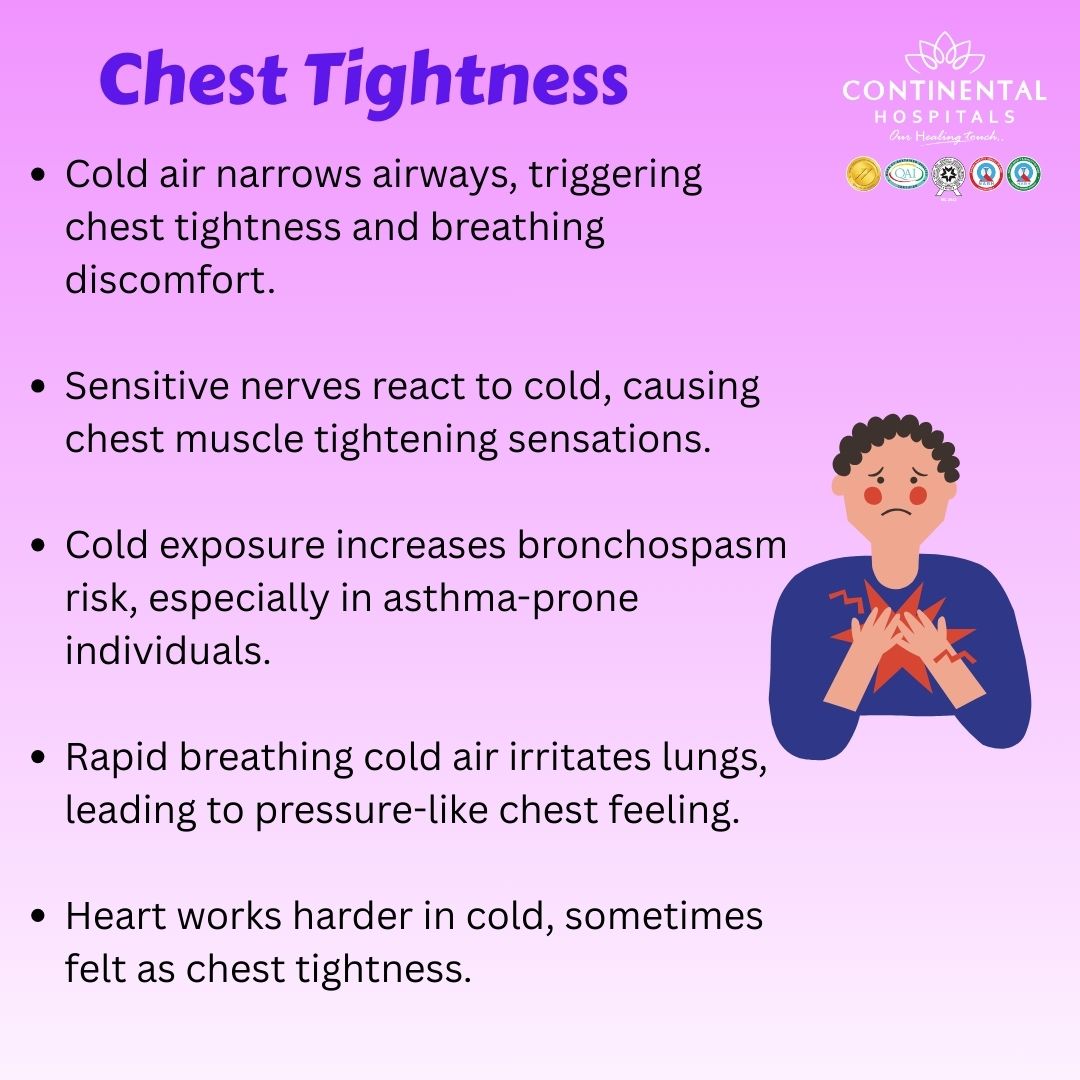
When you breathe in cold air, it enters the airways at a much lower temperature than your body. The airways try to protect themselves by narrowing slightly. In some people, this reaction is stronger than normal.
Cold air can cause the muscles around the airways to tighten. It can also dry the lining of the lungs. Together, these changes can lead to chest tightness and shortness of breath. For people who already have airway sensitivity, cold air triggers asthma or persistent cough more easily.
Common Reasons Cold Air Causes Chest Tightness
Cold air does not affect everyone in the same way. Below are some of the most common reasons why chest tightness occurs in cold conditions.
1. Cold Air Triggers Asthma

People with asthma often notice symptoms worsen during winter. Cold air triggers asthma by causing airway narrowing and inflammation. This can lead to chest tightness, wheezing, cough, and breathing difficulty. Even people with mild or undiagnosed asthma may feel chest tightness and shortness of breath in cold weather.
2. Cold Air Triggers Cough
Cold air can irritate the throat and lungs, leading to a dry cough. Repeated coughing can cause a tight chest and discomfort. Some people experience a tight chest and cough only in cold environments, which improves once they move to warmer air.
3. Airway Sensitivity Without Asthma
Some individuals do not have asthma but still have sensitive airways. In such cases, cold air can cause temporary chest tightness and breathing discomfort without wheezing. This is often mistaken for heart related pain, increasing anxiety.
4. Anxiety Chest Pain and Cold Exposure
Cold air can increase anxiety in some people, especially if breathing feels difficult. Anxiety chest pain often feels like chest pressure or tightness. Chest tightness anxiety symptoms may include rapid breathing, a feeling of suffocation, and fear. Cold environments can trigger or worsen these sensations.
5. Muscle Tightening in the Chest Wall
Cold temperatures can make chest wall muscles stiff. This can cause chest tightness, especially during movement or deep breathing. The pain may feel sharp or like pressure in the chest.
Symptoms That May Occur With Cold Air Exposure
People affected by cold air may notice one or more of the following symptoms:
- Chest tightness and shortness of breath
- Tight chest dry cough shortness of breath
- Chest pressure during walking or exercise in cold weather
- Tight pain in the middle of the chest
- Tight chest and cough after exposure to cold air
- Anxiety chest pain with rapid heartbeat
These symptoms may improve indoors or with warm air.
Is Chest Tightness From Cold Air Dangerous?
In many cases, chest tightness caused by cold air is not dangerous and improves with simple measures. However, it should never be ignored, especially if it is severe, persistent, or occurs with dizziness, sweating, or pain spreading to the arm or jaw.
Chest tightness causes can range from mild airway irritation to serious heart or lung conditions. A proper medical evaluation is essential to identify the exact reason.
How to Reduce Chest Tightness in Cold Air
Simple steps can help reduce symptoms and protect the lungs during cold weather.
Practical Tips
- Cover your nose and mouth with a scarf to warm the air before breathing
- Avoid sudden exposure to very cold air
- Breathe through your nose instead of the mouth
- Stay well hydrated to keep airways moist
- Follow prescribed inhalers or medications if you have asthma
These measures can reduce irritation and prevent chest tightness and shortness of breath.
When Should You See a Doctor?
You should consult a doctor if you experience:
- Frequent chest tightness in cold weather
- Chest tightness anxiety that affects daily life
- Tight chest and cough lasting more than a few days
- Chest pressure or pain not relieved by rest
- Chest tightness and shortness of breath during mild activity
Early evaluation helps rule out serious conditions and ensures proper treatment.
How Doctors Diagnose the Problem?
Doctors may ask about symptoms, triggers, and medical history. Tests may include lung function tests, chest imaging, or heart evaluations, depending on symptoms. Identifying whether cold air triggers asthma, anxiety related chest pain, or another cause is important for correct management.
Treatment Options
Treatment depends on the cause of chest tightness.
- For asthma or airway sensitivity, inhalers and preventive medications may be prescribed
- For anxiety chest pain, stress management and therapy may help
- For cough related issues, treatment focuses on airway irritation and infection if present
Your doctor will tailor the treatment to your specific condition.
Why Choose Continental Hospitals?
Continental Hospitals is recognized as one of the best hospital in Hyderabad, known for advanced medical care and patient focused services. The hospital is equipped with modern diagnostic facilities and a team of experienced pulmonologists, cardiologists, and internal medicine specialists.
Continental Hospitals follows internationally recognized healthcare standards and holds respected accreditations that reflect quality, safety, and clinical excellence. Patients benefit from multidisciplinary care, accurate diagnosis, and evidence based treatment under one roof. The focus is always on ethical care, patient comfort, and long term health outcomes.
Conclusion
Cold air can trigger chest tightness in some people due to airway narrowing, cough, asthma, muscle stiffness, or anxiety. While symptoms may seem mild at first, repeated chest tightness and shortness of breath should not be ignored. Understanding your triggers and seeking timely medical advice can prevent complications and improve quality of life.
consult our best general physician at Continental Hospitals. Expert evaluation and personalized care can help you breathe easier and stay healthy throughout the year.
Related Blog Topics: