.webp)


Healthcare is changing rapidly. Patients today expect more than just treatment. They want better outcomes, clear communication, coordinated care, and long-term health benefits. This shift in expectations is one of the strongest reasons why value based care will grow significantly in 2026.
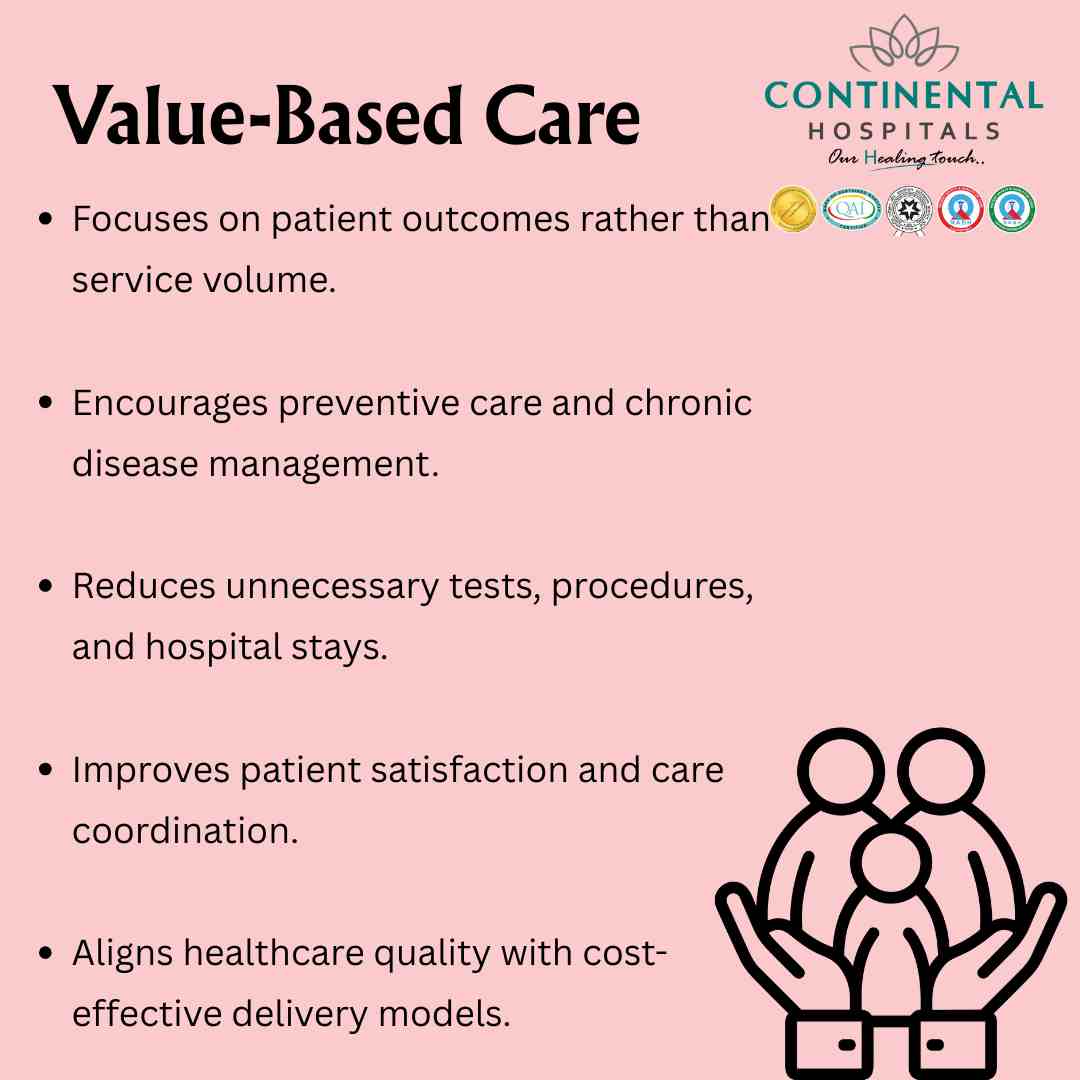
Value based care focuses on patient outcomes rather than the number of tests, procedures, or hospital visits. Instead of paying for volume, healthcare systems are moving toward paying for value. This approach benefits patients, doctors, hospitals, and the healthcare system as a whole.
At Continental Hospitals, recognized as one of the best hospitals in Hyderabad, this future-focused approach aligns with our commitment to quality, safety, and patient-centered care.
What Is Value-Based Care?
Value based care in healthcare is a model where doctors and hospitals are rewarded for keeping patients healthy, improving recovery, and reducing complications. The goal is not how many services are delivered, but how effective those services are.
In simple terms:
- Better health outcomes matter more than more treatments
- Prevention is prioritized over late-stage care
- Coordination between specialists improves patient experience
This shift from fee-for-service to value based healthcare is transforming how care is planned and delivered.
Ongoing health issues or lifestyle conditions? Book your consultation at the best General Physician hospital in Hyderabad.
Why Value-Based Care Is Gaining Momentum in 2026
Several important factors are driving the growth of value based care in healthcare.
Rising Chronic Diseases
Conditions like diabetes, heart disease, obesity, and respiratory disorders require long-term management. A value based healthcare model focuses on continuous care, monitoring, and prevention rather than repeated hospital admissions.

Patient Awareness and Expectations
Patients today ask questions. They want transparency, safety, and measurable outcomes. Value based medicine supports shared decision-making and clearer communication between doctors and patients.
Focus on Preventive Health
Preventive screenings, early diagnosis, and lifestyle guidance are core components of value based programs. Preventing illness is more effective than treating advanced disease.
Better Use of Technology
Digital records, remote monitoring, and data-driven insights help doctors track outcomes and personalize care. These tools support value based healthcare examples that show measurable improvement in patient health.
How Value-Based Care Works in Practice
Value based care in healthcare is implemented through structured systems and measurable goals.
Some key elements include:
- Outcome tracking instead of procedure counting
- Coordinated care across departments
- Evidence-based treatment plans
- Reduced unnecessary tests and interventions
Value based payment in healthcare encourages hospitals to maintain quality standards, reduce complications, and ensure patient satisfaction.
Value-Based Healthcare Examples That Matter
Real-world value based healthcare examples focus on results that patients can feel and see.
Examples include:
- Better blood sugar control in diabetic patients
- Reduced hospital readmissions after surgery
- Faster recovery with fewer complications
- Improved quality of life for chronic disease patients
These outcomes are the foundation of a strong value based healthcare model.
Key Benefits of Value-Based Care for Patients
Value based care is designed around patient needs. The benefits are clear and long-lasting.
For patients, value based care means:
- More personalized treatment plans
- Better coordination between doctors
- Fewer repeat tests and hospital visits
- Focus on long-term health, not short-term fixes
- Greater trust and communication with care teams
This approach improves not just recovery, but overall wellbeing.
Why Hospitals Are Adopting Value-Based Care?
Hospitals are recognizing that value based care in healthcare improves both patient trust and clinical outcomes.
From an institutional perspective:
- Quality benchmarks become measurable
- Resources are used more efficiently
- Clinical excellence is rewarded
- Patient satisfaction improves
Value based programs also encourage hospitals to invest in skilled doctors, advanced diagnostics, and continuous quality improvement.
Value-Based Medicine and Clinical Excellence
Value based medicine combines clinical expertise with evidence-based decision-making. Treatments are chosen because they deliver the best outcomes, not because they increase volume.
This approach supports:
- Safer procedures
- Standardized clinical pathways
- Reduced medical errors
- Ethical and transparent care delivery
Value based healthcare ensures that medical decisions are guided by science, outcomes, and patient benefit.
The Role of Accreditation in Value-Based Care
Accreditation plays a critical role in supporting value based healthcare models. Accredited hospitals follow strict quality and safety standards that align closely with value based care principles.
Continental Hospitals is accredited by nationally and internationally recognized bodies, reflecting:
- High clinical governance standards
- Strong infection prevention protocols
- Patient safety and quality benchmarks
- Continuous improvement in care delivery
These accreditations reinforce our commitment to value based care in healthcare.
Why Value-Based Care Matters in 2026 and Beyond?
The future of healthcare is outcome-driven. As healthcare costs rise and chronic conditions increase, value based care offers a sustainable and ethical solution.
By focusing on prevention, coordination, and measurable results, value based healthcare models ensure that patients receive care that truly improves their lives.
In 2026, value based payment in healthcare will continue to expand because it aligns incentives with patient wellbeing.
Why Choose Continental Hospitals?
Continental Hospitals stands among the best hospitals in Hyderabad, known for clinical excellence, advanced technology, and patient-first care.
What sets us apart:
- Experienced multidisciplinary specialists
- Strong focus on value based care in healthcare
- Evidence-based treatment protocols
- Accredited quality and safety standards
- Seamless coordination across specialties
- Commitment to preventive and long-term health
Our approach reflects the true spirit of value based healthcare by delivering care that is effective, ethical, and patient-centered.
Conclusion
Value based care is not just a trend. It is the future of healthcare. As we move into 2026, value based healthcare models will continue to grow because they deliver what patients truly need better outcomes, preventive focus, and coordinated care.
At Continental Hospitals, we are committed to leading this transformation by providing value driven, patient centered healthcare that supports healthier lives today and tomorrow.
If you suffer from ongoing health issues, lifestyle-related conditions, or need a long-term care plan, consult our best General Physicians at Continental Hospitals.
Related Blog Topics: