.webp)


Smartphones have become a part of almost every moment in our lives. We read, scroll, chat, work, and watch videos for hours. But one silent problem is rising fast: phone neck pain. Many people feel neck stiffness, shoulder tightness, and headaches after long screen time. This problem is known as tech neck, and it is directly linked to poor mobile posture and forward head posture. Understanding why this happens and how to prevent it can protect your spine, joints, and overall health.
What Is Tech Neck?
Tech neck refers to the neck and shoulder pain caused by looking down at screens for long periods. When you bend your head forward to view your phone, your neck has to support extra weight. Even a slight tilt adds stress to the spine. Over time, this leads to smartphone neck strain, muscle fatigue, and joint discomfort.
Your neck is designed to hold your head in a neutral position. When you shift your head forward, the pressure on your cervical spine increases several times. This constant strain leads to neck stiffness due to phone use, tight muscles, and long-term structural changes.
Visit the top orthopedic doctors in Hyderabad at Continental Hospitals, Hyderabad, for advanced diagnosis and expert treatment of neck pain, posture-related problems, spine strain, and tech neck symptoms.
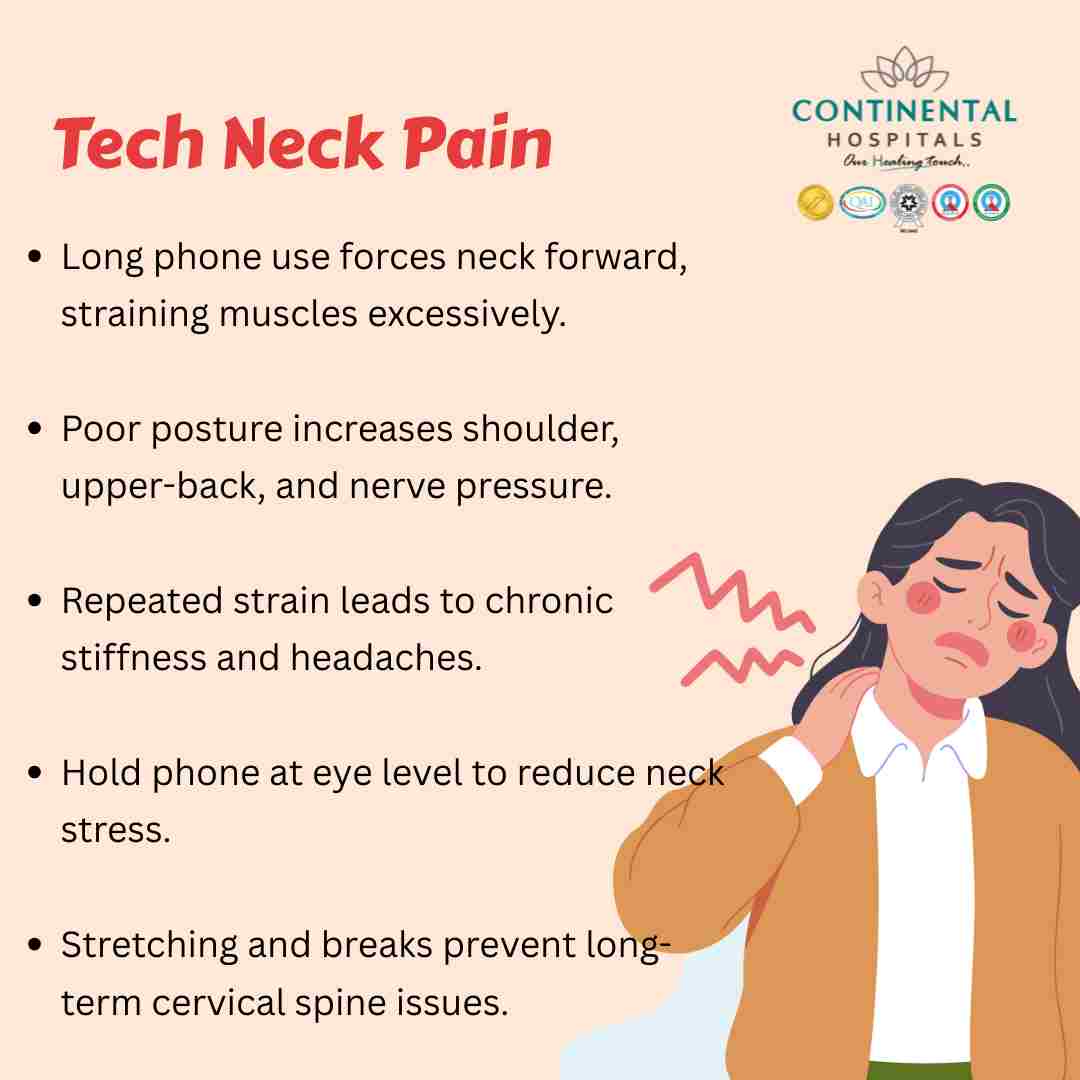
Why Your Phone Is Causing Neck Pain?
1. Forward Head Posture
Forward head posture happens when your head leans in front of your shoulders while looking at your phone. This posture forces the neck muscles to work harder. Over time, this creates muscle imbalance, stiffness, and pain.
2. Long Screen Time
When you spend long hours scrolling or typing, your body remains in one position for too long. Reduced movement decreases blood flow to muscles, resulting in screen time neck pain and stiffness.
3. Poor Mobile Posture
Most people hold their phones at chest or lap level. This angle makes you bend your neck downward, placing stress on the spine. Poor posture pulls your muscles and ligaments out of alignment and leads to mobile posture pain.
4. Repetitive Strain on the Spine
Your spine reacts to repeated stress. Hours of bending create pressure on cervical discs, causing spine strain from phone use. This can also contribute to early degeneration if not corrected in time.

5. Weak Upper Back Muscles
Slouching weakens the upper back and shoulder stabilizing muscles. As these muscles become weak, the neck compensates by taking extra load, leading to chronic pain.
6. Lack of Posture Awareness
Many people do not realize their posture while using phones. Without awareness, the body falls into comfortable but harmful positions.
What Are the Common Symptoms of Tech Neck?
Identifying symptoms early can help you prevent long-term damage.
- Persistent neck pain
- Shoulder tightness
- Stiffness while turning your head
- Tingling in arms or fingers
- Frequent headaches
- Upper back pain
- Reduced neck mobility
- Fatigue in neck muscles
- Pain that worsens with phone use
If you notice any of these symptoms regularly, it may be due to smartphone neck strain.
How Tech Neck Affects Your Spine?
The cervical spine has a natural curve. When you look down for long periods, you are forcing this curve to flatten. This leads to:
- Increased pressure on vertebrae
- Disc compression
- Muscle inflammation
- Reduced joint function
- Posture imbalance
Over time, this can lead to chronic pain and degeneration of spinal structures if not managed early.
How to Prevent Neck Pain From Phone Use?
Making small changes in your daily habits can protect your spine and prevent tech neck.
1. Hold Your Phone at Eye Level
Keeping the screen at eye height prevents bending your neck. This helps maintain neutral spine posture.
2. Take Short Breaks
Take breaks every few minutes to stretch your neck and shoulders. Short movement cycles reduce muscle fatigue and improve blood circulation.
3. Practice Posture Correction
Be mindful of how you sit or stand. Keep your back straight, shoulders relaxed, and neck aligned with your spine.
4. Strengthen Neck and Upper Back Muscles
Simple exercises like chin tucks, shoulder blade squeezes, and upper back stretches can improve muscle strength. Stronger muscles support your neck and reduce stress.
5. Reduce Screen Time
Limit unnecessary scrolling and set reminders to take breaks. Balanced screen time reduces strain on your cervical spine.
6. Use Supportive Seating
Choose chairs that support your back. Sit with your feet flat on the floor and avoid slouching.
7. Adjust Your Workstation
If you use a phone or laptop for work, ensure your setup supports healthy posture. Good ergonomics protect your neck and shoulders.
8. Apply Heat or Cold Packs When Needed
Using heat can relax tight muscles. Cold packs can reduce inflammation after long hours of phone use.
How Can You Correct Your Posture to Prevent Neck Pain?
- Keep your ears aligned with your shoulders
- Avoid dropping your chin toward the chest
- Sit upright while using your phone
- Use both hands instead of one to reduce muscle load
- Stretch every hour to release tension
- Avoid using your phone while lying down
Why Choose Continental Hospitals?
Continental Hospitals in Hyderabad is known for excellence in spine care, orthopaedics, and rehabilitation services. The hospital maintains top clinical standards and holds respected national and international accreditations that ensure quality and patient safety. With advanced diagnostic technology, expert doctors, and evidence based treatment protocols, patients receive comprehensive care for neck pain, posture related issues, and spinal problems. The rehabilitation team focuses on long term recovery through posture training, physiotherapy, and lifestyle guidance.
If You Suffer From Neck Pain
If you are experiencing neck pain, stiffness, or discomfort after phone use, do not ignore the symptoms. Early assessment helps prevent chronic spine issues and supports faster recovery.
Conclusion
Phone neck pain is a rising concern due to increased screen time and poor posture habits. Understanding the cause and adopting healthy habits can protect your neck and spine. Simple posture correction practices, regular stretching, and mindful phone use can significantly reduce smartphone neck strain. If your symptoms are persistent, the specialists at Continental Hospitals can help you manage pain effectively and prevent long term complications.
For expert evaluation and treatment of neck pain, spine strain, posture problems, or tech neck symptoms, consult our Best Orthopedic Specialists in Hyderabad at Continental Hospitals, Hyderabad.
Related Blogs: