.webp)


Winter brings a welcome drop in temperature, but it also creates a range of skin problems that many people struggle with. Dry air, low humidity, indoor heating, and cold winds can weaken the skin barrier and make the skin look dull, itchy, flaky, or inflamed. Dermatologists often notice that patient visits increase during this season because skin becomes more sensitive and needs extra care. This winter skin guide explains the most common problems, the trusted dermatologist approved fixes, and how Continental Hospitals in Hyderabad helps patients with safe and effective skin care solutions.
Why Winter Damages Your Skin
During winter, the moisture in the air drops sharply. When humidity levels fall, your skin loses water quickly. As a result, the skin barrier becomes weak. This leads to dryness, irritation, redness, and flare ups of existing skin conditions. People with eczema, psoriasis, or sensitive skin often find their symptoms getting worse. Even those with oily skin may experience tightness or unexpected rough patches.
Indoor heating can also make the skin dry and dehydrated. Hot showers, although comforting in winter, strip natural oils from the skin. All these factors together create the perfect environment for winter skin issues.
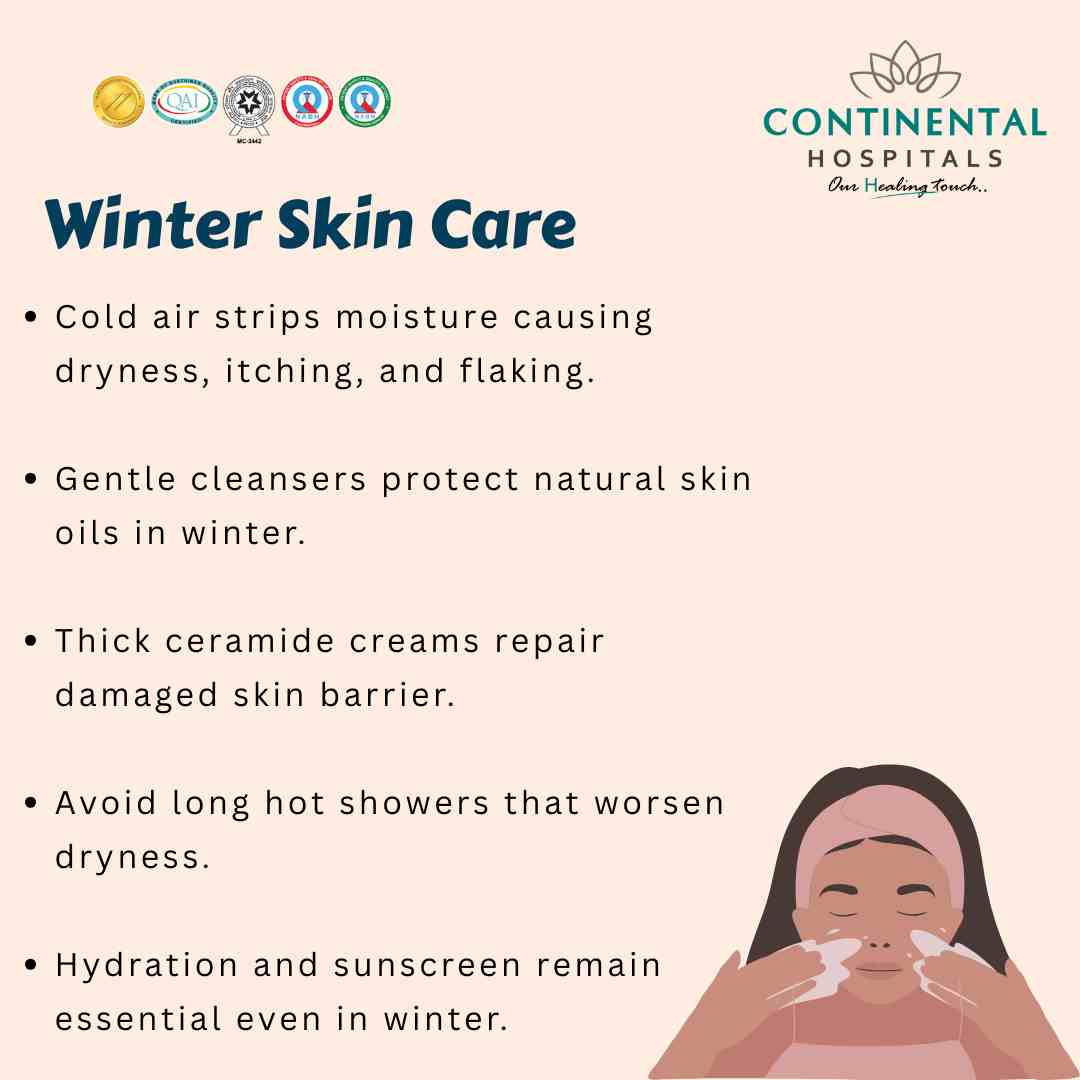
Common Winter Skin Problems
1. Dry and Dehydrated Skin
Skin feels tight, rough, or flaky. Makeup does not sit well and the skin may appear dull.
2. Cracked Heels
Low moisture and continuous pressure lead to thickened skin around the feet, causing cracks and discomfort.
3. Chapped Lips
Lips lack oil glands, so they dry out faster. Cold air and frequent lip licking worsen the problem.
4. Itchy Skin
Winter itch is common because the skin barrier becomes weak. People may notice constant scratching, especially at night.
5. Eczema Flare Ups
Those with eczema experience increased redness, patches, and irritation during the winter season.

6. Psoriasis Worsening
Cold temperatures can trigger plaques and scaling in people with psoriasis.
7. Dandruff and Dry Scalp
The scalp loses moisture and becomes itchy, often leading to visible flakes.
8. Winter Acne
Although winter is dry, acne can worsen because dry skin increases inflammation and clogs pores when people use heavy products without guidance.
Dermatologist Trusted Fixes for Winter Skin
Dermatologists recommend simple, effective, and consistent steps to protect skin during colder months. These solutions are safe for most skin types and help maintain healthy skin through winter.
1. Choose the Right Moisturizer
Use a thick, barrier protecting moisturizer that contains ceramides, hyaluronic acid, or glycerin. These ingredients help restore moisture and strengthen your skin.
2. Switch to Gentle Cleansers
Avoid harsh or foaming cleansers. Choose cream or lotion based cleansers that clean without drying.
3. Avoid Hot Showers
Use lukewarm water while bathing. Hot showers remove natural oils and worsen dryness.
4. Apply Lip Balm Regularly
A nourishing lip balm with hydrating ingredients helps prevent cracks and peeling.
5. Protect Your Skin Outdoors
Cover your face, wear gloves, and apply sunscreen even during winter. Sun damage occurs throughout the year.
6. Add a Humidifier
Using a humidifier indoors adds moisture to the air and prevents dry skin.
7. Hydrate from Within
Drink enough water because dehydration shows on the skin quickly during winter.
8. Use Dermatologist Recommended Treatments
For eczema, psoriasis, dandruff, or winter acne, a dermatologist can guide you with the correct creams, medicated shampoos, and skin care routines.
Daily Winter Skin Routine
A simple winter routine keeps your skin healthy and comfortable.
Morning Routine
- Cleanse with a gentle face wash
- Apply a hydrating serum
- Use a rich moisturizer
- Apply sunscreen
Night Routine
- Cleanse skin to remove pollution particles
- Use a nourishing cream or ointment
- Apply lip balm
- Moisturize hands and feet before sleeping
Winter Skin Care Tips in Quick Points
- Do not skip sunscreen even on cloudy days
- Avoid over washing your face
- Apply moisturizer within minutes after bathing
- Use soft, breathable fabrics to prevent irritation
- Eat foods rich in healthy fats, vitamin E, and antioxidants
- Avoid scratching itchy areas to prevent infection
- Choose mild exfoliators to remove dead skin without damage
Why Choose Continental Hospitals for Winter Skin Care?
Continental Hospitals in Hyderabad is recognised as one of the best hospitals in Hyderabad with advanced dermatology services. Patients trust Continental Hospitals for expert winter skin care because:
- The hospital is accredited by global quality bodies that focus on patient safety and high standards of medical practice
- Experienced dermatologists offer personalised winter skin solutions
- The hospital has advanced diagnostic tools and evidence based treatments
- Patients receive complete skin care for conditions like eczema, psoriasis, dermatitis, acne, and scalp issues
- The dermatology team provides safe and effective management of sensitive winter skin
- The environment is patient friendly with dedicated care and follow up support
- All treatments follow strict quality protocols to ensure safety and comfort
With expert guidance, timely diagnosis, and advanced skin care solutions, Continental Hospitals helps patients maintain healthy skin throughout the winter season.
Conclusion
Winter can be harsh on your skin, but with the right care and trusted dermatology solutions, you can enjoy the season without discomfort. Understanding your skin, choosing the correct routine, and using clinically backed treatments can protect and strengthen your skin barrier. Continental Hospitals in Hyderabad offers expert dermatology care for all winter skin problems with a focus on safety, quality, and patient comfort.
If you suffer from persistent dryness, itching, eczema, psoriasis, dandruff, or any winter related skin issue, book a consultation with our best Dermatology Specialist at Continental Hospitals for personalised and advanced treatment.