post-title

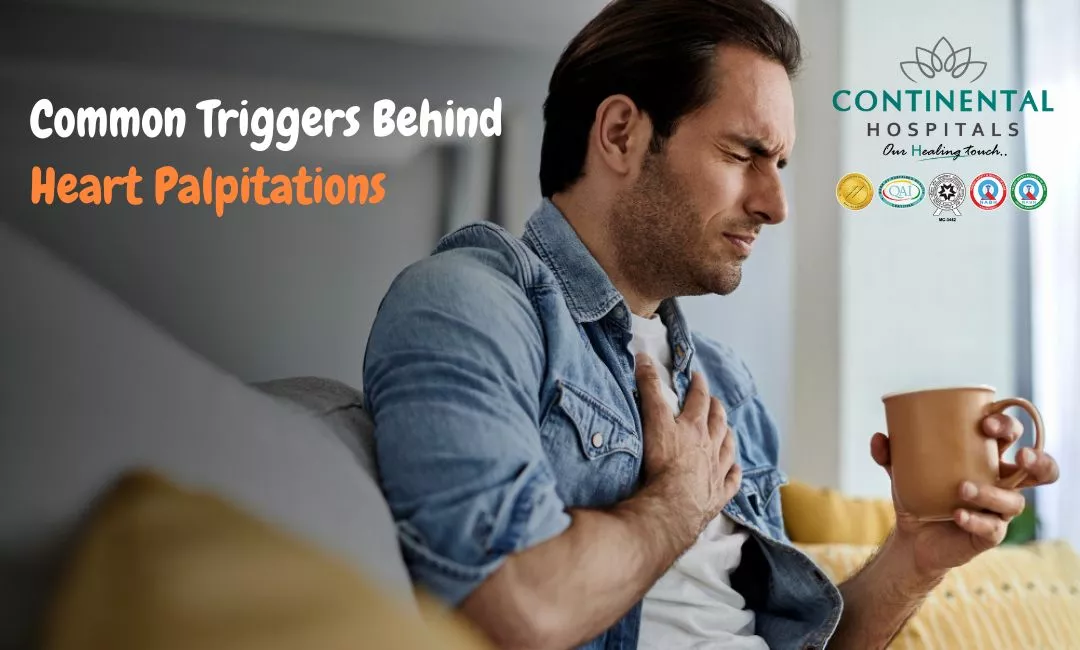
Common Triggers Behind Heart Palpitations

Written by - Editorial Team
Medically Reviewed by - Dr Abhisekh Mohanty

Have you ever felt your heart flutter, race, or skip a beat? These sensations, known as heart palpitations, are more common than you might think. While they can be harmless, they sometimes signal an underlying condition. Understanding the causes of heart palpitations and what triggers them can help you manage symptoms and seek care when necessary.

In this blog, we’ll explore what causes palpitations, how stress, caffeine, dehydration, and other daily factors can affect your heartbeat, and when it’s time to consult a doctor. If you’re looking for expert guidance and care, Continental Hospitals is here to help.

What Are Heart Palpitations?

Heart palpitations are sensations where you feel your heart beating faster, stronger, or irregularly. Some people describe it as a fluttering or pounding in the chest. Others feel like their heart has skipped a beat. These episodes can last for seconds or minutes and may happen occasionally or frequently.

While palpitations are often harmless, they can sometimes indicate a more serious issue, especially if accompanied by dizziness, chest pain, or shortness of breath.

Visit the Best Cardiology Doctors in Hyderabad at Continental Hospitals and receive expert care from our experienced cardiologists in Hyderabad for timely diagnosis and effective treatment.
What are the common causes of heart palpitations?

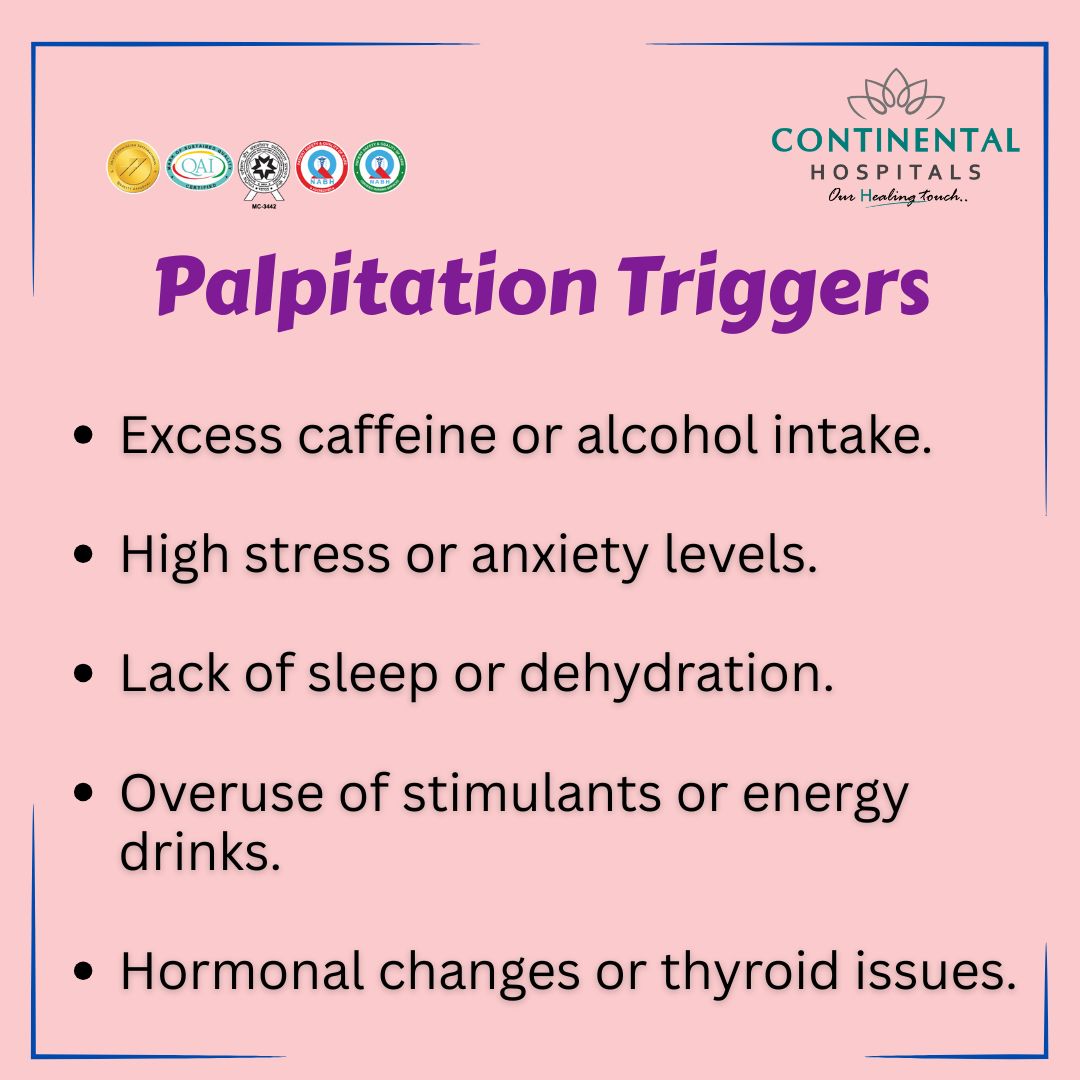
There are several irregular heartbeat causes, ranging from lifestyle habits to medical conditions. Let’s break down the most common ones:

1. Anxiety and Stress

Emotional stress is one of the most frequent palpitations and stress triggers. When you're anxious, your body releases stress hormones like adrenaline, which can make your heart beat faster or irregularly. This is why anxiety and palpitations often go hand in hand.

Second Opinion

You might notice your heart racing before a big presentation or during periods of worry. Deep breathing, relaxation techniques, and managing your mental health can help reduce these episodes.

2. Caffeine and Stimulants

Too much coffee, tea, energy drinks, or even some sodas can cause caffeine heart palpitations. Caffeine stimulates the nervous system, increasing heart rate and potentially causing your heart to flutter or skip beats.

If you’re sensitive to caffeine, try reducing your intake or switching to decaffeinated options. Always read labels, as some medications and supplements also contain caffeine or similar stimulants.

3. Palpitations After Eating

For some people, palpitations after eating are a concern. This can happen when the body redirects blood to the digestive system, slightly increasing the heart's workload. Rich meals, high sugar intake, or foods with high sodium can also contribute to a fluttering chest.

To avoid this, eat smaller portions, stay hydrated, and avoid lying down immediately after meals.

Need an Appointment?

4. Dehydration

Palpitations and dehydration are closely linked. When your body lacks enough fluids, your blood pressure can drop, and your heart has to work harder to pump blood. This strain can lead to heart racing at rest or irregular rhythms.

Stay hydrated, especially during hot weather or after exercise, to support stable heart function.

5. Hormonal Changes

Hormonal fluctuations—such as during menstruation, pregnancy, or menopause—can cause heart fluttering reasons in some women. These changes can affect the nervous system, leading to palpitations.

Although usually harmless, recurring episodes should be evaluated to rule out underlying issues.

6. Medications and Supplements

Certain medications, including asthma inhalers, decongestants, and thyroid treatments, may trigger heart palpitations causes. Even over-the-counter supplements or herbal remedies can affect your heartbeat.

Always inform your doctor about any medications or supplements you’re taking, especially if you notice a pattern between usage and symptoms.

7. Medical Conditions

Sometimes, irregular heartbeat causes are rooted in health problems such as:

  • Thyroid disorders (especially hyperthyroidism)
  • Anemia
  • Low blood sugar
  • Heart valve issues
  • Arrhythmias (abnormal heart rhythms)

In such cases, palpitations are often accompanied by fatigue, shortness of breath, or dizziness. Timely evaluation is essential.

8. Palpitations at Night

Some people experience palpitations at night, which can be disturbing. Lying down can increase awareness of your heartbeat. Acid reflux, sleep apnea, or even vivid dreams can also contribute to these sensations.

If palpitations at night are frequent, it's best to keep a symptom diary and share it with your doctor.

9. Heart Skipping Beats

A common way people describe palpitations is feeling like the heart has “skipped” a beat. In many cases, this is due to premature heartbeats, which are often benign. However, if they occur frequently or are accompanied by other symptoms, further testing may be needed.

When should I worry about heart palpitations?

Palpitations can be unsettling, but they are not always dangerous. However, when to worry palpitations becomes important if you notice:

  • Chest pain
  • Fainting or severe dizziness
  • Shortness of breath
  • A rapid heart rate that doesn’t slow down
  • Frequent episodes that worsen over time

These symptoms could indicate a serious condition such as an arrhythmia or heart disease and should not be ignored.

How Are Palpitations Treated?

The treatment depends on the underlying cause. For instance:

  • If caffeine is the trigger, cutting back can help.
  • If anxiety is the cause, stress management techniques or therapy may be effective.
  • For thyroid or heart-related conditions, targeted medical treatment is necessary.

Diagnostic tools like ECGs, Holter monitors, and blood tests are used to find the root cause and guide the treatment plan.

Why Choose Continental Hospitals for Heart Care?

At Continental Hospitals, we understand that symptoms like palpitations can be both uncomfortable and alarming. Our expert cardiology team uses the latest diagnostic tools and treatment options to ensure accurate diagnosis and effective care.

Here’s why thousands trust us:

  • Experienced cardiologists and electrophysiologists
  • Advanced heart rhythm monitoring technology
  • Personalized treatment plans
  • Holistic care that focuses on prevention and long-term heart health
  • Quick appointments and a patient-first approach

Whether your palpitations are mild or a sign of something more, our specialists are here to provide answers and peace of mind.

Conclusion

Heart palpitations are a common experience, and while many are harmless, some need medical attention. From palpitations and stress to palpitations at night, recognizing your triggers can help you take control of your heart health.

Avoid excessive caffeine, stay hydrated, manage stress, and monitor your symptoms. If you feel your heart skipping beats, racing at rest, or fluttering frequently, don’t wait.

Experiencing heart palpitations or irregular heartbeats? Speak to our top cardiologists in Hyderabad at Continental Hospitals today and take the first step toward a healthier, more confident you.

Related Blogs:

Heart Palpitations vs. Panic Attacks

Frequently Asked Questions

Heart palpitations are sensations where you become aware of your heartbeat. Your heart may feel like it is racing, pounding, fluttering, skipping beats, or beating irregularly. These episodes can last for a few seconds or several minutes. In many cases, palpitations are harmless and occur due to stress, caffeine, lack of sleep, or physical exertion. However, if they occur frequently, become severe, or are accompanied by chest pain, dizziness, fainting, or shortness of breath, they may indicate an underlying heart condition. Conditions such as arrhythmias, heart valve disorders, or thyroid disease can also cause palpitations. A medical evaluation, including an ECG or Holter monitor, can help identify the cause. Early diagnosis ensures appropriate treatment and helps prevent complications.
Yes, stress and anxiety are among the most common causes of heart palpitations. During periods of emotional stress, the body releases adrenaline and other stress hormones that increase heart rate and blood pressure. This natural response can make your heartbeat feel stronger, faster, or irregular. Panic attacks may also produce intense palpitations along with sweating, trembling, and shortness of breath. Chronic stress may increase the frequency of these episodes over time. Practicing relaxation techniques, deep breathing exercises, meditation, yoga, and regular physical activity can help reduce stress-related palpitations. If symptoms occur repeatedly or interfere with daily life, consulting both a cardiologist and mental health professional may be beneficial.
Caffeine can trigger heart palpitations in some individuals, especially when consumed in large amounts. Coffee, tea, energy drinks, soft drinks, chocolate, and certain medications may all contain caffeine. It stimulates the nervous system, increasing heart rate and making some people more sensitive to irregular heartbeats. While moderate caffeine intake is safe for most healthy adults, excessive consumption may increase the likelihood of palpitations. Individual tolerance varies significantly, and some people experience symptoms even with small amounts. Keeping track of caffeine intake and observing whether symptoms improve after reducing consumption can be helpful. If palpitations continue despite limiting caffeine, medical evaluation is recommended.
Yes, dehydration can contribute to heart palpitations by reducing blood volume and altering the body's electrolyte balance. When you do not drink enough fluids, your heart has to work harder to circulate blood efficiently. Low levels of essential electrolytes such as potassium, sodium, magnesium, and calcium may also interfere with the heart's normal electrical activity. Dehydration may occur due to excessive sweating, fever, vomiting, diarrhea, or inadequate fluid intake. Symptoms often include dizziness, fatigue, dry mouth, and rapid heartbeat. Drinking enough water throughout the day and replacing lost electrolytes when necessary can help reduce dehydration-related palpitations. Persistent symptoms should always be evaluated by a healthcare professional.
Hormonal fluctuations can influence heart rhythm and are a common cause of heart palpitations. Many women experience palpitations during pregnancy, menstruation, perimenopause, or menopause due to changing hormone levels. Thyroid hormone imbalance, particularly hyperthyroidism, can also significantly increase heart rate and cause irregular heartbeats. Hormonal medications and certain fertility treatments may occasionally contribute to these symptoms as well. Although many hormone-related palpitations are temporary, persistent or severe episodes should not be ignored. Blood tests and cardiac evaluation can help identify hormonal or heart-related causes. Appropriate treatment often reduces symptoms and improves overall cardiovascular health.
Yes, several prescription medications, over-the-counter drugs, and dietary supplements may trigger heart palpitations. Common examples include decongestants containing pseudoephedrine, asthma inhalers, thyroid medications, weight-loss products, stimulant medications, and certain herbal supplements. Excessive use of nicotine, alcohol, or recreational drugs can also affect heart rhythm. Some supplements marketed for energy or fitness may contain hidden stimulants that increase the risk of palpitations. It is important to review all medications and supplements with your healthcare provider if symptoms develop. Never stop prescribed medication without medical advice. Your doctor may recommend alternative treatments if a medication is identified as the cause.
Occasional heart palpitations are usually harmless, but certain situations require immediate medical attention. You should consult a doctor if palpitations occur frequently, last for several minutes, become increasingly severe, or occur during rest. Emergency care is necessary if they are accompanied by chest pain, fainting, severe shortness of breath, dizziness, confusion, or loss of consciousness. Individuals with existing heart disease, high blood pressure, diabetes, or a family history of sudden cardiac death should seek evaluation promptly. A cardiologist may recommend tests such as an ECG, echocardiogram, Holter monitor, or blood tests to determine the underlying cause. Early diagnosis helps prevent complications and ensures timely treatment.
Many lifestyle changes can help reduce the frequency of heart palpitations. Stay well hydrated by drinking adequate water throughout the day and maintain a balanced diet rich in fruits, vegetables, whole grains, and lean proteins. Limit caffeine, alcohol, nicotine, and highly processed foods if they trigger symptoms. Get seven to nine hours of quality sleep every night and manage stress through meditation, yoga, or breathing exercises. Exercise regularly after discussing a suitable fitness plan with your doctor. Maintain healthy blood pressure, blood sugar, and cholesterol levels through routine health check-ups. If palpitations persist despite lifestyle improvements, seek medical evaluation to identify and treat any underlying heart condition.
Disclaimer: The information provided in this blog is intended for general knowledge and informational purposes only, and does not constitute medical advice. Always consult with a qualified healthcare professional for any medical concerns or before making any decisions about your health.

Get in Touch With Us

Whether you are from India or abroad, we are here to help you with your medical queries. Please fill out the form below and our team will connect with you shortly.

  • ✔ Quick response from our medical experts
  • ✔ Secure data handling & privacy
  • ✔ Easy upload for reports & documents
banner_image

Chat with our medical experts on WhatsApp for quick assistance and hassle-free appointment booking

Recent Posts