.webp)

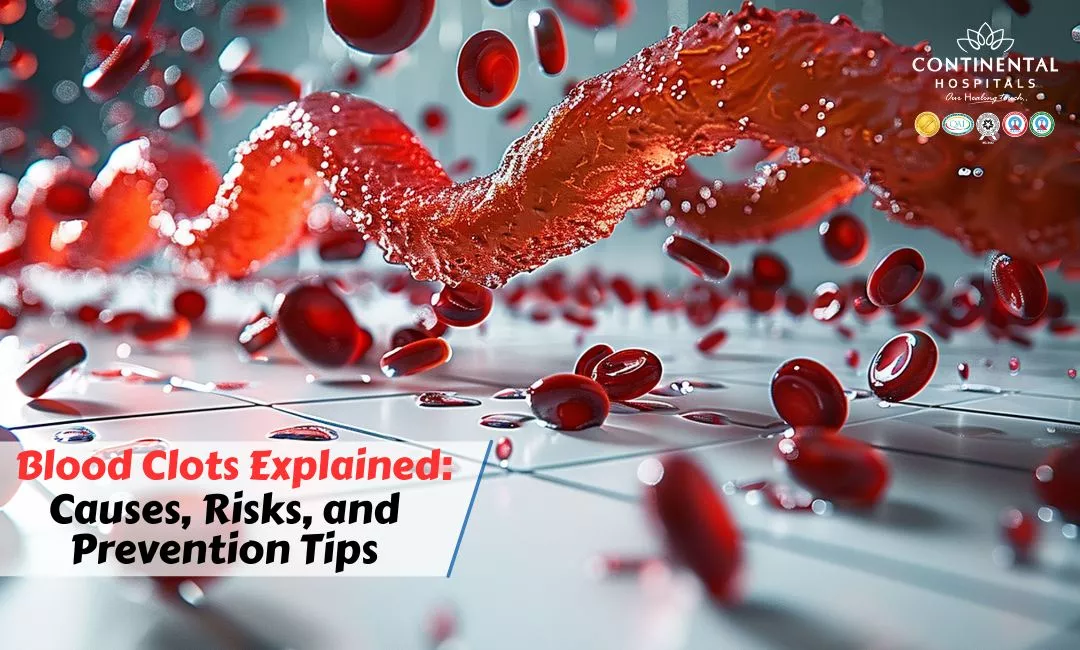
Blood clots are a serious health concern that can affect anyone at any age. While your body forms blood clots naturally to prevent excessive bleeding after an injury, abnormal blood clotting can lead to dangerous health conditions. Understanding blood clots, their symptoms, causes, and prevention methods is crucial to maintaining good health.
What is a Blood Clot?
A blood clot occurs when blood changes from a liquid to a gel-like or semi-solid state. This process, called blood clotting, helps stop bleeding after an injury. However, when a blood clot forms inside a blood vessel without an obvious injury, it can block blood flow and lead to serious complications. Blood clots can occur in veins or arteries and may affect the legs, lungs, or other vital organs.
Notice blood clot signs or have risk factors? Visit our Hematology department at Continental Hospitals for expert care and treatment.
Types of Blood Clots
Deep Vein Thrombosis (DVT)
Deep vein thrombosis occurs when a blood clot forms in a deep vein, usually in the legs. DVT can cause swelling, pain, redness, or warmth in the affected area.
Pulmonary Embolism (PE)
A pulmonary embolism happens when a blood clot travels to the lungs. This is a life-threatening condition that can cause sudden shortness of breath, chest pain, and rapid heartbeat.
Arterial Blood Clots
These clots form in arteries and can block blood flow to the heart or brain, potentially causing a heart attack or stroke.
Common Causes of Blood Clots
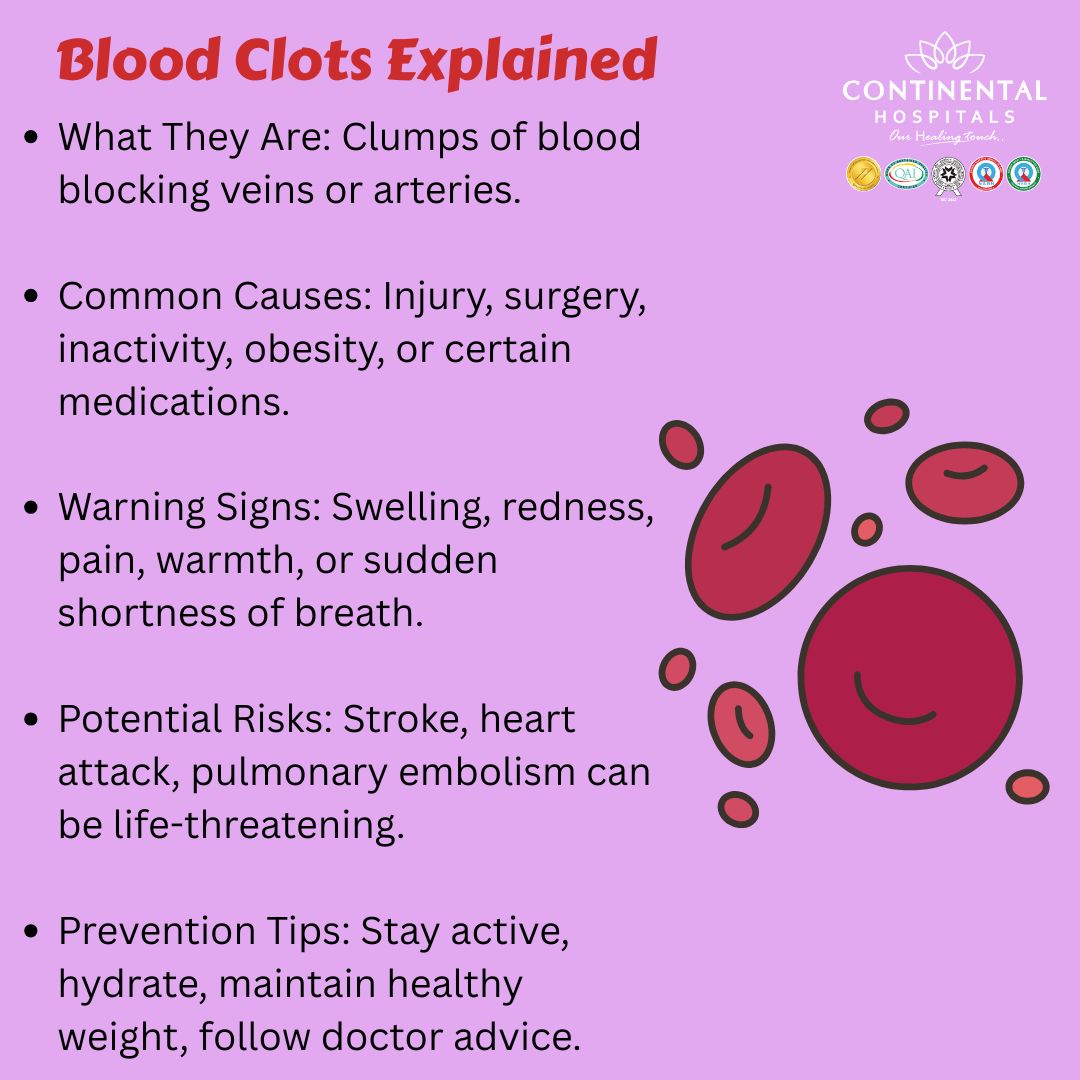
Several factors can increase the risk of abnormal blood clotting. These include:
- Prolonged immobility such as long flights, bed rest, or sedentary work
- Injury to blood vessels from surgery, trauma, or medical procedures
- Medical conditions such as heart disease, cancer, or genetic clotting disorders
- Pregnancy and hormonal changes which increase clotting risk
- Obesity and poor lifestyle habits like smoking or unhealthy diet
Recognizing Blood Clot Symptoms
Identifying blood clot symptoms early can save lives. Common signs include:

- Swelling or pain in one leg
- Redness or discoloration on the skin
- Warmth in the affected area
- Sudden shortness of breath or chest pain
- Rapid heartbeat or dizziness
- Unexplained fatigue
Blood clots in the lungs may present differently than clots in the legs. If you experience sudden breathing difficulty, chest discomfort, or coughing up blood, seek immediate medical attention.
How to Prevent Blood Clots
Preventing blood clots involves lifestyle changes and medical awareness. Some effective strategies include:
Stay Active
Regular physical activity improves blood circulation. Even short walks or stretching exercises can help prevent clots.
Maintain a Healthy Weight
Obesity increases pressure on veins and the likelihood of clot formation. A balanced diet and regular exercise help reduce this risk.
Hydrate Well
Drinking enough water keeps your blood flowing smoothly and reduces the risk of clotting.
Avoid Prolonged Sitting or Standing
Move around during long flights, road trips, or work hours. Flexing your legs and ankles frequently can improve circulation.
Follow Medical Advice
People with a history of blood clots or high-risk conditions may need medications such as blood thinners. Always follow your doctor’s recommendations.
Wear Compression Stockings if Recommended
These help improve blood flow in the legs and prevent clot formation, especially in individuals at risk of DVT.
Blood Clots in Legs vs. Lungs
Blood clots in the legs, also called DVT, usually show visible symptoms like swelling, redness, or tenderness. Clots in the lungs, or pulmonary embolisms, are more dangerous as they can affect breathing and heart function. Early detection and treatment are critical to prevent complications such as chronic vein problems or life-threatening embolisms.
Blood Clot Signs to Watch For
- Sudden swelling in one leg or arm
- Pain or tenderness that may feel like cramping
- Red or bluish skin discoloration
- Shortness of breath or chest discomfort
- Feeling faint, dizzy, or unusually tired
If you notice these signs, immediate medical evaluation is essential.
Why Choose Continental Hospitals for Blood Clot Management?
Continental Hospitals Hyderabad is a leading hospital in Hyderabad, recognized for its excellence in patient care and advanced medical facilities. The hospital is accredited by reputed national and international healthcare organizations, ensuring world-class treatment standards.
Expert Specialists: Continental Hospitals has experienced vascular surgeons, cardiologists, and pulmonologists who provide comprehensive care for blood clot patients.
Advanced Diagnostics: Cutting-edge imaging and laboratory facilities help detect blood clots early and accurately.
Patient-Centered Care: The hospital focuses on individualized treatment plans and follow-up care for optimal recovery.
Preventive Programs: Education on blood clot prevention and lifestyle modifications ensures long-term health benefits.
Choosing Continental Hospitals means access to trusted experts and advanced technology under one roof.
Blood Clot Treatment Options
Treatment depends on the location and severity of the clot. Common approaches include:
Medications: Blood thinners help prevent clots from growing and reduce the risk of new clots forming.
Thrombolytic Therapy: In severe cases, medications may be administered to dissolve clots quickly.
Surgical Procedures: Rarely, procedures like clot removal or placement of filters in veins may be necessary.
Lifestyle Management: Regular exercise, proper hydration, and dietary adjustments are part of ongoing care.
Key Points to Remember
- Blood clots can occur anywhere in the body but are most common in the legs and lungs
- Early detection of blood clot symptoms is vital
- Prevention through active lifestyle, hydration, and medical guidance is essential
- Immediate medical attention can prevent serious complications
- Trust accredited hospitals like Continental Hospitals for expert care and advanced treatment
Conclusion
Blood clots are a serious health condition that can lead to life-threatening complications if not addressed promptly. Understanding the causes, symptoms, and preventive measures can make a significant difference in your health. Regular check-ups, a healthy lifestyle, and awareness of warning signs are key to preventing blood clots.
If you notice any blood clot signs or have risk factors, consult our best hematologist at Continental Hospitals. Our team ensures accurate diagnosis, effective treatment, and comprehensive care.
Related Blog Topics:
Blood Clots and DVT: How to Recognize Symptoms and Prevent Complications