.webp)


A cough is one of the most common symptoms people experience. It often comes with a cold, seasonal flu, or throat irritation and usually settles with simple care. But when the cough becomes intense, persistent, or feels heavy in the chest, many people begin to worry. Can a heavy cough indicate something serious? The short answer is yes, sometimes it can.
Understanding when a heavy cough is harmless and when it needs medical attention is important for protecting your lungs and overall health. This article explains the causes of heavy cough, warning signs to watch for, and what to do if symptoms persist.
What Is a Heavy Cough?
A heavy cough is not just an occasional throat clear. It often feels deep, forceful, and exhausting. Many people describe it as a heavy cough in the chest or a cough that comes with pressure, tightness, or thick mucus. In some cases, it may disturb sleep, especially heavy coughing at night or heavy cough only at night.
A heavy cough can be dry or productive. A dry cough feels irritating and tight, while a cough with heavy mucus produces phlegm that may be clear, yellow, green, or thick.
experiencing persistent heavy cough symptoms, heavy coughing at night, or chest discomfort while breathing, visit our Department of General Physicians at Continental Hospitals.
Common Causes of Heavy Cough
There are many reasons why a person may develop a heavy cough. Some causes are mild, while others may signal a more serious condition.
Causes of heavy cough include
- Viral infections such as flu or common cold
- Heavy cold and cough symptoms due to seasonal changes
- Chest infections like bronchitis or pneumonia
- Allergies and asthma
- Acid reflux irritating the airway
- Smoking or long term exposure to pollution
- Post viral cough that lingers after infection
A chest heavy dry cough may occur after a viral illness or due to airway sensitivity. On the other hand, cough with heavy mucus is often linked to infection or chronic lung conditions.

Heavy Cough in the Chest and Shortness of Breath
One of the most concerning symptoms is heavy chest cough shortness of breath. When coughing is associated with difficulty breathing, chest tightness, or wheezing, it may indicate inflammation or narrowing of the airways.
Possible causes include
- Asthma flare ups
- Acute bronchitis
- Pneumonia
- Chronic obstructive lung disease
- Severe allergic reactions
If shortness of breath is sudden or worsening, medical evaluation should not be delayed.
Heavy Coughing at Night: Why It Matters?
Heavy coughing at night is often more than just an inconvenience. Night time coughing can disturb sleep and reduce oxygen levels, making the body feel exhausted the next day.
Heavy cough only at night may be linked to:
- Post nasal drip from sinus issues
- Acid reflux, where stomach acid irritates the throat when lying down
- Asthma, which often worsens at night
- Heart related conditions that cause fluid buildup in the lungs
If night time coughing persists for several days or keeps getting worse, it should be evaluated by a doctor.
Heavy Cough Symptoms That Need Attention
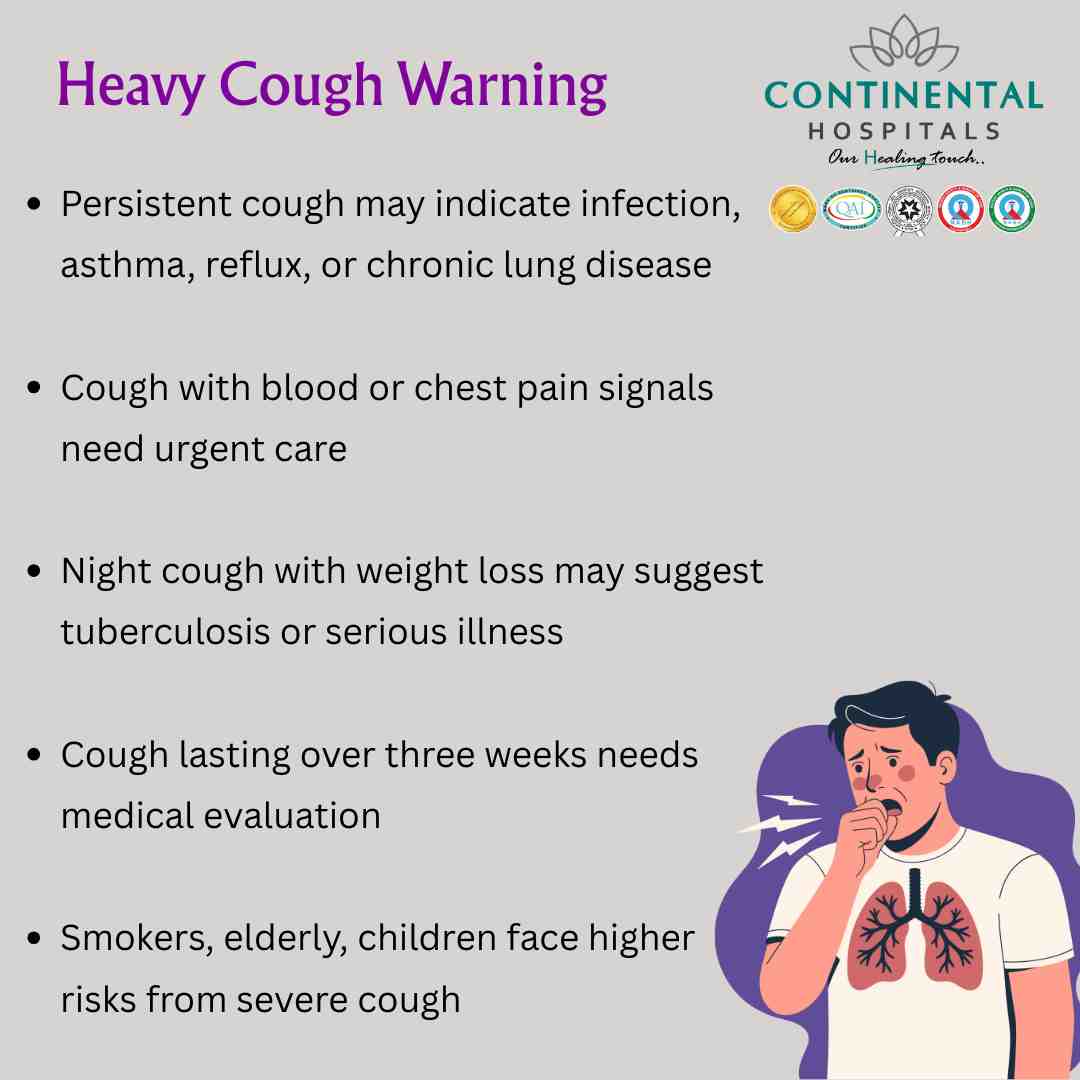
While mild coughs usually improve on their own, certain heavy cough symptoms suggest the need for medical care.
Watch out for:
- Cough lasting more than two to three weeks
- Heavy cough in chest with fever or chills
- Chest pain while coughing
- Blood in sputum
- Persistent cough with heavy mucus
- Unexplained weight loss or fatigue
- Heavy chest and cough along with wheezing
These symptoms may point to infections, lung disease, or other underlying conditions that require treatment.
Heavy Cold and Cough: When Is It Serious?
Heavy cold and cough symptoms are common during weather changes and flu seasons. Most cases improve with rest and supportive care. However, a heavy cold and cough treatment plan should change if symptoms worsen or do not improve.
Seek medical advice if
- Fever lasts more than a few days
- Cough becomes deeper and more painful
- Breathing becomes difficult
- Thick mucus increases instead of clearing
Ignoring these signs can delay recovery and lead to complications.
Heavy Cough What to Do at Home?
For mild to moderate symptoms, some simple steps may help reduce discomfort and support recovery.
Heavy cough what to do:
- Stay well hydrated to thin mucus
- Use warm fluids to soothe the throat
- Avoid smoking and second hand smoke
- Rest your body to allow healing
- Keep indoor air clean and humidified
These measures may offer temporary relief, but they are not a cure for heavy cough caused by infection or chronic disease.
Is There a Cure for Heavy Cough?
Many people search for a quick cure for heavy cough, but the right treatment depends on the cause. There is no single solution that works for everyone.
Heavy cough treatment may include:
- Medicines to reduce inflammation or infection
- Inhalers for airway conditions
- Treatment for acid reflux if present
- Allergy management
- Targeted therapy for lung infections
Self medication without proper diagnosis can sometimes worsen symptoms. A doctor can identify the cause and guide the right treatment plan.
When Can a Heavy Cough Indicate Something Serious?
A heavy cough can indicate something serious when it is persistent, progressive, or associated with warning signs. Conditions such as pneumonia, tuberculosis, chronic lung disease, and heart related problems may initially present with a heavy cough.
Early evaluation helps in timely diagnosis and better outcomes. This is especially important for older adults, smokers, people with weak immunity, and those with existing lung or heart conditions.
Why Early Medical Evaluation Matters?
Delaying care for a heavy cough can allow an underlying problem to worsen. What starts as a simple infection may progress into a more severe illness if not treated properly.
Early consultation helps to
- Identify the exact cause of heavy cough
- Prevent complications
- Reduce duration and severity of symptoms
- Improve breathing comfort and sleep quality
Why Choose Continental Hospitals?
Continental Hospitals is widely recognized as one of the best hospital in Hyderabad, offering advanced care for respiratory and chest related conditions. The hospital is known for its strong focus on patient safety, clinical excellence, and international standards of care.
Continental Hospitals is accredited by leading national and international healthcare bodies, reflecting its commitment to quality treatment, infection control, and patient centered care. With experienced pulmonologists, advanced diagnostic facilities, and multidisciplinary support, patients receive accurate diagnosis and comprehensive treatment under one roof.
The hospital combines medical expertise with compassionate care, ensuring that every patient feels heard, understood, and supported throughout their recovery.
Conclusion: Do Not Ignore a Heavy Cough
A heavy cough may seem like a minor issue at first, but it can sometimes be a signal from your body that something needs attention. Understanding heavy cough reasons and recognizing warning signs can help you take timely action.
If you or your loved ones are experiencing persistent heavy cough symptoms, heavy coughing at night, or chest discomfort while breathing, consult our best General Physicians at Continental Hospitals.
Related Blog Topics