.webp)


Food allergies are often associated with childhood, but many adults are surprised when they develop allergic reactions to foods they have eaten safely for years. Understanding adult food allergies, their symptoms, triggers, and management is essential for maintaining good health and preventing severe reactions. This article explains how food allergies can develop later in life, signs to watch for, and the best steps to protect your health.
If you develop hives, swelling, digestive issues, or breathing problems after eating, visit our Infectious diseases Specility at Continental Hospitals.
What Are Adult Food Allergies?
Adult food allergies occur when the immune system mistakenly identifies certain proteins in food as harmful. This triggers an immune response that can cause symptoms ranging from mild irritation to severe reactions. Food allergies in adulthood are sometimes called late onset food allergies or adult onset allergies
Unlike food intolerance, which affects digestion, food allergies involve the immune system and can cause skin reactions, breathing difficulties, or even life-threatening reactions such as anaphylaxis.
Can Adults Develop Food Allergies?
Yes, adults can develop food allergies even if they never had them as children. Developing food allergies as an adult is increasingly common, and new food allergy in adults can occur due to several factors:
- Changes in the immune system with age
- Exposure to new allergens
- Stress or illness affecting immune response
- Medications that alter immune function
- Gut health changes that impact immune tolerance
Late onset food allergy can occur to foods that were previously tolerated, including nuts, seafood, dairy, eggs, or wheat.
Signs of Adult Food Allergy
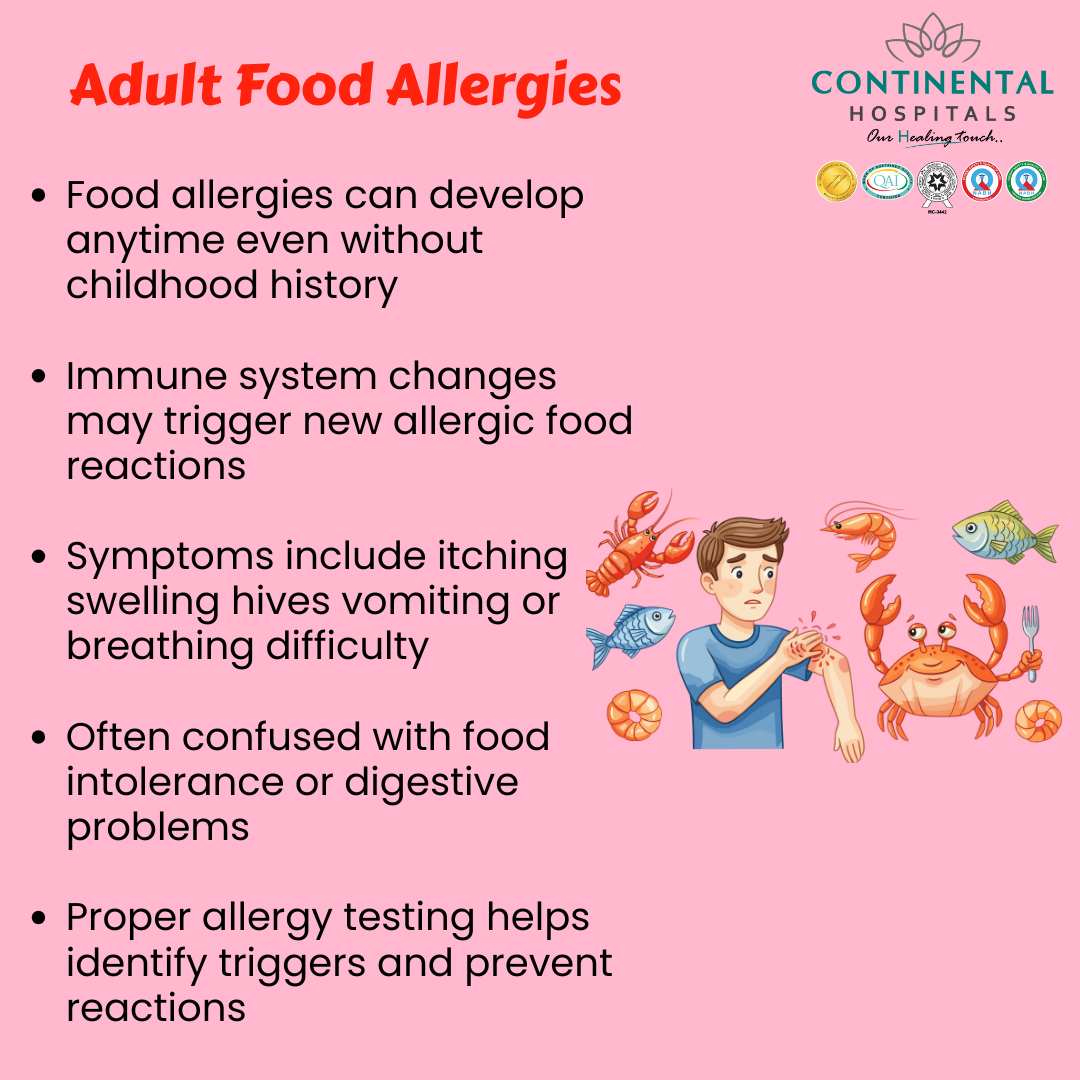
Recognizing food allergy symptoms in adults is critical to prevent complications. Adult allergy triggers may cause reactions immediately after consuming the food or appear hours later. Common signs include:
- Skin reactions such as hives, redness, or swelling
- Itching in the mouth or throat
- Gastrointestinal symptoms like nausea, vomiting, diarrhea, or abdominal pain
- Respiratory issues such as sneezing, wheezing, or shortness of breath
- Severe reactions including anaphylaxis, which requires immediate medical attention
Identifying these symptoms early and consulting a specialist can prevent serious health risks.

Common Adult Allergy Triggers
Certain foods are more likely to trigger adult onset allergies. These include:
- Peanuts and tree nuts
- Shellfish and fish
- Dairy products
- Eggs
- Wheat and gluten-containing foods
- Soy
Adult allergy triggers can vary from person to person. Even foods that have been safely consumed for years can suddenly cause reactions.
How Food Allergies in Adulthood Are Diagnosed
Proper diagnosis is crucial to manage adult food allergies. Doctors use a combination of methods to identify allergies:
Detailed medical history: Discussing symptoms, timing, and foods involved
Skin prick tests: Small amounts of allergen placed on the skin to check for reactions
Blood tests: Measuring specific antibodies to certain foods
Oral food challenge: Conducted under medical supervision to confirm allergy
A correct diagnosis helps in avoiding unnecessary dietary restrictions and ensures the patient receives appropriate care.
Managing Adult Food Allergies
Once diagnosed, managing adult food allergies involves:
- Avoiding trigger foods identified through testing
- Reading labels carefully to prevent accidental exposure
- Carrying emergency medication like antihistamines or epinephrine for severe reactions
- Maintaining a food diary to track reactions and triggers
- Consulting an allergist regularly to monitor changes in allergy status
Education and awareness are key to living safely with adult food allergies.
Can Adult Food Allergies Be Prevented?
Prevention is challenging because immune system changes are unpredictable. However, some measures may help reduce risk:
- Maintaining gut health through a balanced diet with probiotics and fiber
- Introducing new foods gradually and monitoring reactions
- Managing stress and overall health to support the immune system
- Discussing medication use with a doctor, as some medications can influence allergies
Awareness of late onset food allergy symptoms and early medical consultation are the best ways to prevent severe complications.
Why Choose Continental Hospitals for Adult Food Allergies
Continental Hospitals is recognized as one of the best hospitals in Hyderabad, offering comprehensive care for adult food allergies. The hospital holds prestigious accreditations such as NABH and JCI, ensuring quality, safety, and international standards in patient care.
At Continental Hospitals:
- Experienced gastroenterologists and allergists diagnose and manage adult food allergies
- Advanced diagnostic tools provide accurate testing for food allergy symptoms in adults
- Multidisciplinary teams create personalized management plans for safe living with adult allergies
- Patient-centered care ensures guidance for diet, emergency preparedness, and long-term monitoring
The hospital combines clinical expertise with compassionate care, making it a trusted choice for anyone experiencing adult onset allergies.
Key Points About Adult Food Allergies
- Adult food allergies can develop even if childhood allergies were absent
- Late onset food allergy can involve common foods like nuts, seafood, and dairy
- Symptoms may include skin reactions, digestive issues, and respiratory problems
- Accurate diagnosis by an allergist is essential for proper management
- Avoiding triggers and carrying emergency medication ensures safety
Conclusion
Adult food allergies are a growing concern, and recognizing the signs is essential for safety and well-being. Understanding triggers, getting proper diagnosis, and following a personalized management plan can significantly improve quality of life.
If you notice new symptoms like hives, swelling, digestive issues, or breathing difficulties after eating, consult our top Infectious diseases speciaist at Continental Hospitals. Early evaluation and expert care can prevent severe reactions and help you safely manage adult food allergies.
Related Blog Topics