.webp)

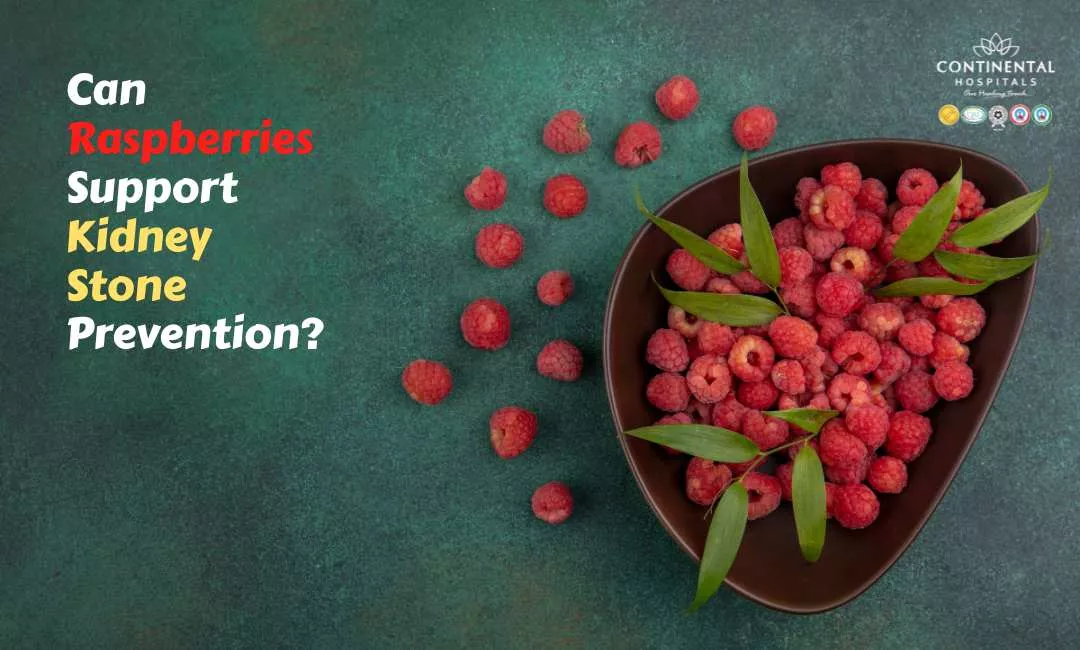
Kidney stones are crystallized deposits of minerals, most commonly calcium oxalate, that form in the kidneys. They can vary in size from tiny grains to stones large enough to block urine flow. Common risk factors include dehydration, high dietary oxalate intake, family history, obesity, and certain medical conditions. Symptoms may include sharp abdominal or back pain, nausea, vomiting, urinary urgency, or blood in the urine.
Early prevention is key to avoiding recurrent kidney stones, and dietary modifications play a critical role in reducing risks.
How Do Raspberries Help Kidney Health?
Raspberries are a nutrient-rich fruit, packed with vitamins, minerals, fiber, and antioxidants. Their potential role in kidney stone prevention comes from several factors:
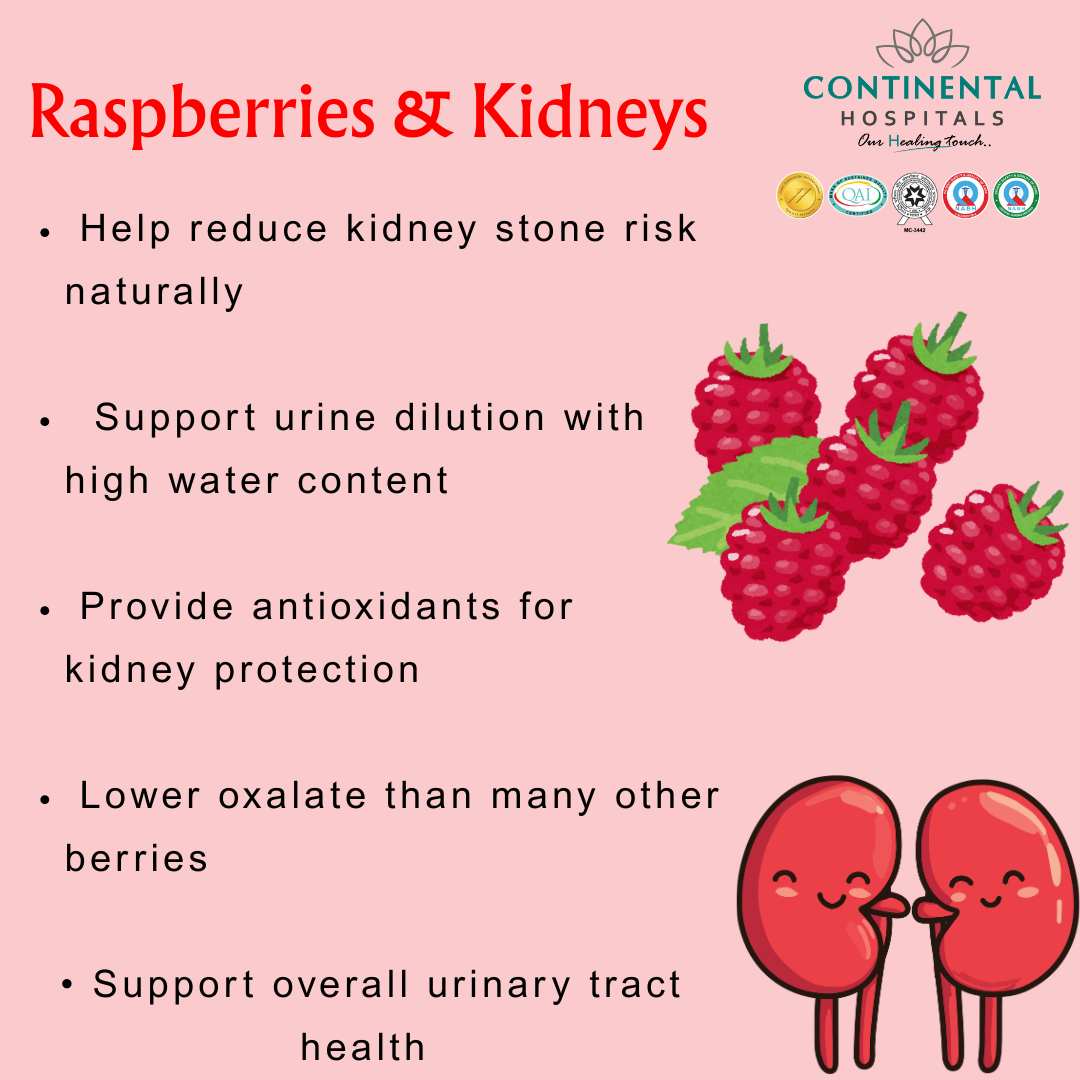
Low Oxalate Content: Oxalate can contribute to calcium oxalate kidney stones. Raspberries have a relatively low oxalate level, making them safer for stone prevention.
High Water Content: Raspberries help increase hydration naturally, which dilutes urine and reduces the concentration of stone-forming minerals.
Antioxidant Properties: Antioxidants in raspberries reduce oxidative stress and support overall kidney function.
Fiber-Rich: Dietary fiber aids digestion, reduces uric acid levels, and promotes a healthy urinary tract.
Including raspberries as part of a balanced diet can support kidney health while minimizing the risk of stone formation.
If you have kidney stones or urinary issues, Visit our Nephrology Speciality at Continental Hospitals for expert care and prevention guidance.

Other Kidney Stone Prevention Foods
While raspberries are beneficial, a variety of kidney-friendly foods can help prevent stones. These include:
Citrus Fruits: Lemons, oranges, and limes contain citrate, which may prevent stone formation.
Vegetables: Leafy greens, bell peppers, and cucumbers provide hydration and essential minerals.
Whole Grains: Brown rice, oats, and barley support healthy digestion and reduce stone risk.
Nuts and Seeds: Almonds and flaxseeds in moderation provide healthy fats without increasing stone risk.
Hydrating Foods: Watermelon, cucumbers, and melons improve urine volume and decrease concentration of stone-forming minerals.
Tips for a Kidney Stone Prevention Diet
Adopting a kidney stone prevention diet involves mindful food choices, hydration, and moderation. Key tips include:
- Drink at least 2–3 liters of water daily to dilute urine.
- Limit foods high in oxalate, such as spinach, beetroot, and chocolate.
- Reduce sodium intake to lower calcium excretion in urine.
- Avoid excessive animal protein, which can increase uric acid levels.
- Include fruits like raspberries that are safe and supportive of kidney health.
Natural Remedies for Kidney Stones
Alongside diet, certain natural remedies and lifestyle habits can support kidney stone prevention:
Hydration: Drink water consistently throughout the day.
Herbal Teas: Some herbal teas support kidney function, such as dandelion root tea.
Regular Exercise: Promotes overall metabolism and reduces risk factors for stone formation.
Moderate Calcium Intake: Adequate calcium helps bind oxalate in the gut, reducing kidney deposition.
Balanced Diet: Emphasize fruits, vegetables, and whole grains to maintain urinary tract health.
Calcium Oxalate Kidney Stones and Fruit Choices
Calcium oxalate stones are the most common type of kidney stone. Limiting high-oxalate foods and choosing fruits low in oxalate is important. Raspberries, blueberries, and apples are excellent options, providing nutrition without increasing stone risk. Using fruits in moderation ensures you gain the health benefits while preventing stone formation.
Kidney Stone Friendly Fruits
Fruits safe for kidney stones include:
- Raspberries
- Blueberries
- Strawberries
- Apples
- Pears
- Melons
These fruits provide hydration, fiber, and antioxidants without raising oxalate levels significantly. Including a variety in daily meals supports kidney health and reduces the risk of recurrent stones.
Lifestyle Tips for Kidney Stone Prevention
Besides diet, lifestyle plays a critical role in kidney stone prevention. Recommendations include:
- Stay hydrated and drink plenty of water throughout the day.
- Maintain a healthy weight to reduce stone risk.
- Avoid excessive salt, processed foods, and sugary drinks.
- Monitor calcium and oxalate intake with guidance from a nutritionist.
- Schedule regular kidney function checkups for early detection.
Why Choose Continental Hospitals for Kidney Stone Care?
Continental Hospitals, recognized as one of the best hospitals in Hyderabad, provides comprehensive kidney care with advanced diagnostic and treatment options. The hospital is accredited with NABH and JCI certifications, ensuring international quality standards and patient safety.
Key benefits include:
- Experienced Nephrologists and Urologists specializing in kidney stone management.
- State-of-the-art imaging and diagnostic facilities for early detection.
- Personalized treatment plans including dietary guidance, medical therapy, and surgical options.
- Multidisciplinary care to support kidney health and prevent stone recurrence.
- Evidence-based practices ensuring safe and effective treatment outcomes.
Patients at Continental Hospitals receive compassionate care along with expert guidance on nutrition and lifestyle to support long-term kidney health.
Conclusion
Raspberries can be a valuable part of a kidney stone prevention diet due to their low oxalate content, hydration benefits, fiber, and antioxidants. Including kidney-friendly fruits, maintaining proper hydration, and adopting healthy lifestyle habits are essential strategies for preventing kidney stones naturally.
If you suffer from kidney stones, recurrent urinary discomfort, or want guidance on a kidney stone prevention diet, consult our best Nephrologist at Continental Hospitals. Early evaluation, expert treatment, and personalized care can help you maintain healthy kidneys and prevent future stone formation.
Related Blog Topics