.webp)

Pregnancy is a time filled with excitement, care, and many questions. Every decision matters because it affects both the mother and the developing baby. One common concern many expectant mothers have is about antibiotics. Are antibiotics safe during pregnancy? Can antibiotics during pregnancy affect a baby’s immunity? These questions are important for pregnancy safety and long term pregnancy health.
Understanding Antibiotics in Pregnancy
Antibiotics are medicines used to treat bacterial infections. During pregnancy, infections such as urinary tract infections, respiratory infections, or skin infections may need treatment. Ignoring these infections can be harmful to pregnancy health and maternal health.
Antibiotics in pregnancy are prescribed only when necessary. Doctors carefully choose safe antibiotics in pregnancy that protect the mother without harming the baby.
Visit our Gynecology Department at Continental Hospitals for expert pregnancy care, early guidance, and support for maternal and baby’s long-term immunity.
Why infections must be treated during pregnancy?
Untreated infections during pregnancy can lead to:
- Preterm birth
- Low birth weight
- Spread of infection to the baby
- Serious complications for the mother
This is why antibiotics during pregnancy are sometimes essential for pregnancy safety.
Does Antibiotic Use During Pregnancy Affect Baby’s Immunity?
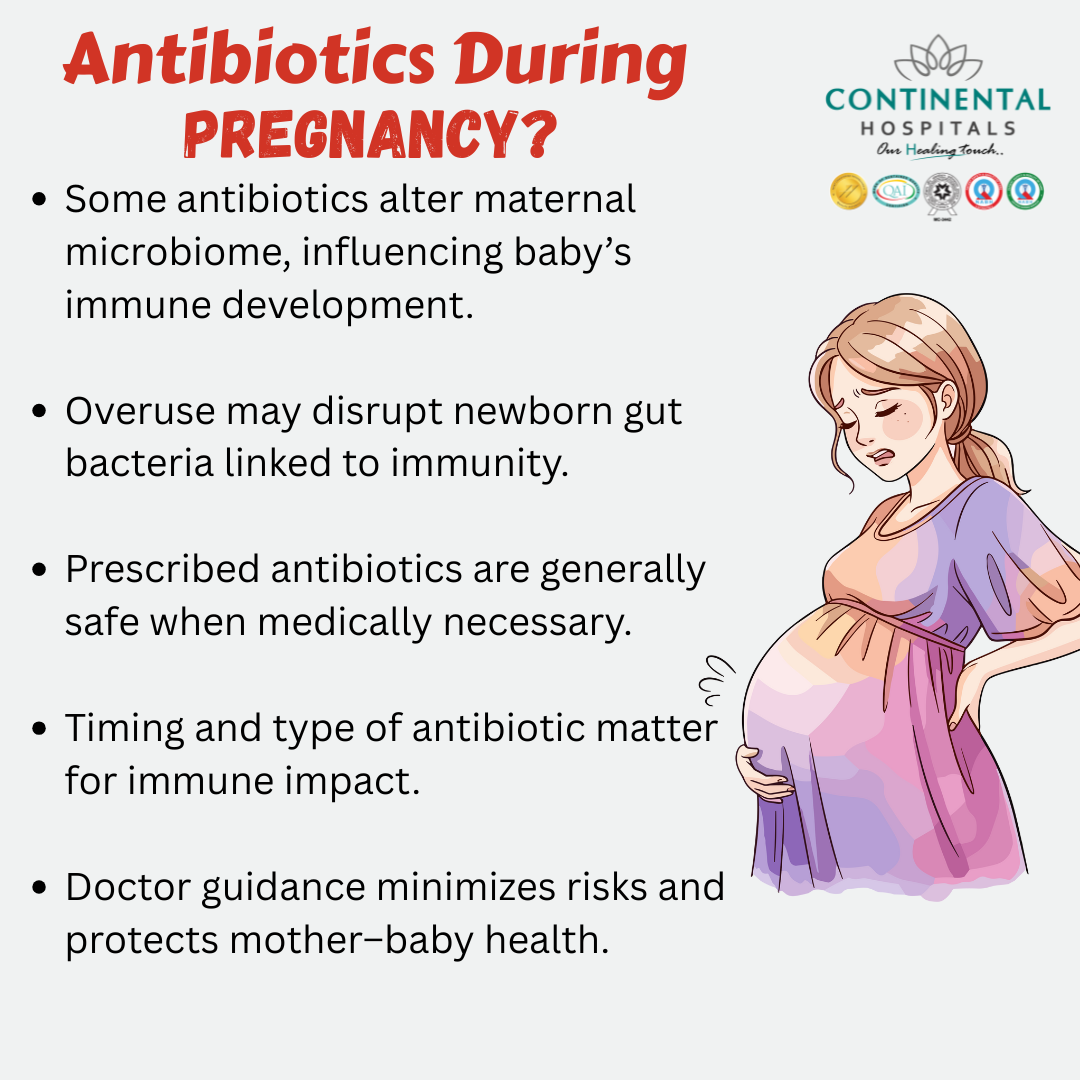
This is one of the most searched questions related to pregnancy and antibiotics. Research shows that some antibiotics during pregnancy may slightly influence the baby’s developing immune system. However, the effect depends on many factors.
These include:
- Type of antibiotic used
- Timing during pregnancy
- Duration of antibiotic use
- Overall pregnancy health of the mother
Doctors do not prescribe antibiotics casually. They weigh the benefits and risks carefully to support a healthy pregnancy.

How Baby’s Immunity Develops During Pregnancy
A baby’s immune system begins developing inside the womb. During pregnancy, the mother passes protective antibodies to the baby through the placenta. This natural process helps protect the baby after birth.
Some studies suggest that frequent or unnecessary use of antibiotics during pregnancy may alter gut bacteria in both mother and baby. Gut bacteria play a role in immunity. However, this does not mean antibiotics always weaken immunity.
The key point is balance. When antibiotics are needed, using safe antibiotics in pregnancy under medical supervision is far safer than leaving infections untreated.
Are Antibiotics Safe in Pregnancy?
Yes, many antibiotics are considered safe in pregnancy. Doctors follow international pregnancy safety guidelines while prescribing medicines.
Common safe antibiotics during pregnancy include:
- Penicillin group antibiotics
- Cephalosporins
- Certain macrolides
These antibiotics have been used for many years and are known to support pregnancy health without harming the baby.
Antibiotics avoided during pregnancy
Some antibiotics are avoided due to possible risks. These are not prescribed unless there is no alternative and the benefit outweighs the risk.
This careful selection ensures maternal health and protects baby’s immunity.
When Are Antibiotics During Pregnancy Necessary?
Antibiotics during pregnancy are prescribed only when clearly required. Situations include:
- Urinary tract infections
- Bacterial vaginal infections
- Pneumonia or severe respiratory infections
- Skin and soft tissue infections
- Certain gastrointestinal infections
In all these cases, treating the infection supports a healthy pregnancy and prevents complications.
Points to Remember About Antibiotics in Pregnancy
- Never self medicate during pregnancy
- Always inform your doctor about your pregnancy
- Take antibiotics exactly as prescribed
- Do not stop the course midway without advice
- Avoid sharing medicines with others
These simple steps improve pregnancy safety and maternal health.
Can Antibiotics Harm the Baby?
When prescribed correctly, safe antibiotics during pregnancy do not harm the baby. The risk from untreated infection is usually much higher than the risk from antibiotics.
Doctors consider:
- Stage of pregnancy
- Severity of infection
- Type of bacteria involved
- Mother’s overall pregnancy health
This approach ensures both mother and baby remain safe.
Supporting Baby’s Immunity After Birth
Even if antibiotics were used during pregnancy, parents can support their baby’s immunity after birth by:
- Breastfeeding, which provides natural antibodies
- Following vaccination schedules
- Maintaining hygiene and nutrition
- Regular pediatric checkups
These steps help build a strong immune system for the baby.
Why Choose Continental Hospitals for Pregnancy Care?
Continental Hospitals is recognized as one of the best hospitals in Hyderabad for comprehensive pregnancy care. The hospital follows international standards for pregnancy safety, maternal health, and newborn care.
Key strengths of Continental Hospitals:
- Internationally accredited healthcare facility
- NABH and global quality accreditations
- Experienced obstetricians and gynecologists
- Multidisciplinary team approach
- Advanced diagnostic and neonatal support
- Evidence based treatment protocols
Every pregnancy is managed with personalized care, ensuring a healthy pregnancy and safe delivery.
Conclusion
Antibiotic use during pregnancy does not automatically harm a baby’s immunity. When infections occur, antibiotics during pregnancy are often necessary to protect both mother and baby. The key is using safe antibiotics in pregnancy under expert medical supervision.
Pregnancy is a delicate journey, and every medicine choice should be guided by a specialist. With the right care, informed decisions, and trusted medical support, a healthy pregnancy and a healthy baby are achievable.
For expert pregnancy care, trusted guidance, and safe treatment options, Continental Hospitals stands as a leading choice and one of the best hospitals in Hyderabad.
Consult Our Best Gynecologist at Continental Hospitals. Early medical guidance helps protect pregnancy health, maternal health, and your baby’s immunity.
Related Blog Topics: