.webp)

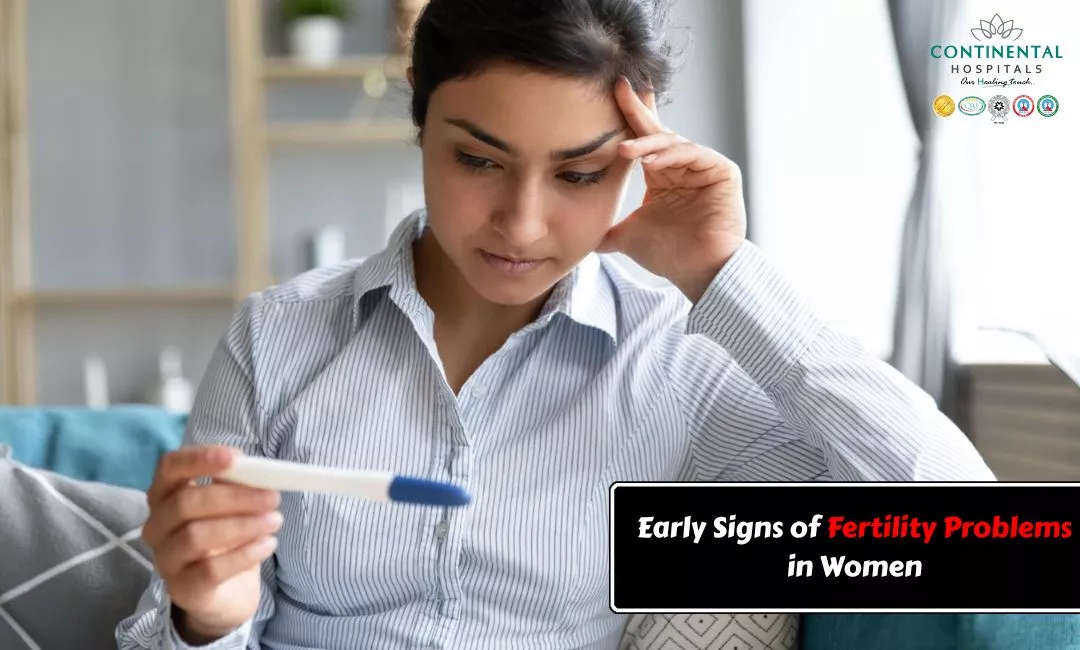
Fertility is a sensitive and important aspect of a woman’s health. Many women assume fertility issues appear only when pregnancy does not happen. In reality, the body often shows early warning signs much before that stage. Recognising these signals early can help women seek timely medical care and improve their chances of healthy conception.
If you notice early fertility problems, visit our Gynecology Specilaity at Continental Hospitals for timely diagnosis and expert care.
Understanding fertility problems in women
Early signs of fertility problems in women
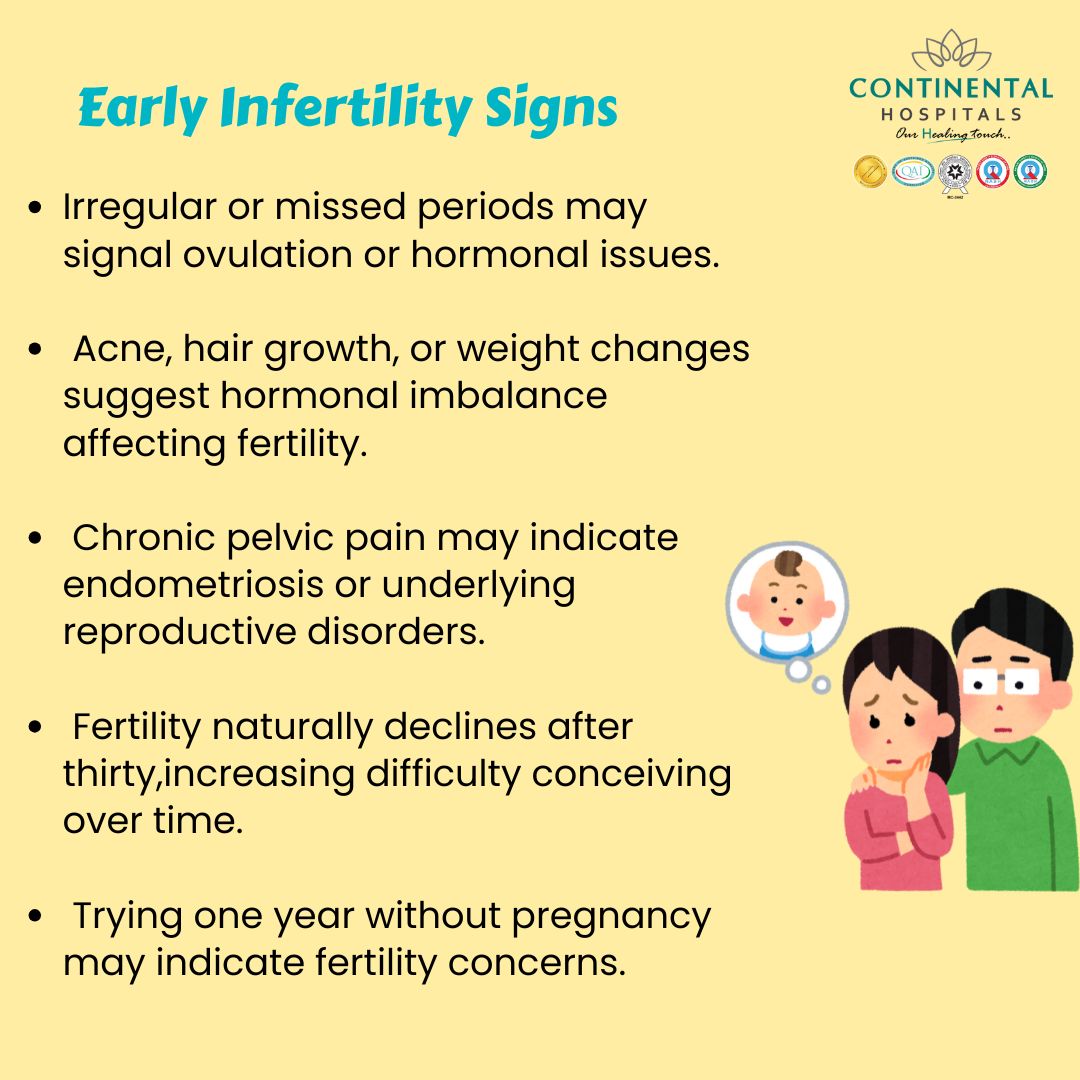
Below are some of the most common infertility warning signs in women that should not be ignored.
Irregular periods and infertility
A regular menstrual cycle usually indicates healthy ovulation. Irregular periods, missed cycles, or very frequent periods may signal ovulation problems symptoms. If ovulation does not occur regularly, pregnancy becomes difficult.
Signs to watch for include:
- Periods shorter than 21 days or longer than 35 days
- Missed periods without pregnancy
- Very heavy or extremely light bleeding
Irregular periods and infertility are closely linked and often point to hormonal imbalance infertility symptoms.
Difficulty getting pregnant signs

If you have been trying to conceive for several months without success, your body may be signalling a fertility issue. Difficulty getting pregnant signs include regular unprotected intercourse with no pregnancy, especially if you are tracking ovulation correctly.
Doctors usually advise evaluation if pregnancy does not occur after one year of trying, or earlier if other symptoms are present.
Hormonal imbalance infertility symptoms
Hormones play a central role in ovulation and reproductive health. When hormones are imbalanced, fertility can be affected.
Common symptoms include:
- Persistent acne in adulthood
- Excess facial or body hair
- Sudden weight gain or difficulty losing weight
- Hair thinning or hair fall
These female infertility symptoms often indicate underlying endocrine issues that require medical attention.
Ovulation problems symptoms
Ovulation problems symptoms can occur even if periods seem regular. Some women may not release an egg every cycle.
Possible signs include:
- Absence of ovulation pain or cervical mucus changes
- Inconsistent basal body temperature patterns
- Short luteal phase after ovulation
Ovulation issues are one of the most common causes of infertility in women.
Pelvic pain or painful periods
Severe pelvic pain, painful periods, or pain during intercourse may suggest conditions affecting fertility. These symptoms should never be ignored as they may indicate structural or inflammatory problems.
Low fertility symptoms female
Low fertility symptoms female may not always be obvious. Some women experience subtle changes such as reduced libido, fatigue, or changes in vaginal discharge. These symptoms, when combined with other warning signs, may suggest reduced reproductive potential.
Listening to your body and noting persistent changes is key to early detection.
Medical conditions linked to infertility
Certain health conditions increase the risk of fertility problems. Early diagnosis and management are essential.
PCOS infertility symptoms
Polycystic Ovary Syndrome is one of the leading causes of infertility in women. PCOS infertility symptoms include irregular periods, excess hair growth, acne, weight gain, and difficulty ovulating. Early treatment can help regulate cycles and improve fertility outcomes.
Thyroid problems and infertility
Both overactive and underactive thyroid conditions can interfere with ovulation. Thyroid problems and infertility are closely connected because thyroid hormones influence menstrual cycles and hormone balance. Symptoms may include fatigue, weight changes, mood swings, and irregular periods.
Endometriosis and uterine conditions
Endometriosis, fibroids, and uterine abnormalities can cause pelvic pain, heavy bleeding, and difficulty conceiving. These conditions often present as infertility warning signs in women long before pregnancy is attempted.
Age related fertility decline symptoms
Age related fertility decline symptoms become more noticeable after the age of thirty. As a woman ages, both egg quantity and quality gradually decrease. Signs may include shorter cycles, reduced response to ovulation tracking, and longer time to conceive.
While age related fertility decline is natural, early evaluation helps women plan better and explore suitable options.
When to see a doctor for infertility?
Knowing when to see a doctor for infertility is crucial. You should consult a fertility specialist if:
- You are under thirty five and trying for one year without success
- You are over thirty five and trying for six months without success
- You have irregular or absent periods
- You experience severe pelvic pain or heavy bleeding
- You have known PCOS, thyroid issues, or previous pelvic infections
Early consultation allows accurate diagnosis and timely treatment.
Diagnosis and evaluation
A fertility evaluation may include blood tests to assess hormone levels, ultrasound scans to check ovaries and uterus, and tests to confirm ovulation. Identifying causes of infertility in women early improves treatment success and reduces emotional stress.
Why choose Continental Hospitals for fertility care?
Continental Hospitals is widely recognised as one of the best hospitals in Hyderabad, offering comprehensive women’s health and fertility services. The hospital is known for its patient focused approach, advanced infrastructure, and clinical excellence.
Continental Hospitals is accredited by national and international healthcare quality bodies, reflecting its commitment to safety, ethical practices, and high standards of care. These accreditations ensure that patients receive evidence based treatment in a safe and trusted environment.
The fertility and gynaecology team includes experienced obstetricians, gynaecologists, reproductive medicine specialists, endocrinologists, and radiologists. This multidisciplinary approach ensures accurate diagnosis and personalised treatment plans.
Advanced diagnostic facilities, modern operation theatres, and evidence based protocols help deliver reliable outcomes. At Continental Hospitals, care is designed to support women at every stage, from early evaluation to advanced fertility management.
Conclusion
Fertility problems often begin silently, with small changes that are easy to overlook. Recognising early infertility symptoms in women such as irregular periods, hormonal imbalance, ovulation problems, or difficulty getting pregnant can make a meaningful difference.
Understanding the signs of infertility in women and knowing when to see a doctor for infertility empowers women to take control of their reproductive health. If you notice early fertility problems, consult our best Gynecologist at Continental Hospitals for timely diagnosis and expert care.