.webp)


Working a night shift can be challenging for the body and mind. While many industries depend on night shift work, it often comes with hidden health risks. Doctors, nurses, security staff, IT professionals, factory employees, and many others continue to serve society through the night. However, long term night shift exposure can affect sleep, digestion, mental health, and overall wellbeing.
What Happens to Your Body During a Night Shift?
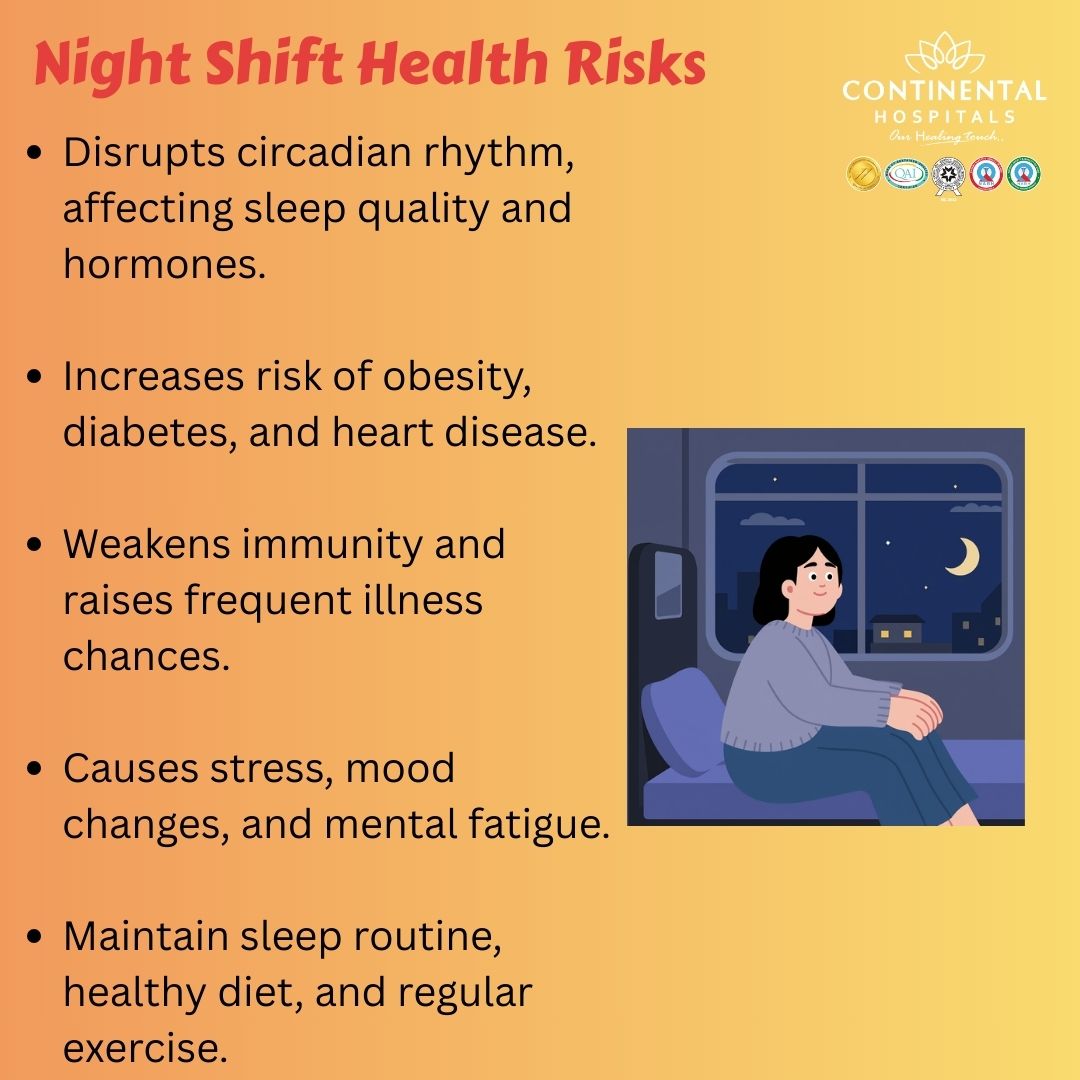
The human body follows a natural sleep wake cycle called the circadian rhythm. This internal clock is designed to help us stay alert during the day and sleep at night. When you regularly work a night shift, this rhythm gets disturbed.
This disruption can lead to:
• Poor quality sleep
• Daytime fatigue
• Hormonal imbalance
• Mood changes
• Reduced immunity
Over time, night shift problems may become more serious if not managed properly.
Visit our Internal Medicine Specialists Department at Continental Hospitals, Hyderabad, for expert diagnosis, personalized treatment, and complete care.
Common Night Shift Health Problems
Many people think tiredness is the only issue with night shift work. In reality, several health conditions are linked to shift work.
1. Sleep Disorders

Shift work sleep disorder is one of the most common conditions seen in night shift employees. It causes difficulty in falling asleep, staying asleep, and feeling refreshed after sleep.
Symptoms include:
• Insomnia
• Excessive sleepiness
• Poor concentration
• Irritability
If left untreated, sleep problems can affect work performance and safety.
2. Heart Health Risks
Studies show that long term shift work may increase the risk of high blood pressure and heart disease. Irregular sleep and unhealthy eating habits during night shift hours can strain the cardiovascular system.
3. Digestive Problems
Many night shift workers skip meals or rely on processed foods. Eating at irregular times disrupts digestion, leading to:
• Acidity
• Bloating
• Constipation
• Weight gain
Poor metabolism is a common night shift health problem.
4. Mental Health Concerns
Working at night often reduces social interaction and family time. This isolation can increase stress, anxiety, and even depression. Continuous fatigue also impacts emotional balance.
5. Weakened Immunity
Lack of proper sleep affects immune function. Night shift workers may fall sick more often due to lowered resistance.
Why Night Shift Work Increases Health Risks?
Several factors contribute to night shift problems:
• Disrupted body clock
• Reduced sunlight exposure
• Irregular eating schedule
• Lack of physical activity
• Chronic stress
When shift work continues for years without proper care, it may increase the risk of diabetes, obesity, and metabolic disorders.
Night Shift Health Tips to Protect Yourself
The good news is that with the right approach, many night shift health problems can be prevented. Here are practical and effective night shift tips.
1. Prioritize Quality Sleep
Sleep is your strongest defense against night shift risks.
• Create a dark and quiet sleep environment
• Use blackout curtains
• Maintain a fixed sleep schedule
• Avoid screen exposure before sleep
Even if you work a rotating night shift, try to keep your sleep hours consistent.
2. Eat Smart During Night Shift
Healthy eating reduces digestive issues and supports energy levels.
• Avoid heavy meals at midnight
• Choose protein rich snacks
• Drink enough water
• Limit caffeine toward the end of the shift
Balanced nutrition is one of the most important night shift workers health tips.
3. Stay Active
Physical activity improves circulation and mood.
• Take short walking breaks
• Stretch during work hours
• Exercise before your shift begins
Regular exercise supports heart health and reduces stress linked to shift work.
4. Manage Stress Effectively
Mental health care is equally important.
• Practice deep breathing
• Stay connected with family
• Plan social time on off days
• Seek counseling if needed
Managing stress reduces night shift health problems in the long term.
5. Get Regular Health Checkups
Routine screening helps detect early signs of health issues.
At Continental Hospitals, we recommend:
• Blood pressure monitoring
• Blood sugar tests
• Lipid profile checks
• Sleep assessments
Early diagnosis prevents serious complications related to night shift work.
Who Is at Higher Risk?
Some individuals are more vulnerable to shift work complications.
• People with pre existing heart disease
• Diabetics
• Individuals with sleep disorders
• Those with high stress levels
If you belong to these groups, regular medical supervision is essential.
When Should You See a Doctor?
You should consult a doctor if you experience:
• Persistent insomnia
• Extreme daytime fatigue
• Frequent headaches
• Mood swings
• Unexplained weight gain
• Chest discomfort
These may be warning signs of underlying night shift health problems.
Why Choose Continental Hospitals?
Continental Hospitals is recognized as the best hospital in Hyderabad for comprehensive healthcare services. We are committed to patient safety, quality care, and medical excellence.
Our hospital is:
• Accredited by NABH
• Accredited by JCI
• Equipped with advanced diagnostic facilities
• Supported by experienced specialists
• Focused on evidence based treatment
Our multidisciplinary team includes internal medicine specialists, cardiologists, endocrinologists, pulmonologists, and sleep medicine experts who understand the unique health challenges faced by night shift workers.
We provide:
• Comprehensive health check programs
• Sleep disorder evaluation
• Lifestyle counseling
• Preventive cardiology services
• Stress management support
Our goal is to help night shift professionals maintain strong physical and mental health.
Preventive Checklist for Night Shift Workers
Follow this simple checklist to stay healthy:
• Fix a consistent sleep routine
• Avoid junk food during late hours
• Drink adequate water
• Take short activity breaks
• Schedule regular medical checkups
• Monitor weight and blood pressure
• Protect mental health
Small daily habits can prevent long term damage caused by night shift work.
Can Night Shift Be Healthy?
Many people ask, Can you stay healthy while working night shift? The answer is yes, but it requires discipline and awareness. Your body needs structured sleep, proper nutrition, exercise, and medical monitoring.
Ignoring symptoms can lead to serious complications. Listening to your body is the first step toward prevention.
Conclusion
Night shift plays a vital role in keeping essential services running, but it should not compromise your health. Shift work sleep disorder, heart risks, digestive issues, and mental health concerns are common but manageable with the right care.
If you are experiencing night shift health problems, do not ignore the warning signs. Early medical guidance can prevent long-term complications.
Consult our best internal medicine specialists at Continental Hospitals, the best hospital in Hyderabad, for expert evaluation and personalized treatment. Our experienced doctors provide comprehensive care to help you stay healthy and productive, no matter your work schedule.
Your health matters at every hour. Protect it with the right guidance and preventive care.