.webp)

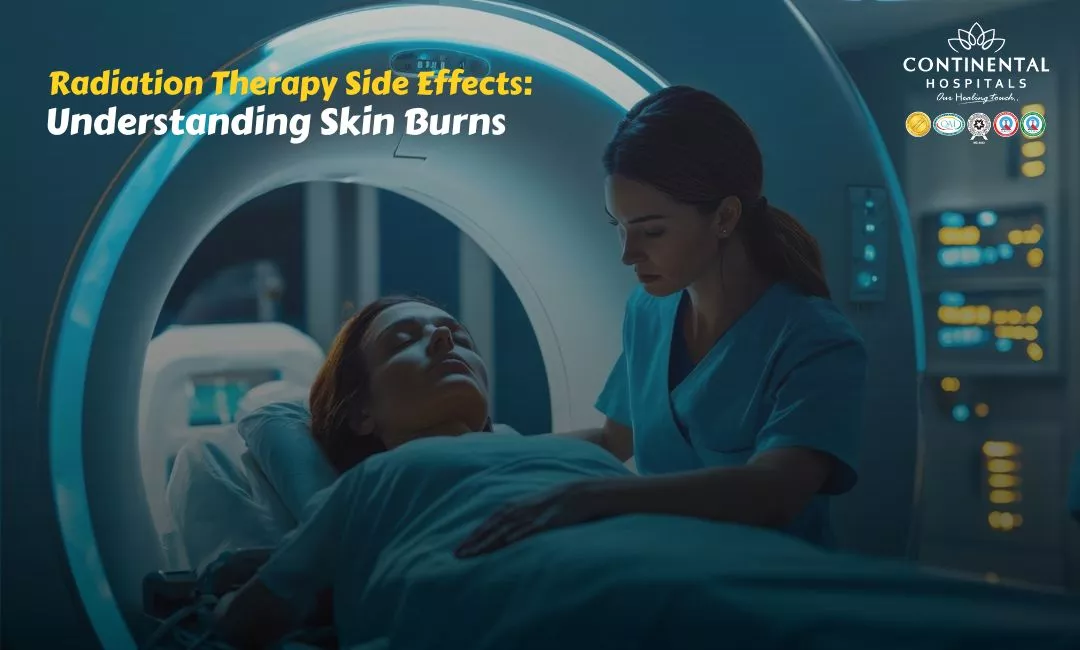
Radiation Therapy is one of the most effective treatments for cancer. It uses high energy rays to destroy cancer cells and stop them from growing. While this treatment saves lives, it can also affect healthy tissues near the treated area. One of the most common concerns patients experience is skin burns caused by radiation. Understanding why these skin changes happen, how to manage them, and when to seek medical help can make Radiation Therapy safer and more comfortable.
What Is Radiation Therapy?
Radiation Therapy uses controlled doses of radiation to target cancer cells. A trained radiation therapist carefully plans and delivers the treatment to focus on the tumor while protecting nearby healthy tissue. Radiation treatment may be given externally through a machine or internally using implants placed near the cancer.
Radiation Therapy is commonly used to treat cancers of the breast, head and neck, cervix, prostate, brain, and lungs. It may be used alone or combined with surgery or chemotherapy depending on the cancer type and stage.
Visit our Radiation Oncology Department at Continental Hospitals, Hyderabad. Expert care for skin reactions and radiation concerns—consult our specialists today.
Why Does Radiation Therapy Affect the Skin?
The skin is often the first layer exposed during radiation treatment. Radiation damages fast growing cells, and skin cells naturally renew themselves quickly. Because of this, the skin in the treated area may become irritated or injured.
Radiation burns are not like burns from fire or heat. They develop gradually over days or weeks of treatment. These burns are a known part of radiation therapy side effects and vary from mild redness to more serious skin damage.
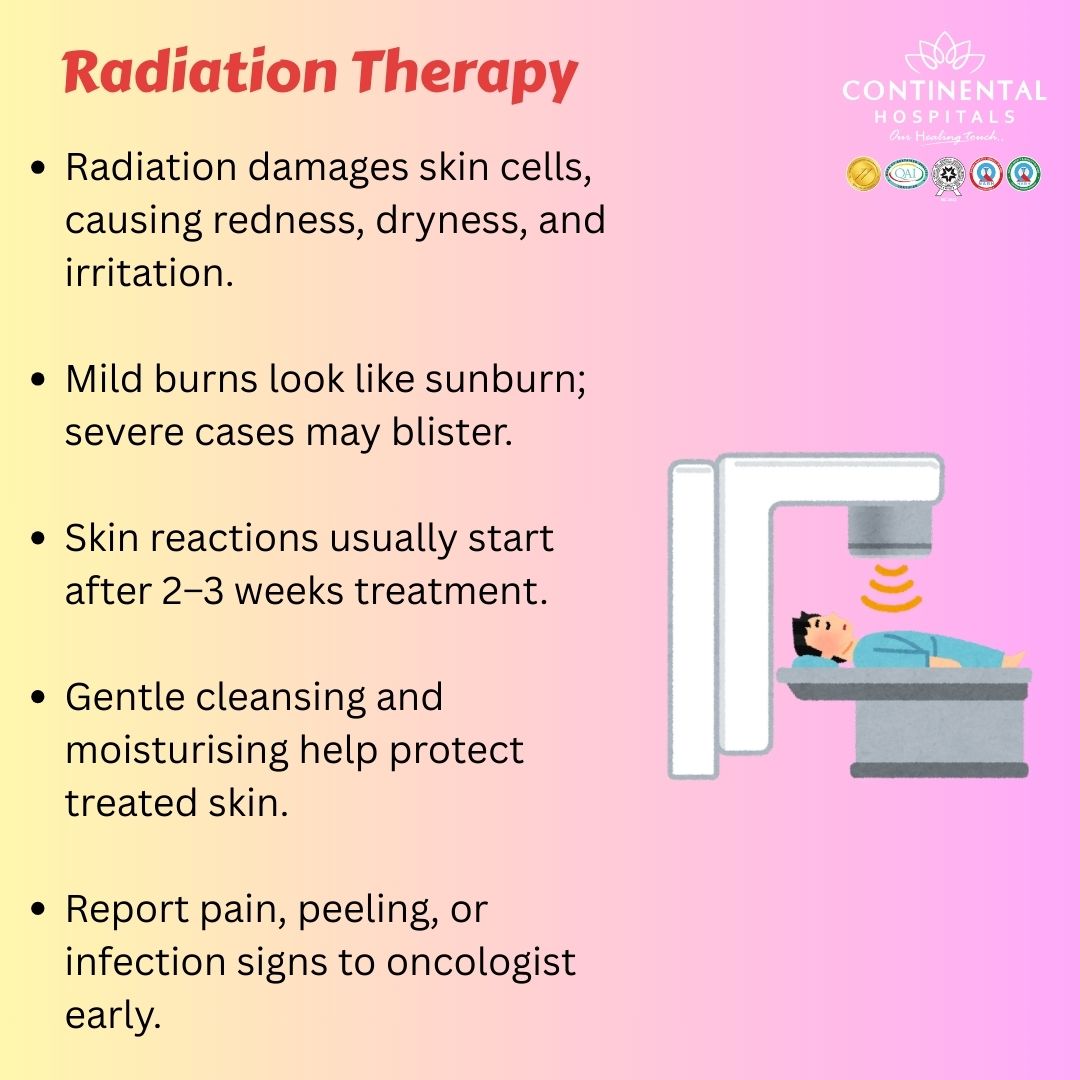
Common Skin Changes During Radiation Therapy
Not everyone experiences the same skin reaction. The severity depends on the radiation dose, treatment area, skin type, and overall health.
Common skin related radiotherapy side effects include:

• Redness similar to sunburn
• Dryness and itching
• Skin peeling or flaking
• Darkening of the skin color
• Tenderness or pain in the treated area
• Moist skin breakdown in severe cases
These changes usually appear after one to two weeks of treatment and may continue for a short time after Radiation Therapy ends.
What Are Radiation Burns?
Radiation burns are skin injuries caused by repeated exposure to radiation. Doctors classify them into stages:
Mild burns
Skin looks red, dry, and itchy. This is the most common reaction and usually heals on its own.
Moderate burns
Skin may peel, swell, or become painful. Blisters may form in some areas.
Severe burns
Skin becomes very sore, moist, and may develop open wounds. This stage requires close medical care.
Early reporting of symptoms helps prevent mild radiation burns from becoming severe.
Who Is at Higher Risk of Radiation Burns?
Some factors increase the risk of skin reactions during Radiation Therapy.
• Treatment to sensitive areas like neck, breast, or groin
• Higher radiation doses
• Fair or very sensitive skin
• Poor nutrition or dehydration
• Smoking
• Existing skin conditions
Your radiation therapist and oncology team assess these risks before radiation therapy begins.
How to Care for Skin During Radiation Therapy
Good skin care plays a major role in reducing discomfort and preventing complications.
Before Radiation Therapy
Ask your doctor what skin products are safe to use? Avoid perfumes, harsh soaps, and scrubs on the treatment area.
During Radiation Treatment
• Keep the skin clean using lukewarm water
• Pat dry gently, do not rub
• Use only doctor recommended creams or moisturizers
• Wear loose, soft clothing
• Protect skin from direct sunlight
• Avoid heating pads or ice packs on treated skin
After Radiation Therapy
Skin may continue healing for several weeks. Continue gentle care and attend follow up visits.
Never apply home remedies or over the counter products without consulting your radiation therapist.
When Should You See a Doctor?
You should inform your care team immediately if you notice:
• Severe pain or burning sensation
• Blisters or open wounds
• Signs of infection such as pus or fever
• Skin changes that worsen suddenly
Early medical support can prevent complications and help the skin heal faster.
Long Term Effects on Skin Health
Most radiation therapy side effects on the skin are temporary. In some cases, long term changes may occur such as:
• Permanent skin darkening
• Increased sensitivity
• Slight thickening or dryness
These effects are usually mild and manageable with proper skin health care and regular follow up.
Emotional Impact of Skin Changes
Skin reactions can affect confidence and emotional well being. Feeling worried or uncomfortable about appearance is natural. Talking openly with your doctor, family, or support groups can help reduce stress during radiation treatment.
Why Choose Continental Hospitals for Radiation Therapy?
Continental Hospitals in Hyderabad is known for delivering advanced cancer care with compassion and precision. The hospital is nationally and internationally accredited, reflecting its commitment to patient safety, quality standards, and clinical excellence.
Key reasons patients trust Continental Hospitals include:
• Experienced radiation oncologists and radiation therapists
• Advanced Radiation Therapy technologies for accurate targeting
• Personalized treatment planning for each patient
• Multidisciplinary cancer care under one roof
• Strong focus on patient education and support
Every Radiation Therapy plan at Continental Hospitals is designed to balance treatment effectiveness with protection of skin health and overall well being.
Conclusion
Radiation Therapy plays a vital role in cancer treatment, but skin burns are a common concern for many patients. Understanding radiation therapy side effects, especially radiation burns, helps patients take timely action and care for their skin properly. With the right guidance, most skin reactions can be managed safely and effectively.
If you or a loved one is preparing for or undergoing Radiation Therapy, do not ignore skin changes. Early care makes a real difference.
Consult our Best Radiation Oncologist at Continental Hospitals, Hyderabad. If you are suffering from skin reactions or have concerns before radiation therapy, seek expert medical advice without delay.
Related Blog Topics: