.webp)


High diabetes, also referred to as high blood sugar levels, is a growing health concern that often develops silently. Many people ignore early symptoms, assuming they are caused by stress, age, or lifestyle habits. However, untreated high diabetes can affect the heart, kidneys, nerves, eyes, and overall quality of life. Understanding the warning signs helps in early diagnosis, timely treatment, and long-term control.
What Is High Diabetes?
High diabetes occurs when blood sugar levels remain above the normal range for a prolonged period. This can happen in people with diagnosed diabetes and also as symptoms of high blood sugar in non diabetics, especially those with obesity, family history, high blood pressure, or sedentary lifestyles.
A persistently high diabetes level damages blood vessels and nerves over time. Recognizing the early signs of high diabetes allows doctors to start high sugar level treatment before complications begin.
High diabetes symptoms? Visit our best Endocrinology department at Continental Hospitals.
10 Warning Signs of High Diabetes You Should Never Ignore
1. Frequent Urination
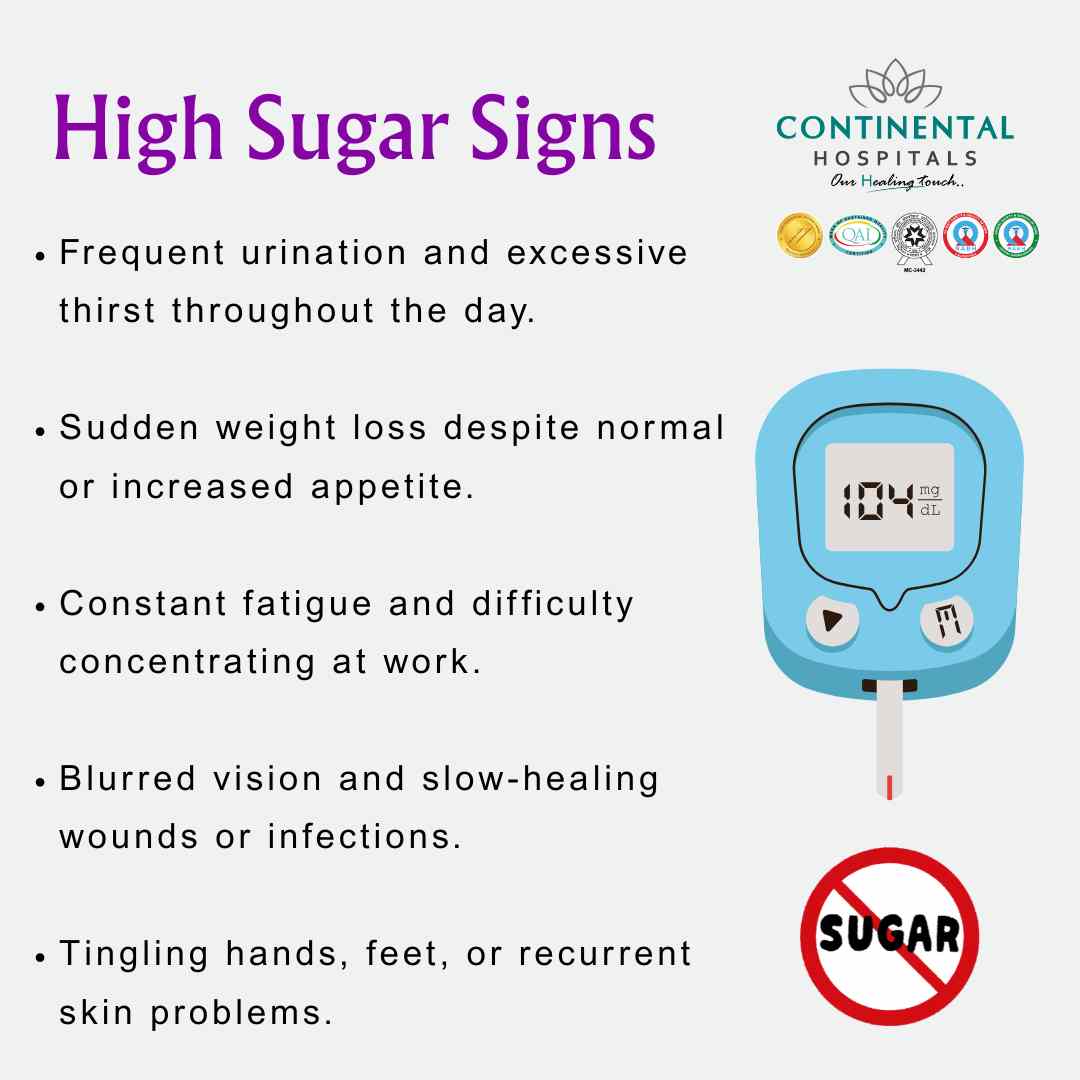
One of the earliest high diabetes symptoms is frequent urination, especially at night. When high blood sugar levels rise, the kidneys work harder to remove excess sugar from the blood, leading to increased urine output.
If you notice repeated bathroom visits without increasing fluid intake, it could indicate a rising high blood sugar level range.
2. Excessive Thirst
Increased urination leads to dehydration, which causes excessive thirst. Feeling thirsty even after drinking enough water is a common sign of high symptoms of diabetes.
Persistent thirst is often linked to diabetes high range sugar levels and should not be ignored.
3. Constant Fatigue and Weakness
High diabetes prevents glucose from entering cells efficiently. As a result, the body lacks energy, leading to constant tiredness.

Fatigue is one of the most overlooked high sugar level symptoms, especially in working professionals who assume it is due to stress or lack of sleep.
4. Sudden Weight Loss
Unexpected weight loss without dieting or exercise may indicate high diabetes. When the body cannot use glucose, it starts breaking down muscle and fat for energy.
This symptom is commonly seen when high blood sugar levels remain uncontrolled for long periods.
5. Increased Hunger
Feeling hungry even after eating meals can be a warning sign of high diabetes level. Since glucose does not reach the cells properly, the body signals hunger repeatedly.
Increased appetite along with fatigue often points toward high blood sugar symptoms.
6. Blurred Vision
High diabetes affects fluid balance in the eyes, leading to blurred or fluctuating vision. Vision problems may improve temporarily when sugar levels stabilize but worsen again if untreated.
Blurred vision is a critical sign associated with high blood sugar level range changes and requires medical evaluation.
7. Slow-Healing Wounds and Frequent Infections
Cuts, wounds, or infections that heal slowly can indicate high diabetes. Elevated sugar levels weaken immune response and reduce blood flow, delaying healing.
People with repeated skin infections, gum infections, or urinary tract infections often have underlying high diabetes symptoms.
8. Tingling or Numbness in Hands and Feet
Nerve damage caused by prolonged high blood sugar levels can result in tingling, numbness, or burning sensations in the hands and feet.
This symptom indicates nerve involvement and highlights the need for immediate high sugar level treatment.
9. Dry Skin and Itching
Dehydration caused by frequent urination can lead to dry skin and itching. Poor circulation due to high diabetes level may worsen skin health further.
Persistent skin dryness can be an early sign of high sugar level symptoms, especially when combined with other warning signs.
10. Mood Changes and Difficulty Concentrating
High diabetes affects brain function and energy levels, leading to irritability, anxiety, and poor concentration. Sudden mood changes without an obvious reason may signal fluctuating high blood sugar levels.
Mental fatigue is increasingly recognized as part of high symptoms of diabetes.
Symptoms of High Blood Sugar in Non Diabetics
High blood sugar is not limited to diagnosed diabetes patients. Many people experience symptoms of high blood sugar in non diabetics, such as:
- Post-meal fatigue
- Excessive thirst after sugary foods
- Frequent urination
- Headaches and blurred vision
These signs may indicate prediabetes or early-stage high diabetes and require medical screening.
What Is the Normal and High Blood Sugar Level Range?
Understanding blood sugar values helps identify risk early:
- Normal fasting levels fall within a healthy range
- Prediabetes indicates rising sugar values
- Diabetes high range values confirm persistent high sugar
Doctors use fasting tests, post-meal tests, and long-term markers to assess high blood sugar level range and decide treatment plans.
What Should a Diabetic with High Blood Pressure Eat?
Diet plays a key role in managing both high diabetes and blood pressure. A balanced meal plan may include:
Whole grains and high-fiber foods:
- Fresh vegetables and fruits with low glycemic load
- Lean proteins such as legumes and fish
- Reduced salt and processed foods
Doctors personalize diets based on individual high diabetes level, blood pressure readings, and lifestyle needs.
Treatment Options for High Diabetes
Managing high diabetes requires a structured approach:
- Lifestyle changes including diet and physical activity
- Monitoring high blood sugar levels regularly
- Prescribed high blood sugar medicine when required
- Ongoing medical supervision to prevent complications
Early high sugar level treatment improves outcomes and reduces long-term risks.
When Should You See a Doctor?
You should consult a doctor if you experience:
- Multiple high diabetes symptoms together
- Persistent fatigue, thirst, or urination
- Blurred vision or numbness
- Family history of diabetes with rising symptoms
Early diagnosis helps control high diabetes before complications develop.
Why Choose Continental Hospitals?
Recognized as one of the best hospitals in Hyderabad, Continental Hospitals offers comprehensive diabetes care with:
- Experienced endocrinologists and physicians
- Advanced diagnostic facilities
- Personalized treatment and nutrition plans
- International healthcare standards and quality accreditations
- Integrated care for diabetes, heart health, kidney health, and lifestyle disorders
The hospital follows globally accepted clinical protocols to ensure safe, accurate, and patient-centered diabetes management.
Conclusion
High diabetes often develops quietly, but the warning signs are clear if you know what to look for. Symptoms like frequent urination, excessive thirst, fatigue, blurred vision, and slow healing should never be ignored. Whether you are diagnosed with diabetes or experiencing symptoms of high blood sugar in non diabetics, early medical guidance is essential.
If you have symptoms of high diabetes, do not delay care. Consult best Endocrinologist at Continental Hospitals for accurate diagnosis, personalized treatment, and long-term diabetes control to protect your health and prevent future complications.
Related Blog Topics: