.webp)


Weekend overeating is a common concern for many people who try to follow healthy routines during the week. You eat balanced meals from Monday to Friday, stay active, and then suddenly feel out of control on Saturday and Sunday. By Monday, there is guilt, bloating, and worry about weekend weight gain. This pattern is not about weak willpower. It is about how the body, brain, and lifestyle work together.
What Is Weekend Overeating?
Overeating refers to eating more food than your body needs, often beyond the point of fullness. When this pattern mainly happens on Saturdays and Sundays, it is called weekend overeating. It usually includes larger portions, frequent snacking, sugary drinks, and comfort foods.
Many people notice that weekend eating feels different from weekday meals. The structure disappears, and food becomes a way to relax, reward yourself, or socialize.
Visit our Nutrition Department at Continental Hospitals for expert guidance on cravings, overeating, and sustainable eating habits tailored to you.
Why Do You Eat More on Weekends?
1. Strict Weekday Dieting Backfires
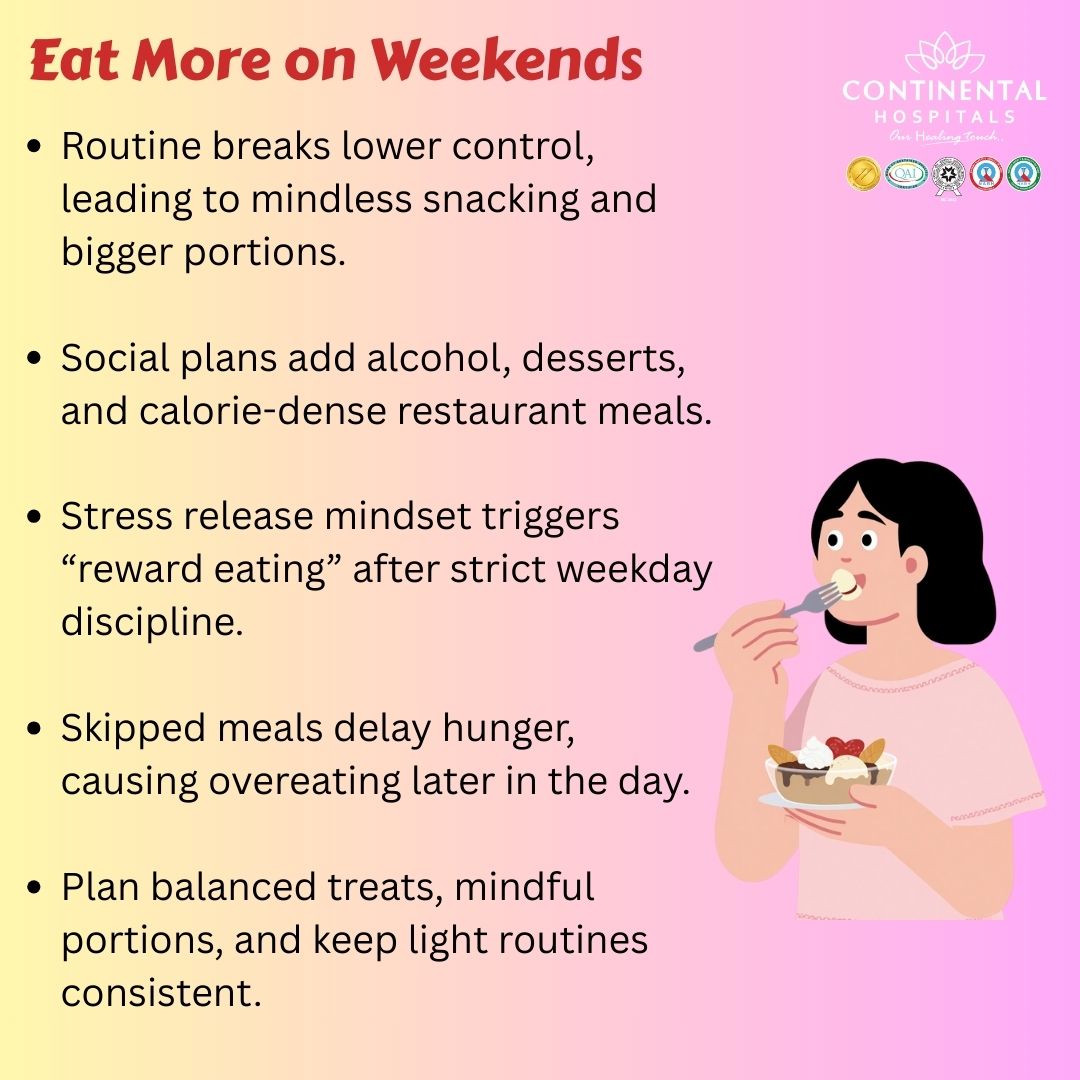
If you eat very little during the week, your body feels deprived. By the weekend, hunger hormones increase and self-control drops. This leads to overeating after a busy week.
Your body tries to compensate for calorie restriction by increasing appetite. This is a natural survival response, not a failure.
2. Hunger Hormones Change on Weekends

Hunger hormones like ghrelin and leptin play a major role in weekend eating.
- Ghrelin increases hunger when meals are delayed or skipped.
- Leptin signals fullness, but stress and poor sleep can reduce its effect.
Irregular sleep and late nights on weekends disturb these hunger hormones, making you crave high-calorie foods.
3. Emotional Release After a Stressful Week
Food often becomes a reward after long workdays. Weekend food cravings are linked to emotional eating rather than physical hunger.
You may eat not because you are hungry, but because you finally have time to relax.
4. Social Plans and Food-Centered Gatherings
Weekends include parties, family meals, eating out, and celebrations. Portions are larger, food choices are richer, and eating lasts longer.
This type of weekend eating adds extra calories without you noticing.
5. Skipping Meals to Save Calories
Many people skip breakfast or lunch on weekends, thinking it balances indulgent dinners. This usually leads to intense hunger later, followed by overeating.
Long gaps between meals increase the risk of binge-like behavior.
6. Less Routine, More Snacking
During weekdays, meals follow a schedule. On weekends, there is no structure. This leads to constant snacking, grazing, and mindless eating while watching screens.
Does Weekend Overeating Cause Weight Gain?
Occasional overeating does not automatically cause weight gain. The problem starts when weekend overeating becomes a regular pattern.
Repeated cycles of restriction and indulgence can slow metabolism, increase fat storage, and affect digestion. Over time, weekend weight gain may become difficult to reverse.
Signs You May Be Overeating on Weekends
- Feeling overly full or uncomfortable after meals
- Craving sugary or salty foods even when not hungry
- Eating out of boredom or stress
- Gaining weight despite healthy weekday habits
- Feeling guilty or bloated by Monday morning
If these signs sound familiar, your body may be asking for a more balanced approach.
What You Can Do About Weekend Overeating?
Build a Flexible Weekday Routine
Avoid extreme dieting from Monday to Friday. Balanced meals with enough protein, fiber, and healthy fats reduce the urge to overeat later.
Consistency matters more than perfection.
Keep Meal Timing Regular
Try to eat meals at similar times on weekends as you do on weekdays. This helps stabilize hunger hormones and prevents sudden cravings.
Do Not Skip Breakfast
A nourishing breakfast reduces overeating later in the day. It supports blood sugar balance and energy levels.
Practice Mindful Eating
Slow down and notice hunger and fullness cues. Ask yourself before eating, Am I physically hungry or emotionally triggered?
Mindful eating reduces automatic overeating without strict rules.
Plan Indulgences Without Guilt
Enjoying favorite foods is part of a healthy lifestyle. Plan them consciously instead of eating impulsively. This prevents loss of control.
Stay Active, Not Punitive
Gentle movement like walking, stretching, or yoga helps digestion and reduces stress. Exercise should support health, not punish eating.
Manage Stress and Sleep
Poor sleep increases appetite and cravings. Aim for consistent sleep patterns even on weekends to regulate hunger hormones.
Can Intermittent Fasting Help?
Intermittent fasting can help some people, but it is not a solution for everyone. If fasting leads to extreme hunger and weekend overeating, it may do more harm than good.
Fasting should be guided by a doctor or nutrition expert, especially if you already struggle with binge patterns.
When Should You See a Doctor?
If overeating feels uncontrollable, frequent, or emotionally distressing, medical advice is important. Conditions like hormonal imbalances, digestive disorders, and stress-related eating issues can contribute to the problem.
Ignoring symptoms may affect long-term health.
Why Choose Continental Hospitals?
Continental Hospitals is known as the best hospital in Hyderabad for comprehensive and patient-centered care. The hospital is internationally accredited and follows globally recognized safety and quality standards.
What makes Continental Hospitals the right choice?
- Highly experienced doctors across specialties
- Advanced diagnostic and treatment facilities
- Multidisciplinary approach to nutrition, metabolism, and lifestyle disorders
- Patient-focused care with evidence-based treatment
- Strong commitment to clinical excellence and ethical medical practices
From preventive care to specialized treatment, Continental Hospitals delivers trusted healthcare under one roof.
Conclusion
Overeating on weekends is not a lack of discipline. It is your body responding to stress, restriction, and irregular habits. Small, consistent changes can restore balance and improve your relationship with food.
If you suffer from frequent overeating, weekend weight gain, or food cravings that feel hard to control, consult our best Nutrition at Continental Hospitals. Expert evaluation can help identify underlying causes and guide you toward sustainable eating habits.
Take the first step toward better health today. Your body deserves care, not punishment.
Related Blog Topics: