.webp)


Do you ever feel like your mind is trapped in a thick cloud? Perhaps you find yourself staring at your computer screen, unable to focus on a simple task, or you walk into a room only to forget why you are there. This experience is commonly known as brain fog. While it is not a specific medical diagnosis, it is a very real and frustrating sensation that affects your ability to think clearly.
What is Brain Fog?
Brain fog is a term used to describe a range of symptoms that affect your cognitive function. It feels like a lack of mental clarity or a state of confusion. When you have brain fog, your brain feels "offline," making it difficult to process information, remember details, or stay focused on the conversation at hand. It can feel like your thoughts are moving through a haze, slowing down your productivity and affecting your quality of life.
Don’t ignore brain fog or cognitive fatigue. Early care matters. Visit the best neuro doctor hyderabad at Continental Hospitals for expert evaluation today.
What are the common symptoms of brain fog?
Recognizing the signs of brain fog is the first step toward clearing the mental mists. Since it affects everyone differently, symptoms can range from mild forgetfulness to significant difficulty in daily functioning. Common signs include:
- Difficulty Concentrating: You may find it hard to stay on task or follow a complex conversation.
- Memory Issues: Forgetting appointments, losing your keys frequently, or struggling to recall names and words.
- Mental Fatigue: Feeling exhausted even after a full night of sleep, as if your brain has run a marathon.
- Lack of Mental Clarity: Feeling spaced out or disconnected from your surroundings.
- Slowed Thinking: Taking longer than usual to solve problems or complete routine activities.
- Irritability: Feeling frustrated by your inability to think clearly, which can affect your mood.
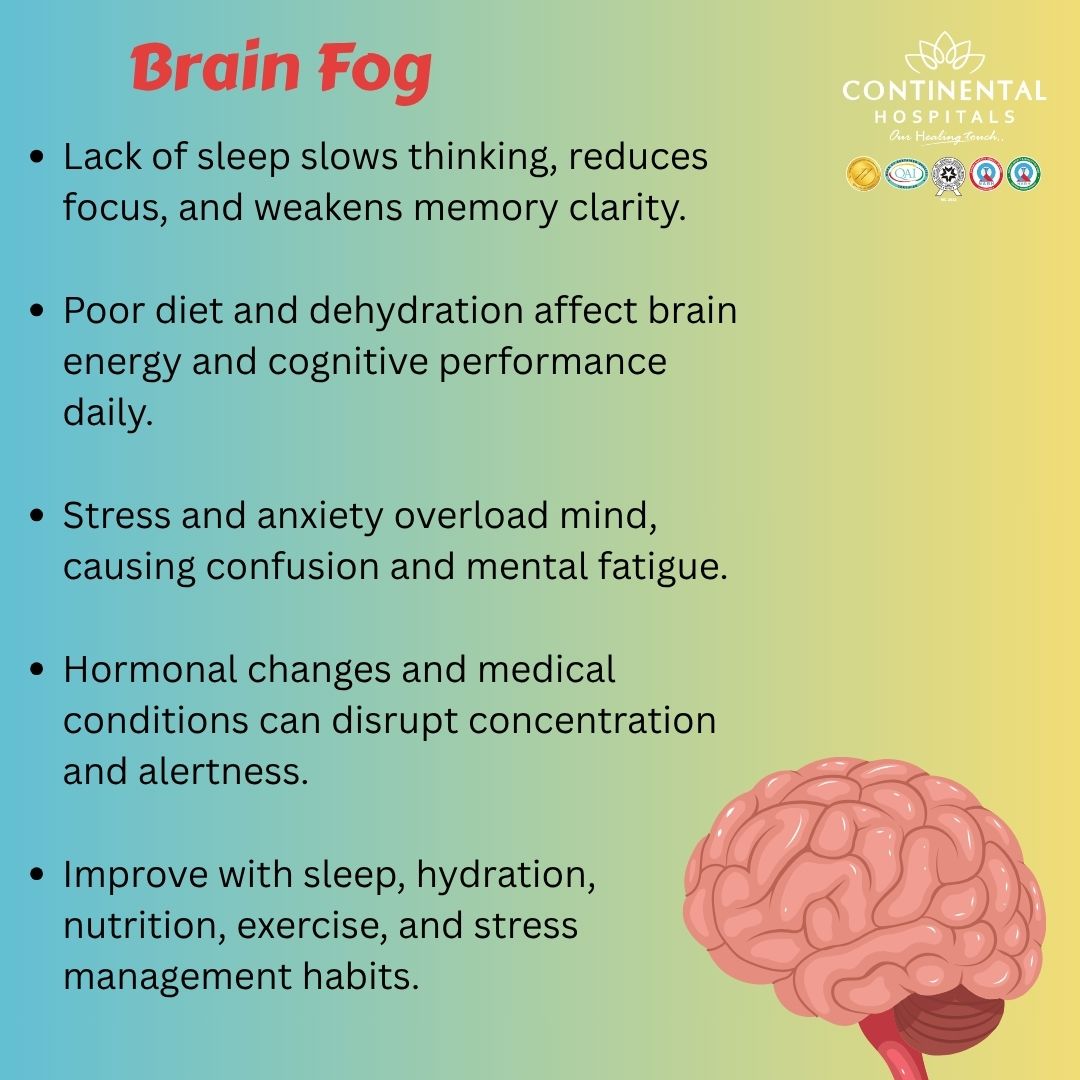
What causes brain fog?
Identifying the root cause of your mental fatigue is essential for finding an effective solution. Many factors, ranging from lifestyle choices to underlying medical conditions, can contribute to this foggy feeling.
Stress and Anxiety
Chronic stress is one of the most common brain fog causes. When you are constantly under pressure, your body remains in a "fight or flight" state, releasing high levels of cortisol. Over time, this exhausts the brain and makes it difficult to focus on anything other than the immediate stressor.
Lack of Quality Sleep
Your brain needs sleep to repair itself and consolidate memories. If you are not getting enough deep sleep, your cognitive functions will suffer. This leads to that heavy, sluggish feeling the next day.
Nutritional Deficiencies
The brain requires specific vitamins and minerals to function optimally. Low levels of Vitamin B12, Vitamin D, or iron can lead to significant mental fatigue. Similarly, dehydration can cause the brain to shrink slightly in volume, leading to immediate focus issues.

Hormonal Changes
Fluctuations in hormones, particularly during pregnancy or menopause, can trigger brain fog. Changes in estrogen and progesterone levels often impact memory and processing speed.
What medical conditions can cause brain fog?
Certain health issues are linked to cognitive haze. These include:
- Anemia
- Thyroid disorders (Hypothyroidism)
- Diabetes and blood sugar imbalances
- Autoimmune diseases
- Chronic fatigue syndrome
How to Get Rid of Brain Fog?
If you are wondering how to get rid of brain fog, the good news is that many solutions involve simple lifestyle adjustments. Addressing the basics of physical and mental health can often lift the fog and restore your sharp thinking.
Prioritize Restorative Sleep
Aim for seven to nine hours of quality sleep each night. Establish a consistent routine by going to bed and waking up at the same time every day. Minimize blue light exposure from phones and computers at least one hour before bed to help your brain transition into sleep mode.
Fuel Your Brain with Nutrition
Diet plays a massive role in mental performance. Focus on a diet rich in antioxidants, healthy fats, and lean proteins. Omega-3 fatty acids found in fish and walnuts are particularly beneficial for brain health. Ensure you are drinking enough water throughout the day to keep your brain hydrated.
Manage Stress Effectively
Incorporate stress-reduction techniques into your daily life. This could include deep breathing exercises, short walks in nature, or mindfulness meditation. Taking regular breaks during work can also prevent mental burnout.
Physical Activity
Exercise increases blood flow to the brain and stimulates the release of chemicals that improve mood and sleep. Even a brisk twenty-minute walk can help clear mental fog.
What Is the Best Treatment for Brain Fog?
While lifestyle changes are effective for many, some cases require professional mental fog treatment. If your symptoms persist despite improving your diet and sleep, it is important to consult a healthcare professional. A doctor can run blood tests to check for vitamin deficiencies or thyroid issues and develop a personalized plan to address the underlying cause.
Why Choose Continental Hospitals for Your Health?
When it comes to neurological and cognitive health, choosing the right healthcare partner is vital. Continental Hospitals stands as a leader in providing comprehensive medical care in Hyderabad. Our facility is designed to provide a healing environment supported by the latest medical technology.
International Standards of Care
Continental Hospitals is proud to hold prestigious accreditations, including the Joint Commission International (JCI) accreditation. This signifies that we adhere to the highest global standards for patient safety and quality of care. We are also accredited by the National Accreditation Board for Hospitals & Healthcare Providers (NABH), ensuring that our clinical processes are rigorous and patient-centric.
Multidisciplinary Approach
Our team of experts takes a holistic view of your health. Because brain fog can stem from various sources, our neurologists, nutritionists, and internal medicine specialists work together to diagnose the exact cause of your symptoms.
Advanced Diagnostic Facilities
We utilize state-of-the-art diagnostic tools to ensure accurate results. From advanced imaging to comprehensive metabolic panels, we leave no stone unturned in understanding your health.
Conclusion
Brain fog is a signal from your body that something is out of balance. Whether it is a result of a hectic lifestyle, poor nutrition, or an underlying health condition, you do not have to live with a clouded mind. By recognizing the symptoms and addressing the causes through lifestyle changes and professional guidance, you can regain your mental clarity and focus.
If you suffer from persistent brain fog or cognitive fatigue, do not ignore the signs. Early intervention can lead to a faster recovery and better long-term brain health. Consult our best neurologist in Hyderabad at Continental Hospitals, Hyderabad, to begin your journey toward a clearer mind today.
Related Blog Topics: