.webp)


A strong immune system is the body’s natural shield against infections, illnesses, and long term health problems. Many people focus on calories and major nutrients like protein or carbohydrates, but often ignore the smaller nutrients that play a powerful role in immunity. Micronutrient deficiencies are a silent but common problem that can weaken immune defenses without obvious early signs. Understanding how micronutrient deficiencies impact immunity is essential for maintaining good health at every age.
What Are Micronutrients?
Micronutrients are vitamins and minerals that the body needs in small amounts but uses for critical functions. These include vitamins like A, C, D, E, and B complex, and minerals such as zinc, iron, selenium, copper, and magnesium. Although required in tiny quantities, micronutrients for immune function are essential for building immune cells, producing antibodies, and controlling inflammation.
When the body does not get enough of these nutrients, a micronutrient deficiency develops. Over time, multiple deficiencies can occur together, leading to micronutrient deficiencies that significantly weaken immunity.
Visit our Nutrition Department at Continental Hospitals, Hyderabad for expert evaluation and personalized care to manage micronutrient deficiencies and boost long-term immune health.
Why Nutrition Is Important for the Immune System?
The immune system relies on constant nourishment to work effectively. Immune cells are rapidly produced and replaced, which means they need a steady supply of vitamins and minerals. Without proper nutrition, immune responses become slow, weak, or unbalanced.
Key reasons why nutrition is important include:
• Supports the production of white blood cells
• Helps antibodies recognize and destroy pathogens
• Reduces excessive inflammation
• Maintains healthy skin and mucosal barriers
• Improves recovery from infections
Poor dietary habits, digestive disorders, chronic illnesses, stress, and aging can all increase the risk of nutrient deficiency.

How Micronutrient Deficiencies Weaken Immunity?
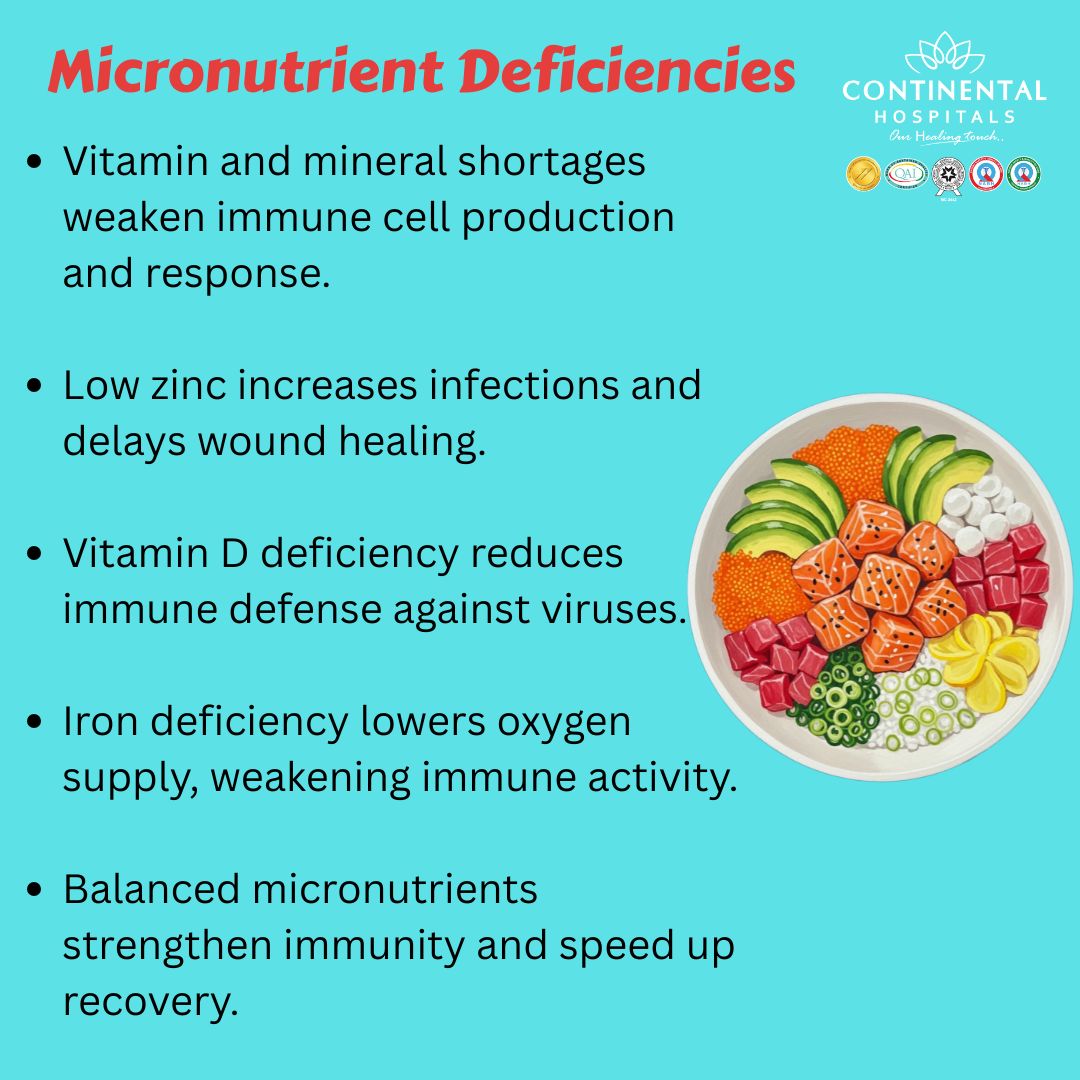
Micronutrient deficiencies affect immunity in several interconnected ways. Each nutrient plays a specific role, and deficiency can disrupt immune balance.
1. Reduced Immune Cell Function
Vitamins and minerals are required for the development and activation of immune cells. Deficiency can reduce the number and efficiency of these cells, making the body more vulnerable to infections.
2. Impaired Antibody Response
Antibodies help the body remember and fight infections. A micronutrient deficiency can reduce antibody production, leading to frequent or prolonged illnesses.
3. Increased Inflammation
Some micronutrients regulate inflammation. When levels are low, inflammation may become excessive, damaging healthy tissues and weakening immunity.
4. Delayed Healing and Recovery
The body needs adequate micronutrients to repair tissues after infection or injury. Deficiencies slow down healing and prolong recovery time.
Key Vitamins and Minerals That Support Immunity
Understanding the role of specific micronutrients helps explain how deficiencies impact health.
Vitamin A
Supports the integrity of skin and mucosal barriers and helps immune cells function effectively. Deficiency increases susceptibility to infections.
Vitamin C
Acts as a powerful antioxidant and supports immune cell activity. Low levels can result in weaker defense against infections.
Vitamin D
Regulates immune responses and reduces excessive inflammation. Vitamin D deficiency is linked to frequent respiratory infections.
Vitamin E
Protects immune cells from oxidative stress and supports immune balance.
B Vitamins
Support energy production and immune cell metabolism. Deficiency can impair immune responses.
Zinc
Essential for immune cell development and wound healing. Zinc deficiency is one of the most common causes of weakened immunity.
Iron
Required for oxygen transport and immune cell growth. Iron deficiency can increase infection risk.
Selenium
Supports antioxidant defenses and immune regulation.
Together, these vitamins and minerals form the foundation of strong immunity. A lack of one or more leads to micronutrient deficiencies that compromise immune health.
Signs You May Have Micronutrient Deficiencies?
Micronutrient deficiencies often develop slowly and may be overlooked. Common warning signs include:
• Frequent infections or colds
• Slow recovery from illness
• Fatigue and low energy
• Hair fall and brittle nails
• Poor wound healing
• Recurrent mouth ulcers
• Weakness or dizziness
If these symptoms persist, it is important to seek medical evaluation.
Who Is at Higher Risk?
Certain groups are more prone to micronutrient deficiency:
• Children and adolescents during growth phases
• Elderly individuals
• Pregnant and breastfeeding women
• People with digestive disorders
• Individuals with chronic diseases
• Those following restrictive diets
Early detection and correction are essential to prevent long term immune damage.
How Are Micronutrient Deficiencies Diagnosed?
Diagnosis involves a detailed medical history, dietary assessment, and laboratory tests. At advanced hospitals, doctors use evidence based testing to identify specific nutrient deficiency and evaluate immune health. Accurate diagnosis helps create a targeted treatment plan rather than generic supplementation.
Can Micronutrient Deficiencies Be Prevented?
Yes. Prevention focuses on balanced nutrition and regular health checkups.
Helpful steps include:
• Eating a varied diet rich in fruits, vegetables, whole grains, and lean proteins
• Including natural sources of vitamins and minerals
• Addressing digestive or absorption issues
• Avoiding unnecessary restrictive diets
• Taking supplements only under medical guidance
Correcting micronutrient deficiencies early supports long term immune resilience.
Why Choose Continental Hospitals?
Continental Hospitals is recognized as one of the best hospitals in Hyderabad, known for its patient focused care and clinical excellence. The hospital is accredited by leading national and international healthcare accreditation bodies, reflecting its commitment to safety, quality, and ethical medical practices.
Reasons patients trust Continental Hospitals include:
• Internationally accredited healthcare standards
• Experienced doctors across multiple specialties
• Advanced diagnostic laboratories
• Evidence based treatment protocols
• Integrated nutrition and preventive care services
• Patient centered approach with personalized care
The hospital’s multidisciplinary teams ensure that micronutrient deficiencies and immune related conditions are managed comprehensively, not just symptomatically.
When Should You See a Doctor?
If you suffer from repeated infections, prolonged weakness, or symptoms suggestive of nutrient deficiency, do not ignore them. Early medical consultation helps identify the root cause and prevents complications.
Conclusion
Micronutrient deficiencies are a major but often overlooked cause of weak immunity. Vitamins and minerals play a vital role in building, regulating, and protecting the immune system. Without them, the body struggles to fight infections and recover effectively. Understanding what micronutrient deficiencies mean for immunity empowers individuals to take timely action.
Consult our Best Nutrition Experts at Continental Hospitals, Hyderabad. Our team provides comprehensive evaluation and personalized care to diagnose and manage micronutrient deficiencies and support long term immune health. Book your appointment today for trusted care at one of the best hospitals in Hyderabad.
Related Blog Topics: