.webp)

Many women think heavy bleeding during periods is just a hormonal issue. But can heavy bleeding be a sign of something more serious, like heart problems? This is an important question in women’s health. Understanding the link between heavy menstrual bleeding and heart disease can help women take early action and protect their long term health.
What Is Heavy Menstrual Bleeding?
Heavy menstrual bleeding means losing more blood than normal during a period. It may include:
• Soaking through one or more pads every hour
• Bleeding that lasts more than seven days
• Passing large blood clots
• Feeling tired or weak during periods
• Needing to change protection during the night
Many women experience heavy periods at some point in their lives. However, repeated heavy bleeding should never be ignored.
Visit our gynecology department at Continental Hospitals for expert care, detailed evaluation, and personalized treatment for women’s health and heart concerns.
Common Causes of Heavy Bleeding
Heavy bleeding can happen for many reasons. Some of the most common causes include:
• Hormonal imbalance
• Polycystic ovary syndrome, also called PCOS, causes heavy periods
• Uterine fibroids
• Thyroid disorders
• Blood clotting problems
• Side effects of certain medications
While these causes are common, doctors also look at overall health, including the heart, when evaluating persistent heavy menstrual bleeding.

Can Heavy Bleeding Be Linked to Heart Problems?
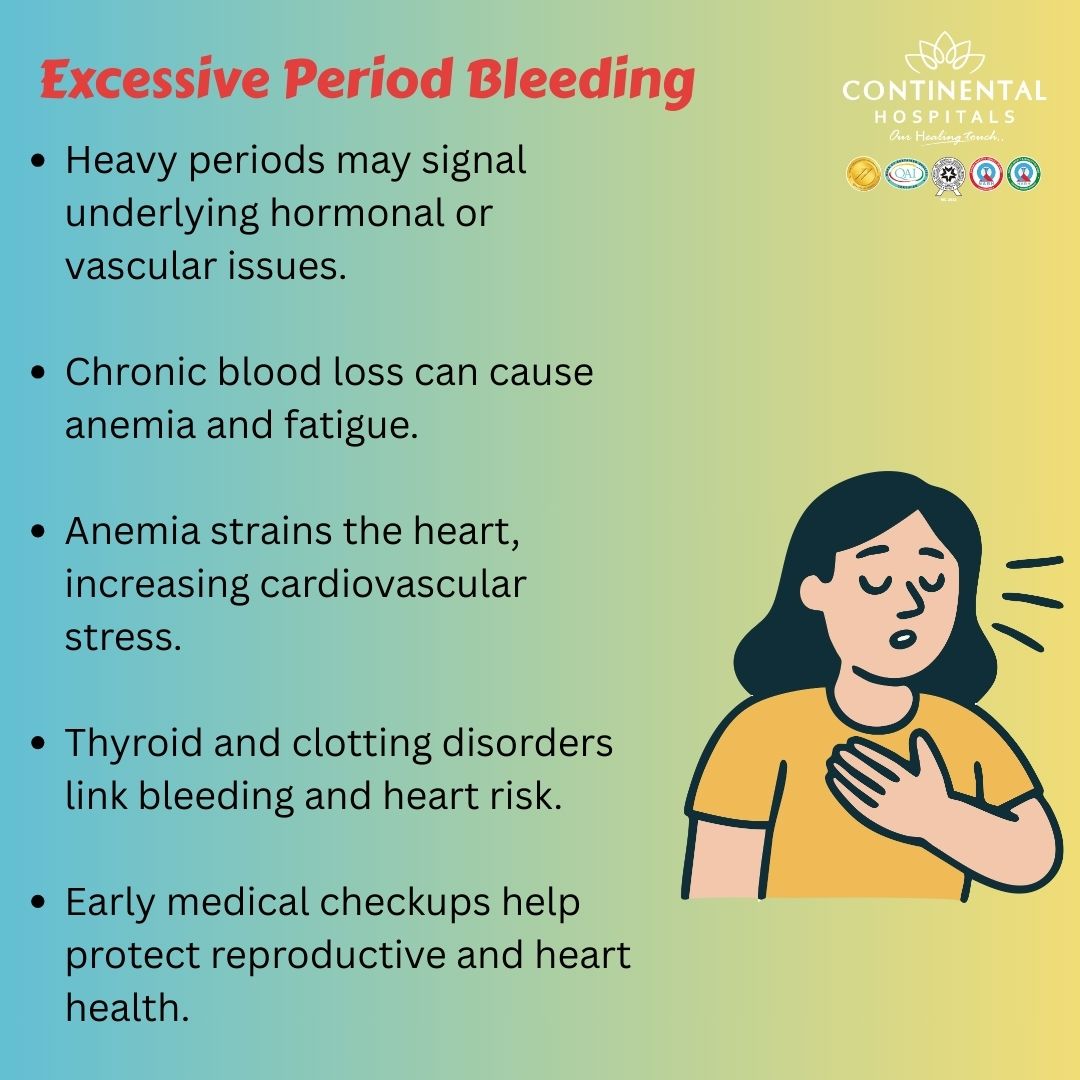
Heavy bleeding itself does not directly cause heart problems. However, it can sometimes be a warning sign of underlying conditions that increase the risk of heart disease.
Here is how heavy bleeding and heart health may be connected:
1. Anemia and Heart Stress
When heavy menstrual bleeding continues for months, it can lead to anemia. Anemia means low levels of hemoglobin in the blood. This reduces the oxygen supply to the body.
To compensate, the heart works harder to pump oxygen-rich blood. Over time, this extra strain may increase the risk of heart problems, especially in women who already have high blood pressure or other risk factors.
2. Hormonal Imbalance and Heart Disease
Hormones like estrogen play a key role in both menstrual cycles and heart health. Low or fluctuating estrogen levels can lead to heavy periods. At the same time, hormonal imbalance may increase the risk of heart disease, especially after menopause.
Women with PCOS and heavy periods often have insulin resistance, obesity, and high cholesterol. These conditions are known risk factors for heart problems.
3. Thyroid Disorders
Thyroid issues can cause heavy bleeding and also affect heart rhythm and blood pressure. An overactive or underactive thyroid can lead to irregular heartbeats and other cardiovascular concerns.
4. Blood Clotting Disorders
Certain clotting disorders can cause heavy menstrual bleeding. Some of these conditions are linked to abnormal blood clot formation, which may increase the risk of heart disease or stroke.
Signs You Should Not Ignore
Heavy bleeding may be common, but it is not always normal. You should consult a doctor if you notice:
• Severe fatigue during or after periods
• Shortness of breath
• Chest discomfort
• Irregular heartbeat
• Swelling in legs
• Frequent dizziness
These symptoms may indicate anemia or underlying heart problems that need urgent medical evaluation.
Understanding Period Bleeding and Heart Health
Women often focus only on gynecological causes when they experience heavy periods. But a holistic approach is important. Period bleeding and heart health are more connected than many people realize.
Research shows that women with metabolic disorders, obesity, diabetes, and high blood pressure are more likely to experience both heavy menstrual bleeding and heart disease. Early screening can prevent complications.
Regular health checkups help identify:
• Blood pressure levels
• Cholesterol levels
• Blood sugar levels
• Hemoglobin levels
• Hormonal profile
By managing these factors early, women can reduce the risk of serious heart problems.
Who Is at Higher Risk?
Some women are more likely to experience both heavy bleeding and heart disease. These include:
• Women with PCOS
• Women with obesity
• Women with diabetes
• Women with a family history of heart problems
• Women above 40 years of age
• Women with thyroid disorders
If you fall into any of these categories, regular evaluation is essential.
When to See a Doctor?
If heavy bleeding affects your daily life, causes weakness, or continues for several months, do not ignore it. Early diagnosis can prevent complications.
Consult a gynecologist if:
• You bleed heavily every month
• Your periods suddenly become heavier
• You feel extremely tired
• You have severe cramps with heavy periods
Consult a cardiologist if:
• You experience chest pain
• You have breathlessness
• You notice irregular heartbeat
• You have high blood pressure
At Continental Hospitals, expert gynecologists and cardiologists work together to evaluate women’s health completely.
Diagnosis and Evaluation
Doctors may recommend:
• Complete blood count to check anemia
• Thyroid function test
• Hormone profile
• Pelvic ultrasound
• Blood sugar and cholesterol test
• ECG and heart evaluation if needed
Early testing helps identify whether heavy menstrual bleeding is purely gynecological or related to broader health issues, including heart disease.
Treatment Options
Treatment depends on the underlying cause.
For heavy bleeding, options may include:
• Hormonal therapy
• Medications to reduce blood loss
• Treatment for fibroids
• Management of thyroid disorders
• Lifestyle changes
If heart problems are detected, treatment may include:
• Blood pressure control
• Cholesterol management
• Diabetes management
• Cardiac medications
• Lifestyle modifications
Addressing both conditions together improves overall health outcomes.
Why Choose Continental Hospitals?
Continental Hospitals is widely recognized as the best hospital in Hyderabad for comprehensive and integrated care. The hospital holds prestigious national and international accreditations that reflect high standards in patient safety, quality treatment, and clinical excellence.
Key strengths include:
• Multispecialty team approach
• Advanced diagnostic technology
• Experienced gynecologists and cardiologists
• NABH and international quality accreditations
• Patient-focused care
• Evidence-based treatment protocols
The hospital provides seamless coordination between departments to ensure that women receive complete evaluation for heavy bleeding and related health concerns.
Protecting Your Heart and Women’s Health
Taking care of period health is part of protecting heart health. Simple steps include:
• Maintaining a healthy weight
• Regular exercise
• Balanced diet rich in iron
• Managing stress
• Regular health checkups
• Monitoring blood pressure and sugar
Early awareness can prevent long term complications.
Conclusion
Heavy bleeding during periods should never be ignored. While it may be caused by hormonal imbalance or uterine conditions, it can sometimes signal broader health issues. Persistent heavy menstrual bleeding may lead to anemia, hormonal disturbances, and increased strain on the heart.
Understanding the connection between heavy bleeding and heart problems empowers women to seek timely care. Early diagnosis and proper treatment can protect both reproductive health and heart health.
If you are experiencing heavy periods, weakness, or symptoms that worry you, consult a specialist immediately. At Continental Hospitals, consult our best gynecologists, who provide comprehensive evaluation and personalized treatment plans for women’s health and heart disease.
Related Blog Topics: