.webp)


Seed oils have been at the center of nutrition debates for years. While some claim they are harmful, others say they provide essential fatty acids beneficial for heart health. Understanding seed oils, their effects on the body, and separating myths from facts is key to making informed dietary choices.
Consult a Nutrition Specilaity at Continental Hospitals Hyderabad for guidance on seed oils, inflammation, and overall health management.
What Are Seed Oils?
Seed oils are extracted from the seeds of plants such as sunflower, soybean, corn, canola, and safflower. They are widely used in cooking, baking, and processed foods because of their neutral flavor and long shelf life. Common seed oils include:
- Sunflower oil
- Soybean oil
- Corn oil
- Canola oil
- Safflower oil
These oils contain varying amounts of polyunsaturated fatty acids (PUFAs), including omega-6 fatty acids, which play important roles in cell function and overall health.
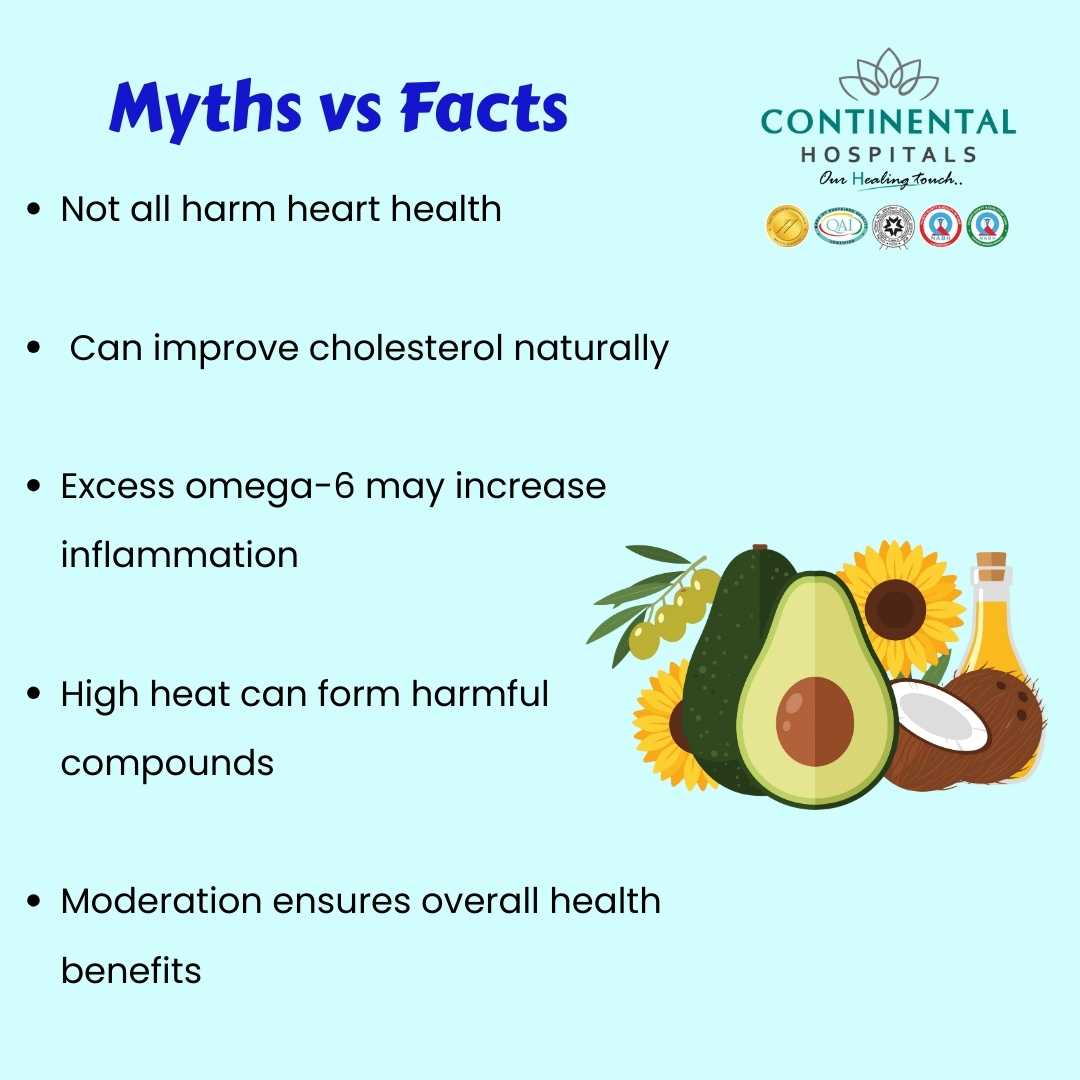
Myths About Seed Oils
Many claims suggest that seed oils are toxic, inflammatory, or dangerous. Some of the common myths include:
- Seed oils are inherently toxic
- They cause chronic inflammation in all users
- Seed oils are the primary cause of heart disease
- They should be completely avoided in a healthy diet
While it is true that excessive consumption of any food can be harmful, labeling all seed oils as dangerous is misleading. Scientific studies show that moderate intake, especially as part of a balanced diet, is not inherently harmful.
Seed Oils and Inflammation
One of the most discussed topics is the link between seed oils and inflammation. Omega-6 fatty acids found in seed oils are often cited as inflammatory. While high intake of omega-6 in proportion to omega-3 may contribute to inflammatory responses, the overall effect depends on diet balance. Key points include:
- Seed oils can be part of an anti-inflammatory diet when balanced with omega-3 sources like fish, flaxseeds, and chia seeds.
- Avoiding seed oils entirely does not guarantee lower inflammation; processed foods and refined sugar also contribute significantly.
- Using seed oils in moderation, combined with whole foods, vegetables, and lean proteins, supports overall health.
Seed Oils Explained: Benefits and Risks
Seed oils are not purely harmful. Understanding both benefits and risks helps make smarter choices:

Benefits:
- Rich in unsaturated fats which support heart health
- Contain vitamin E, an antioxidant that protects cells
- Can improve cholesterol levels when replacing saturated fats
Risks:
- High heat cooking can oxidize oils, producing harmful compounds
- Excess omega-6 without omega-3 balance may increase inflammation
- Overconsumption contributes to excessive calorie intake and weight gain
Tips for Safe Use of Seed Oils
To get the benefits and minimize risks:
- Use moderate amounts in daily cooking
- Pair with omega-3-rich foods to balance fatty acids
- Avoid repeatedly heating oils to high temperatures
- Prefer unrefined or cold-pressed varieties when possible
Should You Avoid Seed Oils Completely?
Complete avoidance is not necessary for most people. Focus on moderation, variety, and balance. Incorporating other healthy fats like olive oil, avocado oil, nuts, and seeds ensures a nutrient-rich diet.
Signs of Seed Oil Overuse
Excessive consumption may contribute to:
- Chronic inflammation
- Weight gain
- Digestive discomfort in sensitive individuals
- Potential oxidative stress from overcooked oils
Expert Advice and Medical Guidance
If you experience chronic inflammation, digestive issues, or other health concerns possibly related to diet, it is recommended to consult a nutritionist or Internal Medicine specialist. They can provide personalized guidance, including how to include seed oils safely in your diet.
Why Choose Continental Hospitals?
Continental Hospitals the best hospitals in Hyderabad is a NABH and JCI-accredited facility, reflecting global standards of healthcare excellence. Reasons to choose Continental Hospitals include:
- Experienced nutritionists, endocrinologists, and internal medicine specialists
- Comprehensive evaluation and dietary planning tailored to your health needs
- Evidence-based treatment plans for lifestyle and dietary interventions
- Focus on patient-centered care for long-term wellness and disease prevention
Simple Tips for Healthy Use of Seed Oils
Rotate oils: Use a mix of olive, avocado, and moderate seed oils
Control heat: Avoid high-heat frying for long durations
Pair wisely: Include omega-3 foods like fish and flax seeds
Read labels: Be aware of seed oil content in processed foods
Conclusion
Seed oils are neither universally harmful nor entirely risk-free. Myths around toxicity and inflammation often exaggerate risks, while their benefits in moderation are supported by science. Understanding the balance between omega-6 and omega-3 fatty acids, proper cooking methods, and moderation is key.
Continental Hospitals in Hyderabad provides expert guidance for diet, nutrition, and health optimization. If you experience inflammation, digestive issues, or have concerns about seed oils in your diet, consult our best Nutritionist at Continental Hospitals. Personalized evaluation and structured guidance can help you make informed choices, support heart and overall health, and maintain a balanced lifestyle.